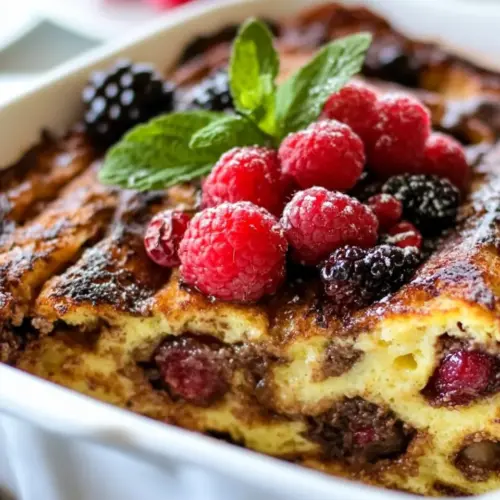
Panettone French Toast Casserole
Panettone French Toast Casserole is a creamy, custardy bake that turns enriched Panettone into a crispy edged, soft centered brunch classic. With warm notes of cinnamon and a caramelized top, this easy holiday favorite is perfect for Christmas mornings or leisurely weekends. Make ahead friendly and crowd pleasing, it delivers comforting texture and flavor that’s worth waking up for.
Equipment
- Mixing Bowl
- Whisk
- Baking Dish
Ingredients
- 6 cups cubed Panettone Cubed panettone soaks up the custard mixture while providing a sweet, airy base that caramelizes when baked; its rich fruit and buttery crumb give the casserole depth and a festive flavor. Cut into uniform pieces to ensure even soaking and consistent texture throughout the dish.
- 5 eggs Beaten eggs set the custard, binding the bread and creating a tender, custardy interior; they also add structure and a golden color when baked. Whisk thoroughly to combine whites and yolks for a smooth, uniform custard.
- 1 1/2 cups milk Milk adds creaminess and moisture to the custard, diluting the eggs to create a silky texture that permeates the bread; using whole or reduced-fat milk will affect richness. Warm slightly if desired to help the bread absorb the liquid more evenly.
- 1 tbsp sugar Granulated sugar provides sweetness to balance the bread and enrich the custard; it also contributes to light caramelization on the surface during baking. Adjust amount slightly for personal preference, keeping the overall balance with the sweet panettone in mind.
- 1 tsp vanilla extract Vanilla extract imparts aromatic warmth and enhances the overall flavor profile of the casserole; a small amount lifts the custard and complements the panettone’s fruity notes. Add during whisking to distribute flavor uniformly.
- 1/8 tsp salt A pinch of salt brightens flavors and balances the sweetness, enhancing both the custard and the panettone’s buttery notes. Use sparingly to avoid overpowering the delicate dessert profile.
- softened butter Softened butter is used to grease the baking dish and dot the top of the casserole for added richness and a golden finish; melting slightly helps it spread and incorporate into the surface. Use enough to prevent sticking and to encourage a crisp, buttery crust.
- sugar + cinnamon to sprinkle A sprinkle of sugar and cinnamon adds a final crunchy, fragrant topping that complements the sweet, spiced notes of panettone; it creates an appealing caramelized crust once baked. Combine to taste and distribute evenly for a balanced finish.
Instructions
- Whisk the eggs, milk, sugar, salt and vanilla extract in a medium mixing bowl.: As you whisk the mixture, notice how the pale yellow deepens and the surface becomes slightly glossy, a sign that the eggs and milk are marrying. The aroma of vanilla extract will lift as you combine the ingredients, and the tiny sugar crystals dissolve to create a smooth custard. This step matters because a well-emulsified custard ensures consistent texture throughout the bake; if the custard is uneven, some pockets might set differently. A common mistake is under-whisking, which can leave streaks of yolk or grainy sugar. If you see any unmixed bits, continue whisking until the mixture is uniform and slightly frothy at the edges, which indicates a good incorporation of air and ingredients.
- Grease the baking dish with butter.: When you spread softened butter across the bottom and sides, the dish will take on a soft sheen and you may hear a faint hiss if the butter warms slightly. This thin layer prevents sticking and encourages the outer edges of the casserole to brown nicely, forming those irresistible crisp bits. The reason it is important is that butter promotes even browning and helps release the casserole cleanly. One thing to avoid is skimping on the greasing, which can cause the bread to adhere and tear when serving. Rub the butter into corners so the custard cannot seep underneath and become trapped, which would inhibit even cooking.
- Place Panettone cubes into a baking dish and pour the egg mixture on top, trying to soak all the pieces.: As you nestle the cubed Panettone into the dish, you will see pockets and crevices where custard can pool; pour slowly so the liquid fills those spaces. Press down gently on some cubes to help them accept the custard. You will notice the bread darken slightly as it absorbs the mixture, an immediate visual cue that the process is working. This soaking step is crucial because proper saturation prevents dry centers while keeping structure. A frequent error is pouring and immediately baking; if the custard does not have time to penetrate, the interior may remain dry. If your cubes resist absorbing, let them rest for a few minutes, then press again to encourage penetration.
- Sprinkle a little cinnamon and sugar on top.: The moment you dust the top with cinnamon and sugar , a warm, spicy aroma will rise, hinting at the caramelized finish to come. That light scattering creates tiny sweet, crunchy pockets after baking, offering contrast to the creamy interior. This finishing touch matters because it enhances both texture and scent, making each bite more interesting. One oversight is adding too much, which can lead to an overly hard crust; aim for an even, thin layer. If you worry about uneven distribution, use a small sieve to sprinkle the mixture uniformly for consistent caramelization.
- Bake in preheated oven at 350 for about 40-45 minutes. Let it rest at least 5 minutes before serving. (Note: you may also refrigerate it overnight and bake it the next morning).: As the casserole bakes at 350 degrees, the kitchen will fill with a toasty, eggy fragrance and a hint of caramel as sugars brown. Look for a golden top with bubbling edges, and a gentle jiggle near the center that indicates it is set but still tender. This temperature encourages even cooking throughout without drying the interior. The rationale is that moderate heat allows the custard to slowly set while the top browns; too hot and the outside overcooks before the center sets. A key mistake is pulling it out too early; the center should hold with a slight wobble, not be liquid. If the top browns too quickly, tent with foil and continue baking until the interior reaches the right texture.
- Serve with maple syrup, jam, condensed milk or your favorite fruits.: Resting allows the custard to finish setting and the structure to firm up so slices hold together. You will notice steam ease off and the scent mellow into warm, inviting notes as the dish cools slightly. This short pause is important so the casserole does not run when you serve it, and it helps the flavors settle. A mistake to avoid is cutting immediately, which can produce a sloppy serving. During rest, the contrast between crisp edges and creamy center becomes more pronounced, making for better presentation and texture balance.
- Serve with maple syrup, jam, condensed milk or your favorite fruits.: When you spoon on toppings like maple syrup or dollops of jam, the syrup glistens and the fruit adds bright acidity to balance the richness. The variance in textures from silky syrup to juicy fruit lifts every bite. This final touch matters because it personalizes the experience and adds flavor contrast. A common misstep is piling on a single heavy topping that overwhelms the dish; aim for balance so the Panettone character still comes through. I like small amounts of complementary toppings so each spoonful has a bit of everything.
Notes
- Make ahead assembly Start the casserole the night before by combining the bread and custard and covering it in the refrigerator. This extended soak time deepens flavor and reduces morning prep, but avoid overpacking the dish which can prevent even absorption.
- Adjust milk richness Swap to a richer milk for a creamier custard or a lower fat option for a lighter result. Be mindful that thinner milks soak differently, so you may need a few extra minutes of bake time.
- Even topping distribution Use a small sieve to dust the cinnamon and sugar for a uniform crust that caramelizes evenly, preventing patches of overbrowned sugar.
- Prevent overbrowning If the top is darkening too quickly, tent with foil and continue baking until the center is set, which preserves the custardy interior while protecting the exterior.
- Serving balance Pair with a splash of acidity from fresh fruit or a tart jam to cut richness and brighten flavors, giving each bite more dimension.