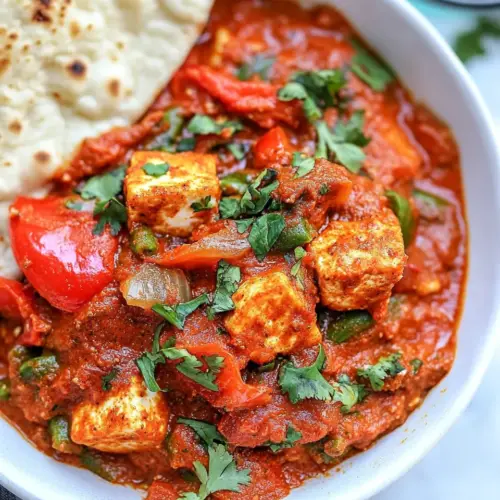
Paneer Tikka Masala
Paneer Tikka Masala is a creamy, aromatic Indian classic featuring golden cubed paneer simmered in a spiced tomato yogurt sauce. This easy weeknight dinner offers tender vegetables, pops of sweet peas, and warm garam masala notes that make it both comforting and impressive. It reheats beautifully, making it a smart choice for meal prep or feeding a hungry crowd.
Equipment
- Oven
- Baking Sheet
- Large Skillet
Ingredients
- 12 ounces paneer cut into 3/4-inch cubes Provide soft, milky cubes that absorb marinades and retain shape when cooked, offering a rich, creamy texture to the dish; sear or roast to develop golden edges while keeping the interior tender.
- 1 tablespoon minced fresh ginger Add bright, zesty warmth and a citrusy bite that lifts savory flavors; finely mince to distribute pungent freshness throughout marinades and sauces without overpowering other spices.
- 2 teaspoons minced garlic about 1 large clove Contribute a sharp, aromatic pungency that deepens savory notes and complements ginger; mince finely to blend seamlessly into marinades and cooked sauces for balanced heat.
- 1 teaspoon ground coriander Impart a warm, citrusy herbal note that grounds the curry with floral, slightly sweet undertones; use measured amounts to enhance complexity without creating bitterness.
- 1 teaspoon garam masala Introduce a layered blend of warming spices that adds depth, aromatic warmth, and a touch of sweetness; sprinkle into marinades and sauces to build authentic North Indian flavor.
- 1 teaspoon ground cumin Provide earthy, slightly smoky warmth that supports other spices and enhances savory richness; toast lightly or add during cooking to release its aromatic oils.
- 3/4 teaspoon kosher salt Give essential seasoning to balance flavors and enhance all other ingredients; measure precisely to avoid over-salting and distribute evenly through the marinade or sauce.
- 5 tablespoons 2% plain Greek yogurt Offer tangy creaminess that tenderizes paneer and adds a mellow, slightly tart background; whisk into the marinade to help coat cubes and promote flavor penetration.
- 2 tablespoons coconut oil or canola oil Supply a neutral, high-heat cooking fat that helps brown vegetables and paneer while carrying aromatic spices; choose oil with a suitable smoke point for searing and sautéing.
- 1 large red bell pepper cored and thinly sliced Contribute sweet, slightly smoky crunch and vibrant color when thinly sliced and cooked until tender-crisp; sauté or roast to release natural sugars that complement the curry.
- 1/2 medium head cauliflower cut into florets Provide a hearty, slightly nutty texture that soaks up sauce and adds bulk; cut into small florets for even cooking and to create a satisfying contrast to paneer.
- 1/2 medium yellow onion very finely chopped Add a subtle sweet-and-sharp base flavor when finely chopped to integrate smoothly into the sauce; sweat gently to build a mellow, caramelized backdrop for spices.
- 1 tablespoon fresh ginger minced Deliver fresh, sharp zing that brightens the sauce and complements garlic and spices; mince finely and add during cooking for aromatic lift and depth.
- 1 tablespoon minced garlic about 3 garlic cloves Bring robust pungency and savory depth that melds with ginger to form the flavor foundation; mince and sauté to mellow harshness and release savory oils.
- 1/2 teaspoon kosher salt Provide background seasoning to balance flavors and prevent blandness; add incrementally while tasting to achieve the desired savory level.
- 1/2 teaspoon ground black pepper Contribute a warm, pungent bite that enhances overall seasoning and adds a peppery lift; grind or measure carefully to avoid overpowering the curry.
- 1 tablespoon tomato paste Offer concentrated umami and tomato sweetness that deepens color and thickens the sauce; cook briefly to caramelize and mellow its acidity.
- 1 1/2 teaspoons garam masala Add sweet, aromatic complexity and traditional Indian warmth that reinforces garam masala already present; sprinkle during cooking to bloom its oils and fragrance.
- 1 1/2 teaspoons turmeric Provide bright, earthy color and mild bitterness that complements warm spices and enriches the sauce visually and flavor-wise; use in measured amounts for balance.
- 1/8 teaspoon cayenne pepper Introduce sharp heat that elevates the spice profile and adds a lingering kick; use sparingly and adjust to taste for controlled spiciness.
- 1 can crushed tomatoes (28 ounces) Give rich tomato body and acidity that forms the savory base of the sauce and simmers down into a thick, flavorful gravy; stir and simmer to meld flavors and reduce excess liquid.
- 1 package frozen peas (10 ounces) Supply a pop of sweet, tender texture and subtle vegetal flavor that refreshes the sauce and adds color contrast; fold in near the end to preserve texture and brightness.
- 1/2 cup 2% plain Greek yogurt Add creamy tang and cooling richness that smooths and slightly thickens the curry while balancing spices; whisk in off-heat to prevent curdling and maintain a silky texture.
- 1/4 cup fresh cilantro roughly chopped Provide herbaceous brightness and a fresh finish that cuts through richness and adds aromatic green notes; chop roughly and sprinkle over the finished dish for garnish.
- For serving: Homemade Naan or prepared brown rice Serve as a starchy or bready accompaniment to soak up sauce and complete the meal; warm or toast before serving to enhance texture and flavor.
Instructions
- Place the paneer in a bowl and toss with the ginger, garlic, coriander, garam masala, cumin, and salt.: As you mix these aromatics with the paneer , inhale the immediate lift of warm spices and sharp ginger. The texture of the paneer will feel cool and slightly springy, and the spices will begin to cling to the surface. This early contact helps the flavors penetrate the outer layer. One common mistake is under tossing, leaving some pieces unevenly coated, so be thorough and use a large bowl to get every cube well covered.
- Add the 5 tablespoons of yogurt and stir until the paneer pieces are evenly coated. Let marinate at room temperature for 20 minutes or refrigerate and marinate overnight. Preheat the oven to 400°F.: Once the yogurt meets the spices, the mixture becomes creamy and glossy. The marinade should cling to the paneer like a light dressing, signaling that it will brown and caramelize nicely. Marinating at room temperature allows flavors to bloom quickly, while an overnight chill deepens the profile. Avoid leaving it out too long in warm conditions to prevent any off flavors. Preheating the oven ensures an immediate sizzle when the cubes go in.
- Line a large baking sheet with aluminum foil and coat with nonstick spray. Arrange the paneer cubes on top in an even layer, discarding any excess marinade.: Setting the paneer cubes spaced evenly gives hot air access around each piece, helping edges turn lightly golden. The foil makes cleanup simple and the nonstick spray prevents sticking. If the cubes crowd, they steam instead of browning, so give them room. Removing excess marinade prevents charring or soggy bottoms, which can alter the desired texture.
- Bake for 12 to 15 minutes, until the paneer is lightly golden at the edges. Remove from the oven and set aside.: During baking you will smell the spices toasting, and visually you want subtle golden edges rather than deep brown. That gentle color signals the exterior is set while the interior remains tender. Pulling them out too early means insufficient browning, while overbaking will make the pieces dry and rubbery. Letting them rest briefly off heat preserves juiciness while you prepare the masala.
- While the paneer bakes, prepare the masala. Heat the coconut oil over medium-low in a large, sturdy skillet. Once hot, add the bell pepper, cauliflower, onion, ginger, garlic, salt, and pepper. Cook, stirring occasionally, for 1 minute, then increase the heat to medium and continue cooking until the vegetables are tender and the onion is translucent; about 12 to 15 minutes. Do not let the onion brown—if it starts to turn brown, reduce the heat and continue cooking until soft.: The oil should shimmer but not smoke, releasing a soft sizzle when the vegetables hit the pan. Initially you will get a bright, fresh aroma from the peppers and cauliflower, then as the onion softens the base will sweeten. The sound will shift from a sharp sizzle to a gentler simmer, and the vegetables will look glossy and slightly reduced. Browning the onion will push the flavor into caramel territory, changing the intended profile, so lower the heat if that happens. A typical slip is rushing to high heat which can char the outside while leaving raw centers.
- Add the tomato paste, garam masala, turmeric, and cayenne. Cook and stir constantly for 30 seconds, until very fragrant.: When the concentrated tomato paste hits hot fat and spices, it transforms, releasing a deep, savory perfume. Stirring constantly prevents sticking and allows the spices to bloom evenly. You should feel warmth from the spices and smell a pronounced, toasted fragrance. Overcooking here can make the mixture bitter, so keep the interval short and attentive, using a wooden spoon to scrape any fond and incorporate those flavor bits.
- Add crushed tomatoes and cook, stirring occasionally, until hot, about 2 minutes.: The skillet will fill with a bright tomato scent and the sauce will begin to thin, then thicken slightly as it heats. Visually, you want a uniform, glossy red base with tiny bubbles around the edges. This quick heating helps the flavors marry before the paneer and peas join. A common oversight is not deglazing or stirring enough, which can leave sticky bits that scorch, so keep an eye and stir a few times during this brief step.
- Add the paneer and peas, and cook, stirring occasionally, until warmed through, about 2 minutes more.: Adding the warmed paneer and frozen peas brings a fresh pop of color and a cool contrast to the hot sauce that will rapidly equalize. You should hear a soft simmer and see the sauce cling to the paneer . The peas will plump and the paneer will absorb some sauce flavor. Avoid prolonged cooking here as the paneer can over softens and the peas can get mushy; a quick warm through preserves their textures.
- Remove from heat and let cool for 1 minute. Stir in the 1/2 cup yogurt. Taste and add additional salt and pepper as desired. Sprinkle with cilantro and serve warm with naan bread or brown rice.: After removing from heat, stirring in the finishing yogurt creates a silky, mellow sauce, and the aroma will soften into a comforting, rounded bouquet. The texture becomes creamier immediately, and the bright cilantro at the end lifts the richness. Tasting here is crucial to balance salt and pepper. Avoid adding yogurt while the pan is still vigorously boiling, as sudden heat can make it split. Let it cool slightly to achieve a smooth finish.
Notes
- Boost smokiness by briefly charring the bell pepper under a broiler before slicing and adding to the masala, which adds a subtle grilled note that complements the spices.
- Swap oil choices by using coconut oil for a hint of tropical sweetness or a neutral oil like canola for a cleaner spice profile based on what you have on hand.
- Marinate longer when you have time, up to overnight, to deepen the spice penetration into the paneer, making each bite more flavorful without extra work the day of cooking.
- Make it ahead by preparing the masala a day early and storing it separate from the paneer, then combine and warm gently before serving for fresher textures.
- Control heat by adjusting the cayenne slightly up or down to suit your tolerance, tasting the sauce before adding the finishing yogurt so you can balance flavors.
- Increase vegetable content by adding more cauliflower florets or extra peas if you prefer a heartier, vegetable forward version while keeping proportions consistent.