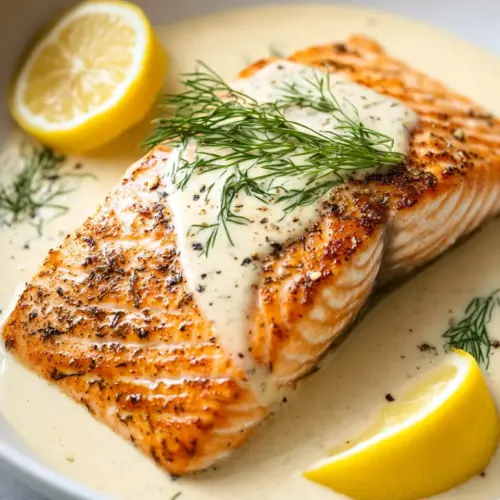
Pan Seared Salmon with Creamy Lemon Dill Sauce
Pan Seared Salmon with Creamy Lemon Dill Sauce is an easy weeknight dinner that pairs a crispy seared fillet with a creamy, tangy sauce. The combination of silky Neufchatel, bright lemon, and fresh dill creates a restaurant style dish that feels elegant yet approachable, perfect when you want a quick, flavorful meal that impresses.
Equipment
- Skillet or frying pan
- Spatula or tongs
- Whisk
- Measuring Cups and Spoons
Ingredients
- 1 pound salmon cut into 4 filets Season liberally to enhance natural flavors and create a savory crust on the salmon fillets during searing; use small pinches to balance the dish and adjust to taste after cooking.
- salt and pepper to taste Balance flavors to bring out brightness and contrast against the rich salmon; apply sparingly while cooking and finish with an extra dash if desired.
- 2 tablespoons avocado oil divided Heat gently to provide a high-smoke-point cooking fat for searing the salmon; divide between pan and sauce to prevent sticking and add smooth mouthfeel.
- 1 shallot thinly sliced Sauté briefly to release sweet, aromatic flavors that form the base of the sauce; slice thinly so it softens quickly and melds into the creamy lemon dill mixture.
- 1 garlic clove minced Mince finely to distribute a pungent, savory note throughout the sauce and pan; cook just until fragrant to avoid bitterness and preserve aromatic depth.
- 1/4 cup vegetable broth Deglaze the pan to lift browned bits from searing and build a light savory foundation for the sauce; use measured amount to control consistency and reduce slightly for concentration.
- 1 cup milk Warm gently to provide body and a creamy base for the sauce while avoiding curdling; choose a lower-fat milk and add slowly while whisking for smooth incorporation.
- 2 ounces Neufchatel Soften and whisk into the sauce to create a tangy, silky texture with milder creaminess than cream cheese; allow to melt fully for a cohesive, velvety finish.
- juice of half a lemon Squeeze fresh to brighten and balance the richness with citrus acidity; add gradually and taste to achieve the desired lemony lift without overpowering dill and capers.
- 1/4 cup fresh dill chopped Chop finely to distribute vibrant herbaceous freshness throughout the sauce; stir in near the end of cooking to preserve color and delicate flavor.
- 2 tablespoons capers Rinse or drain and stir in to introduce briny, tangy pops of flavor that complement the salmon and creamy sauce; add them toward the end to maintain their texture and saltiness.
Instructions
- Pat the salmon dry. Then season it with salt and pepper to taste. Heat the avocado oil in a pan over medium/high heat.: The surface should feel dry to the touch, which helps achieve a crisp, golden exterior when the fillets hit the hot pan. Listen for a lively sizzle as the fish makes contact, and smell the faint toasty note that indicates the Maillard reaction has begun. The why here is simple, moisture prevents browning, so drying the surface gives you a better crust. A common mistake is skipping this step, which leads to steaming instead of searing and a dull finish on the fillet.
- Place the salmon in the pan, skin side up. Sear for 4-5 minutes on the first side and 2-3 minutes on the second side. The salmon will reach an internal temperature of 145 F when it is done cooking.: Once dry, lightly dust both sides with salt and pepper , which heightens the natural flavors and creates a seasoned crust. You may notice the coarse grains sitting visibly on the flesh before cooking, and during searing the seasoning helps form an appealing color. Proper seasoning supports the contrast between the rich fish and the bright sauce. Avoid over salting early, as that can draw out moisture and make the flesh firmer than desired.
- After the salmon is done cooking, remove it from the pan and add the other tablespoon of avocado oil to the pan. Reduce the heat to medium and add the shallots and garlic. Sauté for 1-2 minutes, stirring frequently until the garlic is fragrant.: Heat your pan until a drop of water skitters across the surface, then add the avocado oil . The oil should shimmer but not smoke, creating a lubricated surface that encourages even browning. This step matters because the right heat ensures Maillard flavors without burning. If you underheat the pan, the fish will stick and not form a good crust, while overheating will burn the oil and impart bitter notes.
- Add the vegetable broth in the pan and sauté for 1-2 more minutes, stirring frequently. Then pour the milk into the pan, followed by the Neufchatel. Whisk the milk and Neufchatel until the sauce is nice and creamy. Bring to a simmer and let the sauce cook for 5 minutes or until it is thick enough to coat the back of a spoon.: Carefully lay each fillet away from you to avoid splatter, placing the skin side up so the flesh touches the pan first. You will hear a steady, assertive sizzle and see the edges begin to change color almost immediately. This technique promotes a controlled render of fat and helps the skin crisp when flipped later. A common error is crowding the pan, which lowers the temperature and prevents a proper sear.
- Squeeze the lemon juice into the sauce, and stir until combined. Add the salmon back into the pan, then garnish with the dill and capers. This is best served immediately.: During the first sear the surface should develop a deep golden brown and the flesh will begin to firm. Flip when the fish releases easily from the pan, and finish on the second side until the interior reaches an ideal flake. The internal temperature target of 145 F ensures safe doneness while keeping the fish moist. Overcooking will dry the fillet, so check early and err on the side of slightly under for the juiciest result.
- After the salmon is done cooking, remove it from the pan and add the other tablespoon of avocado oil to the pan: As you lift the fillets, you may notice browned bits clinging to the pan that are packed with flavor. Adding the reserved avocado oil helps revive the pan, creating a glossy medium for sautéing aromatics. This is important because those browned bits will dissolve into the sauce, amplifying taste. Avoid letting the pan sit too long, cold pan surfaces will not deglaze effectively and the sauce will lack depth.
- Reduce the heat to medium and add the shallots and garlic: The heat reduction prevents burning delicate aromatics like sliced shallot and minced garlic . As they hit the oil you'll smell a fragrant, sweet onion note and a toasty garlic aroma within moments. Softening them rather than charring builds a sweet savory base for the sauce. Burnt garlic turns bitter, so stir frequently and pull from heat if the color advances too quickly.
- Sauté for 1 to 2 minutes, stirring frequently until the garlic is fragrant: Movement prevents hot spots and ensures even softening. You should see the shallots become translucent and catch a touch of color at the edges while the garlic releases its warm perfume. These softened aromatics integrate into the sauce, contributing complexity. The mistake to avoid is letting them sit unmoved, which causes uneven browning and an unpleasant bitter edge.
- Add the vegetable broth in the pan and sauté for 1 to 2 more minutes, stirring frequently: Pouring vegetable broth lifts the browned fond from the pan, dissolving concentrated flavors into a savory liquid. As it reduces slightly you may notice the aroma deepen and the liquid glaze the pan. This step builds body and savory backbone for the final sauce. If you add too much broth, the sauce will become thin, so allow it to reduce gently until slightly concentrated.
- Then pour the milk into the pan, followed by the Neufchatel: Introducing milk and broken pieces of Neufchatel creates a creamy emulsion that softens the savory base. Warm liquid helps the cheese melt into a glossy, cohesive sauce rather than clumping. Whisking encourages a smooth texture and even distribution. A pitfall is adding cold dairy to a very hot pan which can break the emulsion, so temper gently and whisk consistently.
- Whisk the milk and Neufchatel until the sauce is nice and creamy: As you whisk, watch the mixture transform into a velvety sauce that coats the back of a spoon. You should perceive a gentle thickening and a rich mouthfeel, with the dairy homogenizing with the reduced broth. This technique yields a sauce that clings to the fish, enhancing each bite. Overwhisking vigorously at high heat can cause separation, so keep a steady pace and moderate heat.
- Bring to a simmer and let the sauce cook for 5 minutes or until it is thick enough to coat the back of a spoon: A low simmer concentrates flavor and achieves the right viscosity. Look for slow, soft bubbles and a sauce that lightly trails when you drag a spoon across the pan. This step matters because a properly reduced sauce will cling to the salmon and balance the textures. If you rush with high heat, the sauce may thin or scorch, losing its delicate creamy quality.
- Squeeze the lemon juice into the sauce, and stir until combined: Fresh lemon juice brightens the whole pan, cutting through richness and refreshing the palate. You should notice the aroma shift toward citrus and the flavor pop into a more lively profile. Acid also helps balance the cream, preventing it from feeling heavy. Adding too much at once can make the sauce sharp, so taste and adjust carefully.
- Add the salmon back into the pan, then garnish with the dill and capers: Nestling the fillets back into the sauce warms them gently and allows the flavors to meld. Scatter chopped dill and capers on top to add fresh herbal lift and briny contrast. The final plate should show glossy sauce, bright green flecks of herbs, and little salt bursts from the capers. Avoid letting the fish sit in sauce for too long, as it can soften the crust; serve promptly for best texture.
- This is best served immediately: Serve as soon as everything is hot and aromatic so the contrast between the crisped exterior and silky sauce is at its peak. The sensory payoff is immediate, with warm cream, bright acid, and herbaceous notes all in harmony. Reheating later will change the texture of the salmon and sauce, so enjoy it fresh for the best experience.
Notes
- Swap dairy texture Use a similar soft cheese if you do not have Neufchatel, but keep the quantity comparable to maintain creaminess and tang.
- Adjust brightness Add more or less lemon juice at the end to tune acidity, tasting as you go to avoid overpowering the sauce.
- Control salt Rinse capers briefly if you want milder brine, which lets the dill and lemon sing without excessive salt.
- Make it lighter Use lower fat milk to reduce richness, but watch texture, you may need to simmer a bit longer to thicken.
- Scale up easily Cook fillets in batches and keep them warm on a low oven rack while finishing the sauce so timing remains reliable for larger groups.