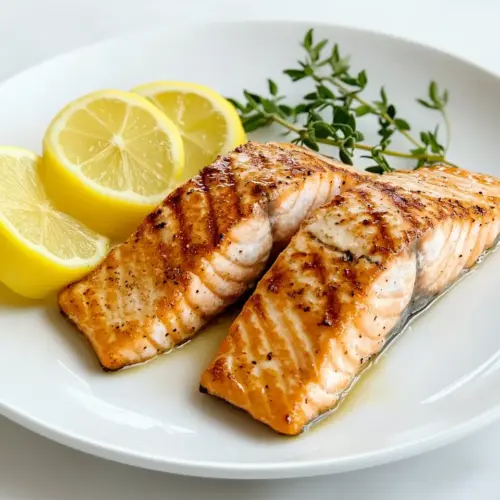
Pan Seared Salmon
Pan Seared Salmon delivers a crisp skin and tender, flaky interior with minimal fuss. This easy weeknight dinner is savory, bright with lemon, and perfect for quick family meals or simple entertaining. The straightforward technique yields restaurant style results that make it worth trying tonight.
Equipment
- Large Skillet
- Spatula
- Paper towels
Ingredients
- 4 salmon fillets 6 ounces each, skin on Season evenly to enhance the salmon's natural flavor and help draw out moisture for better browning; apply just before cooking to avoid curing the fish. Promote a balanced savory profile that helps the seared crust taste complete while keeping the interior tender.
- 1/2 teaspoon kosher salt Enhance savory depth and provide subtle contrast that accentuates the fish's richness; sprinkle sparingly to avoid overpowering delicate flavors. Work with kosher salt to create a simple, classic seasoning that supports the seared exterior.
- 1/4 teaspoon black pepper Coat the pan to prevent sticking and enable efficient heat transfer for a crisp, golden-brown sear; heat until shimmering before adding fillets to maximize crust development. Contribute a faint fruity note and help carry the pan flavors across the fish surface.
- 1 tablespoon olive oil Offer bright acidity when squeezed to cut through the salmon's richness and lift the overall flavor profile; serve wedges so diners can add to taste. Provide aromatic citrus oils from the peel that complement the seared, savory notes of the fish.
- Lemon wedges for serving Hold the salmon together while cooking and protect the flesh during searing by keeping the skin side intact; cut into portions ensure even cooking and easier serving. Allow the skin to crisp up for texture contrast while the flesh remains moist and flaky.
Instructions
- Let the salmon come to room temperature for about 15 minutes. Pat the salmon fillets dry with paper towels and season generously with salt and pepper.: As the fillets warm slightly the interior cooks more evenly, which helps prevent an overcooked outer layer and raw center. You will notice the flesh lose some of its chill, and this small change shortens the cooking gap across the fillet. If you skip this, the outside may brown too quickly while the center stays underdone, which is the most common mistake at this step. The gentle warming also reduces excess moisture on the surface so the skin will crisp more readily.
- Heat the olive oil in a large skillet over medium-high heat until hot but not smoking.: Drying the surface is essential because moisture steam prevents browning. Press with paper towels until the skin and top are no longer damp, then feel the texture change from slick to tacky. The salt will begin to draw out a whisper of moisture, which helps create a concentrated flavor at the surface. A frequent error is under drying, which leads to a soft skin. Be thorough but gentle so you do not tear the skin.
- Place the salmon fillets in the skillet, skin side down. Cook without moving them for 4-6 minutes until they release easily from the pan. Flip the fillets over and cook for an additional 2-4 minutes, or until the salmon reaches your desired doneness.: The oil needs to be hot enough to sizzle the fish when it lands, but not so hot that it smokes and imparts bitterness. Look for a shimmer across the oil and a faint movement that ripples when you tilt the pan. If the oil smokes, remove the pan briefly from heat and let it cool a touch, because overheated oil can burn the seasoning and spoil the flavor. A common oversight is starting with a cool pan, which causes the fillet to stick and fail to form a crisp crust.
- Remove the salmon from the skillet and let it rest for 5 minutes. Serve with fresh lemon wedges.: When the fillets meet the hot surface you should hear an immediate, steady sizzle that tells you the Maillard reaction is underway. Press the fillets lightly with a spatula for the first few seconds so the skin makes full contact, which promotes even browning. Listen for a confident sizzle and watch the skin color change to a deep golden. People often move the fish too soon; if you yank at the fillet before it releases, you risk tearing the skin and losing that beautiful crust.
- Cook without moving them for 4 to 6 minutes until they release easily from the pan: As the fillet cooks you will see the cooked portion creep up the side from the bottom, turning from translucent to more opaque. That visual cue tells you when the underside has set and the skin will release without sticking. Resist the urge to lift or flip before this change, because premature movement is the most frequent reason the skin sticks. If the exterior is browning unevenly, gently adjust the pan position or lower the heat to avoid burning while still allowing the interior to finish cooking.
- Flip the fillets over and cook for an additional 2 to 4 minutes, or until the salmon reaches your desired doneness: After flipping, pay close attention to the color and feel. You want the center to be slightly translucent if you prefer medium, or fully opaque if you like well done. The surface should still retain a bit of sheen. Use a fork to check for gentle flaking at the thickest point, which signals doneness. Overcooking will yield a dry texture, which is the most common mistake here, so aim for the targeted firmness and remove the fillets a touch early because they will continue to cook while resting.
- Remove the salmon from the skillet and let it rest for 5 minutes: Resting lets the juices redistribute, producing a more tender bite and preventing the center from drying out. You will notice the fish settle and the residual heat will carry it to final doneness. If you slice immediately, the juices will run out and the fillet may seem drier. A typical error is skipping rest to rush to the table, which reduces juiciness and richness.
- Serve with fresh lemon wedges: The bright aroma of lemon cut through the savory richness and brightens the palate, making each bite feel lighter. Squeeze just before eating for the best citrus impact. Avoid pouring too much acid over the fish in advance, which can mask the delicate flavors and make the flesh firmer.
Notes
- Add fresh herbs Try finishing the salmon with a scatter of chopped herbs like parsley or dill for a fresh, green pop. Sprinkle them after resting so they remain vibrant and aromatic.
- Use citrus zest Grate a little lemon zest over the fillet before serving to intensify the citrus note without adding extra acidity that could firm the flesh.
- Experiment with pepper Swap regular black pepper for a coarse cracked pepper blend to introduce extra crunch and a more pronounced spice character on the crust.
- Finish with a compound butter If you want richness, top the warm fillet with a small pat of herb butter right after resting so it melts gently and creates a silky glaze.
- Try a gentle glaze Brush the fillet briefly with a light glaze of olive oil and lemon just after searing for a subtle sheen and flavor boost without overpowering the fish.