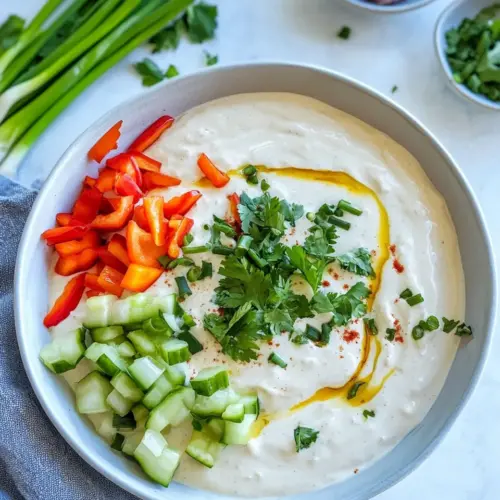
Paleo Sour Cream Onion Dip
Paleo Sour Cream Onion Dip is a creamy, tangy, and dairy free dip made from soaked cashews and steamed cauliflower with bright lemon and savory nutritional yeast. This easy, silky dip works as a scoopable party favorite or a pourable queso style topping, perfect for an easy weeknight snack or entertaining. Make it for its texture, bright flavor, and simple pantry ingredients.
Equipment
- Bowl
- Steamer
- Blender or food processor
Ingredients
- 2 cups raw cashews soaked overnight Soaked to soften and blend into a creamy, dairy-free base; provides body, richness, and a neutral nutty flavor when pureed smooth after overnight soaking.
- 1 heaping cup cauliflower florets steamed Steamed until tender to add subtle vegetal sweetness and mild texture, helping create a thicker, savory backbone that mimics traditional sour cream mouthfeel when blended.
- 1/3 cup lemon juice Acidified to brighten flavors and emulate tangy sour cream; balances richness while enhancing overall freshness and acting as a natural preservative in the dip.
- 2/3 to 1 cup unsweetened cashew milk see note Adjusted to achieve desired consistency; unsweetened cashew milk thins the mixture while contributing a smooth, neutral creaminess without adding sugar.
- 2 cloves garlic Minced to infuse sharp, aromatic depth and savory bite; garlic elevates overall flavor with pungent warmth that complements the creamy base.
- 1 stalk green onion Sliced finely to introduce a fresh, oniony crispness and mild green flavor; also used as a garnish to add color contrast and subtle crunch.
- 3 tablespoons nutritional yeast Sprinkled to contribute a cheesy, umami undertone and depth; nutritional yeast enhances savory complexity and rounds out the dairy-free tang.
- 1 teaspoon ground cumin Ground to add warm, earthy notes and subtle smokiness; cumin supports the savory profile and harmonizes with other spices without overpowering.
- 1 teaspoon ea salt Measured to season uniformly and enhance all flavors; salt balances acidity and richness while bringing out the individual components of the dip.
Instructions
- Place the raw cashews in a bowl and cover them with 2 inches of water. Leave on the counter to soak overnight. Strain and pat dry.: Close your eyes and notice how the raw cashews plump as they absorb water, becoming noticeably softer and yielding a tender center that blends to velvet. This soaking step is essential to avoid a gritty texture, because unsoaked nuts will resist pureeing and leave tiny grainy bits. A common mistake is shortening the soak time which results in a coarse mouthfeel. After soaking, drain thoroughly and pat with a towel to remove excess water, because excess liquid will thin the final dip unpredictably. The scent is subtly nutty and mild at this point, and that neutral base will carry the other flavors.
- Steam the cauliflower for 5 to 8 minutes, until tender when poked with a fork.: As the cauliflower steams, a gentle vegetal aroma rises and the florets soften to the point where a fork slides through with little resistance. Proper tenderness matters because undercooked florets will leave fibrous bits when pureed, while over steaming can add too much water and a mushy taste. Use a timer and test the florets by piercing the thickest part; it should yield without collapsing. One pitfall is steaming unevenly, so spread the florets in a single layer and rotate the basket if needed. The visual cue is a brighter, slightly translucent look compared to raw, and the sound is minimal steam hiss rather than violent bubbling.
- Add all ingredients for the dip to a blender or food processor. Start with 3/4 cup cashew milk and use up to 1 cup if necessary. Note: adjusting the amount of nut milk determines the thickness of the queso. For a very thick queso, use 1/2 cup nut milk.: adjusting the amount of nut milk determines the thickness of the queso. For a very thick queso, use 1/2 cup nut milk : When you add the ingredients into the container, the aroma shifts as citrus and aromatics meet the nut base, creating a lively scent profile. Starting with around 3/4 cup of unsweetened cashew milk helps you control the texture, preventing the mixture from becoming too thin too quickly. A powerful blender will homogenize the mix faster, but patience matters with food processors which need pulsing and scraping. Avoid the mistake of dumping the full cup immediately, because you can always thin but you cannot thicken without more blended cashews or cauliflower. The visual cue during blending is a cloud of pale, creamy emulsion forming around the blade.
- Blend until completely smooth and no clumps are visible.: As the blender runs, you should see the mixture transform into a glossy, uniform cream. The sound will change from loud chopping to a lower, steady hum as the solids finish breaking down. This step matters for mouthfeel; a fully smooth dip feels luxurious and cohesive on the palate. A common troubleshooting tip is to stop occasionally, scrape down the sides, and give it another burst to ensure everything incorporates. If you detect tiny bits, keep blending rather than assuming it's done. The finished texture should hold its shape slightly when spooned, with a sheen that indicates proper emulsification.
- Taste dip for flavor add additional green onion and/or sea salt to taste.: The first spoonful reveals the balance of tang, savory, and aromatic notes. Start small when adjusting, because a little extra salt or more chopped green onion can quickly shift the profile. This tasting step is where you personalize the dip to your preference, deciding whether you want a brighter lemon bite or an earthier finish from the nutritional yeast . One mistake is over seasoning at once, which is hard to reverse; instead add increments, stir, and taste. The final sensory check should show a lively acidity from the lemon juice , rounded creaminess from the raw cashews , and a fresh onion pop from the green onion .
Notes
- Soaking matters: Always soak the raw cashews overnight. Properly hydrated cashews blend into a silkier base and reduce blending time, preventing overheating and separation.
- Control the consistency: Begin with 2 thirds to 3 quarters cup of unsweetened cashew milk and add more only if needed. This lets you choose between a thick dip and a pourable queso without sacrificing texture.
- Steam carefully: Steam the cauliflower just until fork tender. Over steaming introduces excess moisture, while under steaming leaves tiny fibrous bits that affect smoothness.
- Blend in stages: Pulse first to break down solids, then blend on high until glossy. Stopping to scrape the sides ensures everything incorporates and prevents uneven lumps.
- Adjust acidity last: Add extra lemon juice sparingly when you taste the finished dip. Acid brightens the flavors but can overwhelm if added too early.
- Use nutritional yeast judiciously: Three tablespoons adds savory depth without making the dip taste cheesy in a fake way; increase slightly if you want a stronger umami note.