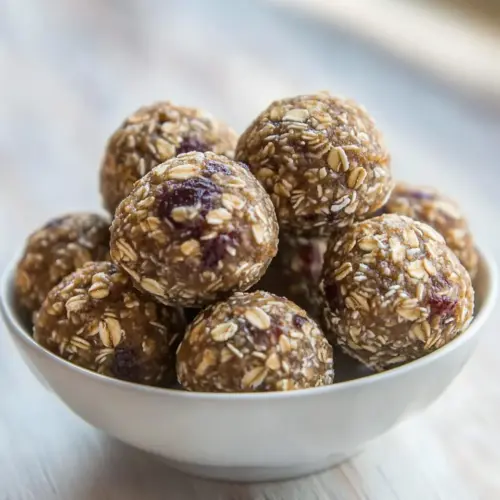
Paleo Oatmeal Cookie Energy Bites
Paleo Oatmeal Cookie Energy Bites are chewy, warmly spiced, and naturally sweet, delivering cookie like flavor without grains. These easy no bake bites blend crunchy walnuts, sticky medjool dates, and aromatic cinnamon for a portable, nourishing snack perfect for busy mornings or an easy weeknight pick me up.
Equipment
- Food Processor
- Rubber spatula
- Sealable Container
Ingredients
- 2 cups walnuts Provide a crunchy, buttery base and healthy fats while contributing a rich, slightly sweet nuttiness that binds when processed; can be pulsed to form the textured foundation for the bites and supports satiety with protein and omega-3s.
- 1/2 cup pumpkin seeds Contribute a tender crunch and boost of magnesium and zinc, helping to balance texture and add nutritional density; can be lightly toasted for deeper flavor without overwhelming the mixture.
- 1/2 cup unsweetened shredded coconut Add chewy texture and subtle natural sweetness while lending a tropical, toasty flavor; helps absorb moisture and contributes to the overall mouthfeel of the energy bites.
- 1/3 cup coconut butter Supply creamy, rich fat and act as a binder to help the mixture stick together, providing a smooth, cohesive texture; yields subtle coconut flavor and helps refrigerate into firm bites.
- 3 tablespoons unsweetened almond milk Loosen the mixture slightly and provide moisture to create a pliable consistency, while keeping the recipe dairy-free and light; small amounts prevent dryness and help ingredients meld.
- 5 large medjool dates, pitted Offer concentrated natural sweetness and a sticky texture that binds the mixture together, while contributing caramel-like flavor notes and chewy body to the bites.
- 1/3 cup raisins Provide extra chewiness and natural sweetness with fruit-forward flavor, helping to bind and add bursts of sugary contrast; also increases the fiber content and shelf stability.
- 1.5 teaspoons ground cinnamon Lend warm, aromatic spice and depth, complementing the sweet flavors and enhancing perceived sweetness without added sugar; a small amount elevates overall flavor complexity.
- 2 teaspoons pure vanilla extract Impart aromatic vanilla richness and enhance other flavors, rounding out sweetness and adding a familiar dessert note; a little extract amplifies the overall flavor profile.
- 1/8 teaspoons ea salt Season subtly to enhance all flavors and balance sweetness; a pinch helps brighten and round the taste without being detectable as salt.
Instructions
- Add all ingredients for the energy bites to a food processor and process until a thick, sticky dough forms. You will need to stop the food processor multiple times to scrape the sides with a rubber spatula and re-start. Note: if dough continues to stay crumbly, add 1 to 2 additional tablespoons almond milk, until dough forms.: The moment you start processing, you will notice the kitchen filling with a warm, cinnamon sweet aroma and a nutty undertone from the walnuts . The sound will change from rapid chopping to a steady whir as the dates and coconut butter begin to bind, and you will see the mixture clump together on the sides. This aroma is a good sign that the sugars in the medjool dates are breaking down and coating the nuts, creating the classic sticky texture. Work in short pulses to avoid overheating the motor or turning the nuts oily, and stop to scrape down the bowl regularly so nothing escapes uniform processing. A common mistake is overprocessing into a paste; stop when it is thick and slightly coarse rather than completely smooth. If the mixture feels too dry and still crumbly, it means the dates were not fully incorporated or they are not soft enough, so add a teaspoon of almond milk at a time to coax the dough to come together.
- Transfer the mixture to a sealable container and refrigerate at least 2 hours. Form balls and store in a zip lock bag or air-tight container in the refrigerator or freezer.: When you pause and scrape, you will reveal pockets of bigger pieces that need another chop, which helps maintain a consistent texture. Using a rubber spatula prevents metal scrapers from damaging the processor bowl, and scraping ensures all ingredients get evenly distributed. Expect the motion to be intermittent; this is normal and actually improves the final chew because it prevents localized overprocessing. Avoid the temptation to run the processor continuously, which can warm the fats and create an oily result. If you notice oil pooling, stop and refrigerate the bowl for ten minutes before continuing, because cooled fats will recombine more attractively.
- Note: if dough continues to stay crumbly, add 1 to 2 additional tablespoons almond milk, until dough forms : Crumbliness is usually just a sign that the mixture needs more moisture to activate the binding role of the dates and coconut butter . When you add a tablespoon of almond milk , the mixture will go from dusty to tacky, and you should feel it start to hold together when pinched. Add the milk conservatively, because too much will make the dough overly soft and sticky, which makes rolling messy. A troubleshooting tip is to chill the bowl briefly if you end up overhydrating, it firms up the fats and makes rolling manageable again.
- Transfer the mixture to a sealable container and refrigerate at least 2 hours: Chilling is where magic happens, because cooling firms the coconut butter and allows the flavors to meld. You will notice the mass set from pliable to sliceable, and the scent becomes more integrated, less raw. Two hours is the minimum for easy rolling, though overnight is fine if you want ready to grab bites the next day. A common mistake is skipping chilling and trying to roll immediately, which leads to misshapen, sticky balls. If pressed for time, pop the refrigerated mixture into the freezer for fifteen to twenty minutes, watching closely so it does not freeze solid.
- Form balls and store in a zip lock bag or air-tight container in the refrigerator or freezer: As you roll, the surface warms slightly from your hands, releasing nutty oils and enhancing aroma. Aim for consistent sizes so they thaw and eat uniformly. Rolling between your palms produces a smooth exterior while maintaining the slightly textured interior that makes each bite interesting. For best texture, store in the fridge for up to two weeks, or freeze for up to three months in a labeled bag. One typical error is stacking fresh, warm bites together; let them firm completely before packing so they do not stick into one big clump.
Notes
- Use soft dates for best binding, because medjool dates that are plump and pliable integrate more easily and reduce the need for extra liquid.
- Pulse don’t puree, as gentle pulses create a slightly coarse texture that mimics oatmeal cookies, while continuous processing risks an oily paste.
- Measure by feel, if the dough is slightly tacky and holds when pressed it is ready for chilling; if it crumbles, add almond milk sparingly.
- Chill before rolling, firm dough shapes more cleanly and yields tidy, uniform bites that are easier to store.
- Freeze for longer storage, pack in a labeled bag and remove a few hours before you want to eat, or thaw in the fridge overnight.