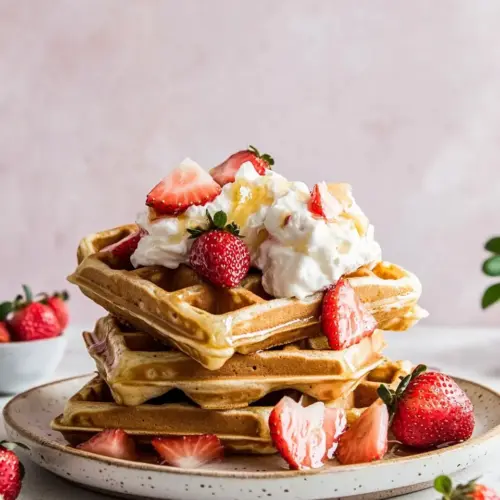
Overnight Waffles with Whipped Meyer Lemon Cream and Strawberries
Overnight Waffles with Whipped Meyer Lemon Cream and Strawberries features a creamy lemon whipped topping and tender, yeasted waffles with crisp edges, perfect for an easy weekend brunch. The combination of soft mascarpone or cream cheese, bright Meyer lemon, and fresh strawberries creates a balanced, irresistible plate that is elegant yet simple to prepare, making it worth making for guests.
Equipment
- Mixing Bowl
- Electric Mixer
- Waffle Iron
- Whisk
Ingredients
- 2 cups warm whole milk Warm and gently heated to activate yeast and incorporate fats; provides tender moisture and helps dissolve sugar and salt for even fermentation and batter consistency.
- 2 teaspoons instant yeast Instantly leavening and activated quickly when mixed into warm liquid; introduces airiness and rise to the waffle batter during the overnight fermentation.
- 1/2 teaspoon kosher salt Kosher-level salting that enhances overall flavor balance, strengthens gluten structure slightly, and controls yeast activity to prevent over-fermentation.
- 1 tablespoon honey Naturally sweet and fermentable liquid that feeds yeast, adds subtle floral flavor, and contributes to browning and caramelization during cooking.
- 4 tablespoons butter, melted Melted to distribute evenly through the batter, providing richness, tender crumb, and helping crispen exterior when cooked on a hot waffle iron.
- 1 teaspoon vanilla extract Fragrant flavoring added for aromatic depth; rounds out sweetness and complements citrus and berries in the finished dish.
- 2 cups all-purpose flour All-purpose foundation that builds the batter structure through gluten formation and provides starches for tenderness and browning.
- 2 eggs Binding protein that enriches the batter, contributes to structure and leavening, and adds moisture and richness for a tender waffle.
- 1/4 teaspoon baking soda Small leavening boost that reacts with acidic components to create lift and tenderize the crumb; balances the yeast action for lightness.
- fresh strawberries, sliced Fresh fruit sliced for bright acidity, juicy texture, and fresh contrast to the rich waffles and creamy topping; adds natural sweetness and color.
- maple syrup or powder sugar, for serving Sweet finishing option for serving that adds sticky sweetness or light powdered dusting to enhance presentation and flavor balance.
- 4 ounces mascarpone or cream cheese Creamy rich base for the whipped topping, lending tang and silkiness; contributes to stability and a luxurious mouthfeel when combined and whipped.
- 1 tablespoon Meyer lemon juice + 1-2 teaspoons zest, to your taste Bright acidic juice and aromatic zest that cut through richness, add citrus fragrance, and balance sweetness in the whipped cream mixture.
- 1/3 cup heavy whipping cream Heavy cream for whipping and adding volume, lightness, and stable peaks; helps create an airy, creamy topping when combined with the cheese base.
- 1 -2 tablespoons honey Liquid sweetener added to taste for subtle sweetness and to stabilize the whipped cream; adjusts flavor to complement lemon and berries.
Instructions
- The night before serving: In a medium mixing bowl, combine the milk, instant yeast, salt, honey, butter, vanilla, and flour, and mix until combined. Cover and let sit overnight at room temperature. In the morning: Preheat your waffle iron. In a small bowl, whisk together the eggs and baking soda. Mix the eggs into the batter that has sat overnight.: The batter will develop a gentle yeasty aroma and slight bubbles as it ferments, a sign the dough is active and hydrated, creating tiny air pockets that yield a tender interior and crisp edges when cooked. You should be able to stir the batter easily and notice a slight rise or loosened texture by morning. The why here is that slow fermentation rounds flavor and improves texture without extra work the next day. A common mistake is using milk that is too hot which will kill the yeast and prevent the batter from maturing; aim for warm to the touch, not steaming. Also avoid overmixing after flour is added, which can lead to toughness rather than lightness. If the batter seems too thick in the morning, let it rest briefly or stir in a splash of warm milk to loosen it before adding eggs.
- Using an electric mixer, whip the cream cheese and lemon juice together until smooth. Add the cream and whip until soft peaks form. Add the honey and lemon zest. Whip once more until combined. Serve atop the waffles.: As the iron heats you will notice a faint scent of heated nonstick surface or a touch of butter if you brush the plates, which signals it is ready to crisp the batter quickly. Preheating ensures even browning so the exterior becomes golden and crisp while the interior remains soft and tender. The reason this step matters is that a cold iron will cause the batter to stick and cook unevenly, producing undercooked centers. A typical misstep is rushing this step and loading a not fully heated iron, which results in soggy waffles that fail to develop deep color. I recommend testing with a small scoop first, then adjusting temperature for perfect coloring.
- In a small bowl whisk together the eggs and baking soda: You will see the baking soda incorporate and start to foam slightly when mixed with the eggs, which indicates it is ready to react once combined with the batter and the lemon acid later in the cream. This reaction helps create extra lift and delicate texture in the final waffles. The sensory cue here is a light airy look to the whisked mixture, not a dense heavy liquid. One trap is failing to whisk the eggs fully, which leads to streaks and uneven rise in the batter. Take a minute to whisk until uniformly pale and slightly frothy.
- Mix the eggs into the batter that has sat overnight: After adding the eggs the batter should feel silkier, and you may notice more activity as the baking soda interacts with the residual acidity. The batter will smell slightly richer and look smoother, preparing it for immediate cooking. This technique is important because adding eggs right before cooking preserves their leavening and moisture, contributing to a tender crumb. A typical error is overworking the batter after adding eggs, which tightens the gluten and yields denser waffles, so fold gently until combined. If the batter seems lumpy, let it sit a couple minutes and give a gentle stir to unify texture without beating.
- Using an electric mixer whip the cream cheese and lemon juice together until smooth Add the cream and whip until soft peaks form Add the honey and lemon zest Whip once more until combined Serve atop the waffles: As you whip the mascarpone or cream cheese with Meyer lemon juice, the mixture should become glossy and fragrant, releasing a bright citrus perfume that lifts the dairy richness. When you add the heavy whipping cream and whip to soft peaks, you will see the texture become airy and cloudlike, holding gentle peaks that fold easily over warm waffles. Adding honey and zest at the end preserves the aromatic oils and keeps the sweetness balanced. This step matters because the light whipped texture contrasts with crisp waffles and the lemon cuts through richness, offering a bright finish. One common mistake is overwhipping which can make the cream grainy or break the emulsion; stop when the peaks are soft and spreadable. If the cream separates slightly, fold gently and chill briefly before serving to firm it up. Serve the whipped lemon cream with sliced strawberries and a drizzle of maple syrup or dusting of powdered sugar for a visually appealing and balanced plate.
Notes
- Make ahead advantage Mix the batter the night before and let it ferment at room temperature so the next morning you only need to add eggs and cook.
- Meyer lemon intensity Increase zest for more fragrant citrus notes, but add it sparingly so the cream does not become bitter.
- Whipping technique Start with chilled heavy whipping cream and beat at medium speed to reach soft peaks that hold shape yet remain spreadable.
- Butter for crispiness Brush the waffle iron with a bit of melted butter or oil between batches to enhance browning and prevent sticking.
- Syrup or sugar finish Offer a side of maple syrup or a light dusting of powdered sugar so guests can choose their preferred sweetness level.