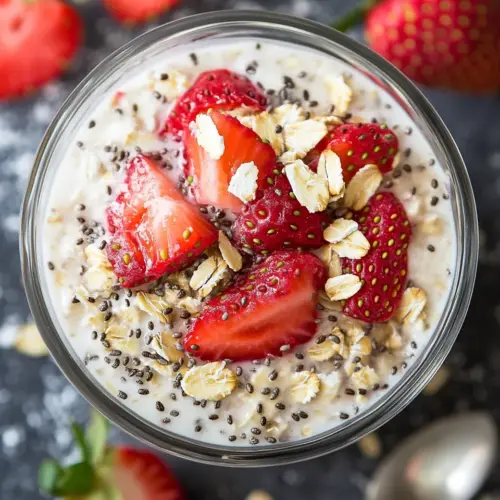
Overnight Strawberry Steel Cut Oats
Overnight Strawberry Steel Cut Oats is a creamy yet textural breakfast that pairs chewy steel cut oats with bright strawberries and warm vanilla. This easy make ahead bowl gives you comforting warmth with minimal morning work, perfect for a lazy weekend or an easy week starter. Try it for a nourishing reason to wake up happy.
Equipment
- Large sauce pan
- Small knife
- Blender or food processor
Ingredients
- 3 1/2 cup water Bring to a simmer and provide the primary liquid needed to soften steel cut oats overnight; water hydrates the grains and creates the porridge base. Maintain a neutral flavor that lets vanilla and strawberries shine while preventing the mixture from becoming too thick. Adjust quantity if a creamier or thinner texture is desired during soaking or reheating.
- 1 cup steel cut oats Soak to act as the hearty whole-grain base that absorbs liquid and develops a chewy, nutty texture overnight. Release natural fiber and slow-release carbohydrates that make the dish filling and sustain energy through the morning. Pair with liquid and flavorings so oats attain a tender but slightly toothsome consistency.
- 1 small vanilla bean Split and scrape to impart concentrated aromatic vanilla flavor throughout the oats without adding extra liquid. Add fragrant seeds from the bean into the soaking mixture and nest the pod in the pot for deeper infusion. Enhance overall aroma and sweetness while keeping the recipe free of artificial flavorings.
- 1 dash salt Season lightly to enhance the natural flavors of oats, strawberries, and vanilla; a dash of salt balances sweetness and amplifies taste. Dissolve into the soaking liquid so even a small amount distributes evenly. Prevent over-salting by using sparingly, especially with dairy or sweet toppings added later.
- 4 cups strawberries Slice or mash to contribute fresh, bright strawberry flavor and natural sweetness to the overnight oats; fruit also adds moisture and texture. Release juices that can lightly sweeten and tint the mixture, offering a pleasant contrast to the nutty oats. Consider macerating slightly if a softer fruit texture is preferred in the final dish.
- 1/4 cup milk Stir in to add a touch of creaminess and slight dairy richness that mellows the oats' texture without overpowering the fruit. Thin with more or less milk to adjust creaminess, and choose dairy or plant-based milk according to dietary preference. Use sparingly since the oats will absorb liquid overnight and thicken as they sit.
- 1 teaspoon chia seeds Sprinkle to provide helpful thickening and a boost of omega-3s, fiber, and mild nuttiness to the overnight oats. Create a gel-like texture as chia seeds absorb liquid, improving mouthfeel and binding loose juices from the fruit. Use measured amounts to avoid an overly gelled consistency while maximizing nutritional benefit.
Instructions
- Before you go to bed, put 3 1/2 cups filtered water in a large sauce pan and bring to a boil.: The steam rising from the pot should smell fresh and clean as the water hits a rolling boil, a lively sound like a steady hiss will tell you it is there. This vigorous heat primes the water to quickly soften the steel cut oats , allowing them to begin gelatinizing on the surface which leads to the creamy interior after resting. You want a true boil so the oats absorb evenly overnight, if the water only simmers the grains may remain undercooked. A common mistake is using a pot that is too small, which risks spilling as it boils; choose a large sauce pan to give room for foam.
- Prepare the vanilla bean by slitting the bean open along its length with the tip of a small knife. Pry the bean open to expose the seeds.: The first thing you will notice is the glossy interior as the pod parts, revealing tiny black seeds that look like perfume dust. Scraping out the seeds releases concentrated flavor that perfumes the cooking liquid, making the finished oats smell decadent. Prying the pod open helps the seeds disperse, so they infuse more evenly during the short boil and long rest. Avoid chopping the whole pod into tiny pieces in the pot, which makes retrieval messy; instead slit and scrape cleanly.
- Once the water has come to a boil, stir in the oats and the vanilla bean and boil for 1 minute. Turn off the heat, cover, and go to bed.: At this point the pot will make a steady, bubbling roar and the surface will shimmer. Stirring distributes the steel cut oats so none clump together and the vanilla bean seeds are evenly suspended. Boiling briefly gelatinizes the outer layer of the grains, creating a protective texture that softens overnight while avoiding mush. This short boil matters because it sets the structure; skipping it can yield a slimy or inconsistent texture. The typical error here is overboiling, which breaks down the oats too much, so stick close to the minute.
- In the morning, reheat the oats in the pan.: The immediate change is the kitchen quieting as the pot sits, and the trapped steam will continue gentle work on the grains. Covering keeps the heat and moisture contained, allowing the oats to finish absorbing liquid slowly and develop even tenderness. Leaving the lid off will dry the top and cool the pot too fast, producing uneven texture. A helpful tip is to set the covered pot on a heatproof surface away from drafts so it cools gradually.
- Hull and slice half the strawberries and puree the other half in a blender or food processor until smooth.: When you lift the lid you should see a glossy surface and a waft of warm vanilla that signals readiness. Reheating over low heat softens the center and loosens the texture, and you can listen for a gentle simmer to know it is warming through. Stirring as it warms will break up any surface gel and revive creaminess, which matters for mouthfeel. Be careful not to rush with high heat, which can scorch the bottom and create a burnt aroma.
- Layer the hot oatmeal with the strawberries and strawberry puree. Serve hot with a little milk, cream, coconut milk, or almond milk. Sprinkle on chia seeds or other garnish as you like.: The sliced berries will have a bright, fragrant perfume and a juicy snap, while the puree should be smooth and glossy, carrying concentrated strawberry sweetness. Combining puree with slices gives you both jammy sauce and fresh fruit texture in every spoonful. Avoid overblending into foam, which changes texture; pulse until smooth and thick. A mistake I see is using underripe berries which produce a thin, tart puree that will make the whole dish sourer than intended.
- Serves 2-4 depending on how hungry you are.: As you spoon the warm oats into bowls, you will notice steam rising and the aroma of vanilla and fruit mingling. Drizzle some of the puree so it folds into the grains, then tuck the slices on top for color and texture contrast. This layering keeps some bright pockets of fruit intact while distributing flavor through the bowl. If you mix everything uniformly you lose those lovely contrasts, so I recommend arranging rather than stirring at first.
- Serve hot with a little milk, cream, coconut milk, or almond milk: Adding a splash of milk yields a silky sheen and cools the surface to an immediately edible temperature. Watch how the milk pools and softens the oats visually, and decide how creamy you want the bowl to be. Those who prefer a lighter mouthfeel can skip it, but most people enjoy the luscious finish. Pour slowly so you can stop when you reach your preferred creaminess.
- Sprinkle on chia seeds or other garnish as you like: The tiny chia seeds add a delicate crunch and a slight gelatinous texture as they hydrate, which complements the chewy oats. You can sprinkle them sparingly to avoid an overly thickened surface. Overdoing garnishes can mask the simple beauty of the oats and strawberries, so keep them restrained.
- Serves 2 4 depending on how hungry you are: The yield can vary, so notice the portion sizes as you dish out the bowls, watching for the balance of grains to fruit. If people are particularly hungry, plan on smaller bowls or additional sides. A typical oversight is assuming exact uniform portions, when appetite and bowl size really change the serving count.
Notes
- Boost creaminess — Stir in a tablespoon of your preferred milk just before serving to create a silkier texture without diluting flavor.
- Make it tangier — Fold a small spoonful of unsweetened yogurt into the warm oats for a gentle tang that plays well with the strawberries.
- Increase texture — Toast a handful of nuts separately and sprinkle them on top for crunch contrast to the chewy steel cut oats.
- Sweeten naturally — If needed, add a drizzle of honey or maple right at the end, tasting as you go so the fruit remains the star.
- Vary the fruit — Swap some or all of the strawberries for seasonal berries to shift the flavor profile while keeping the same technique.
- Make ahead for travel — Pack the reheated oats and toppings separately, then assemble and pour the warm mixture over the fruit when you arrive.