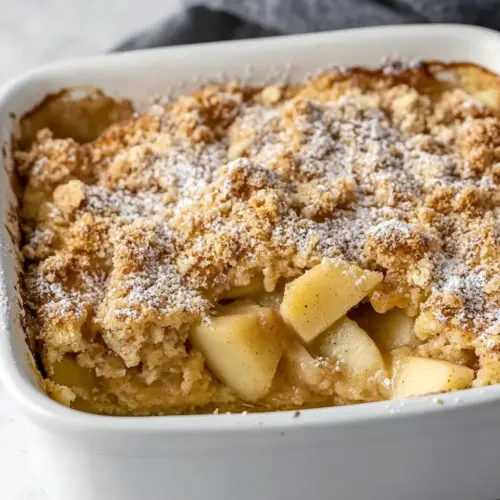
Overnight Apple Pie French Toast Casserole
Overnight Apple Pie French Toast Casserole delivers a creamy, comforting custard studded with spiced apple pie filling and a crispy oat crumble. This easy make ahead brunch recipe is perfect for holidays or lazy weekend mornings, offering warm cinnamon aroma and a buttery top. It’s an inviting crowd pleaser that makes mornings simple and memorable, a perfect reason to bake it for guests.
Equipment
- 9×13 baking dish
- Mixing Bowl
- Whisk
- Mixer
Ingredients
- 1 (16 ounce) loaf day-old french or sourdough bread Cubed and slightly stale to better absorb custard, adds structure and a chewy texture while providing a neutral base for apple and spice flavors in the casserole. Day-old french or sourdough bread soaks evenly without becoming too mushy, creating pockets that hold apple filling and streusel components. Choose a loaf with a sturdy crumb to maintain bite after baking and to contrast with the creamy egg-milk custard.
- 5 large eggs Beaten together to create a rich custard that binds the bread and apple filling, contributing moisture, structure, and a tender set when baked. Large eggs add protein for coagulation, which helps the casserole hold its shape while offering a silky mouthfeel. Use fresh eggs for best texture and consistent rise during baking.
- 1 1/3 cup (308 ml) milk Poured in to loosen the custard and provide creaminess, milk balances richness and ensures the mixture penetrates the bread for even custardy layers. The quantity given produces a custard that is neither too dry nor overly wet, promoting a soft interior and delicate bake. Select your preferred milk for subtle flavor adjustments and texture variations.
- 1 teaspoon vanilla extract Added to enhance and round out the custard with warm vanilla notes that elevate the apple and cinnamon elements throughout the casserole. Vanilla extract contributes aromatic sweetness without additional sugar, deepening the overall flavor profile of the dish. Use pure vanilla for the most pronounced, natural flavor.
- 1/4 cup (50 g) granulated sugar Sprinkled into the custard and streusel to provide sweetness and help balance tartness from the apple pie filling, granulated sugar also encourages gentle caramelization on exposed surfaces. The fine crystals dissolve into the liquid components, contributing to an even sweet base for the casserole. Adjust slightly if using a particularly sweet canned filling.
- 1 teaspoon cinnamon Stirred into the custard and streusel mix to impart warm, aromatic spice that complements the apple pie filling and creates a classic apple-pie flavor. Cinnamon enhances perceived sweetness and adds depth without overpowering other ingredients. Use ground cinnamon evenly to avoid concentrated pockets of spice.
- 1 (20-21 ounce) can apple pie filling Layered into the casserole for immediate apple flavor, texture, and sweetness without additional peeling or cooking, the canned apple pie filling supplies tender apple slices in a spiced syrup. Its sauce mingles with the custard while baking, creating pockets of concentrated fruitiness and moisture. Drain slightly if overriding filling consistency is a concern, but typically add as-is for best flavor.
- 1 cup (124 g) all purpose flour Combined with butter, oats, and brown sugar to form a crumbly streusel that adds crunchy texture and a toasty, bready counterpoint to the soft custard and apples. All purpose flour provides structure to the topping so it bakes into crisp clusters that hold together when serving. Measure accurately for consistent streusel results.
- 1/2 cup (100 g) packed brown sugar Mixed into the streusel to offer deep, molasses-like sweetness and moistness that helps bind the topping ingredients into cohesive clusters. Packed brown sugar contributes a rich caramel flavor and retains more moisture than granulated sugar, enhancing the streusel's chewiness. Press lightly when combining to achieve the desired crumble size.
- 1/2 cup (113 g) unsalted butter, softened Creamed with sugar and flour to create a rich, buttery streusel that browns and crisps atop the casserole, adding luscious flavor and mouthfeel. Unsalted butter allows control over overall saltiness while providing tenderness and effective browning during baking. Soften to room temperature for easy incorporation and even distribution.
- 1 cup (80 g) quick cooking oats Stirred into the streusel for hearty texture and nutty flavor, quick cooking oats lend chew and visual appeal while absorbing some butter and sugar for crisp clusters. Oats also add whole-grain character and balance the sweetness of the topping, making each bite more satisfying. Use the quick-cooking variety as specified for consistent tenderness after baking.
Instructions
- Spray a 9×13 baking dish with cooking spray. Slice french bread into bite-sized cubes. Place in the bottom of the pan.: When you press the oiled pan surface with your finger it should feel slick, not sticky, which helps the casserole release after baking. As you slice the bread , you should hear a firm, slightly crisp sound if the loaf is day old, and the cubes will hold their shape when layered. Visually ensure the pieces are similar size so they absorb custard evenly. A common mistake is leaving very large chunks, which can stay under soaked in the center. If you notice any very soft pieces, give them a light toast first to firm them up.
- Whisk eggs, milk, vanilla, granulated sugar, and cinnamon until blended. Pour over bread pieces in pan. Cover with plastic wrap and refrigerate for at least 6 hours or overnight.: As you whisk the mixture, smell the warming scent of cinnamon and sweet vanilla rising, and the custard should look smooth and glossy. When you pour it over the bread , watch the liquid sink between cubes, and gently press a few pieces to help them absorb. The refrigeration time lets the custard fully penetrate the cubes so the interior becomes creamy. If you rush to bake it right away, the center can remain dry. Avoid overfilling the pan with liquid, which leads to a soggy result.
- Preheat oven to 350°F.: You should feel a warm draft as the oven comes up to temperature, and the oven thermometer, if you have one, should read 350°F to ensure accurate baking. A stable oven temperature produces even browning on the crumble and helps the custard set without cracking. Preheating too briefly can mean longer bake times and uneven texture. If your oven runs hot, lower the temperature slightly to prevent the top from darkening too quickly.
- Remove french toast from the refrigerator. Evenly spread pie filling over the top.: As you take the pan from the fridge, you might notice a faint chill and the custard slightly settled around the cubes. Spoon the apple pie filling in neat dollops and smooth them into an even layer; the glossy apple syrup will glisten in the light. Distribute the filling to avoid clumps that can weigh down one area. A common issue is piling too much filling in one spot, which can make that section overly moist, so spread it carefully for balance.
- With a hand or a stand mixer, combine butter, flour, brown sugar, and oats until a crumble forms. It’ll take awhile, especially with a hand mixer. Sprinkle evenly over the top of the casserole.: As you mix the crumble, listen for the change from separate ingredients to cohesive clumps, and inhale the buttery, toasted sugar scent. The texture should be coarse and pebble like, not pastey. When you scatter it, the pieces should sit atop the apple pie filling , creating a blanket that browns attractively. If your butter is too warm, the crumble will clump into a greasy paste, so chill briefly if needed. Avoid overmixing, which can compress the oats and make the topping dense rather than crisp.
- Bake for 33-38 minutes until slightly golden and baked through. Serve warm with powdered sugar, syrup and/or whipped cream.: As the casserole bakes you will notice steam rising and a sweet, spiced aroma filling the kitchen, signaling the custard is setting and the crumble is browning. The edges should puff slightly and the topping become a warm, golden brown; a toothpick inserted into the center should come out mostly clean with a few moist crumbs. If the top is browning too quickly while the center seems undercooked, tent with foil to prevent overbrowning. Overbaking will dry the custard out, while underbaking leaves a runny interior, so aim for a gentle jiggle in the center when you remove it from the oven.
Notes
- Swap bread type Use day old french or sourdough bread as directed, but if you want a more rustic texture try a crusty country loaf for chewier bites.
- Adjust custard richness Increase the ratio of eggs to milk for a firmer, richer custard, or add a touch more milk for a softer, creamier center.
- Control sweetness Reduce the granulated sugar slightly if your apple pie filling is very sweet, this preserves balance between the apple layer and the custard.
- Mix up the topping Swap quick oats for rolled oats for chunkier crumble pieces, they will toast differently and give a heartier bite.
- Make ahead timing Assemble and refrigerate overnight as suggested, or prepare up to 24 hours in advance and bake the following morning for easy entertaining.