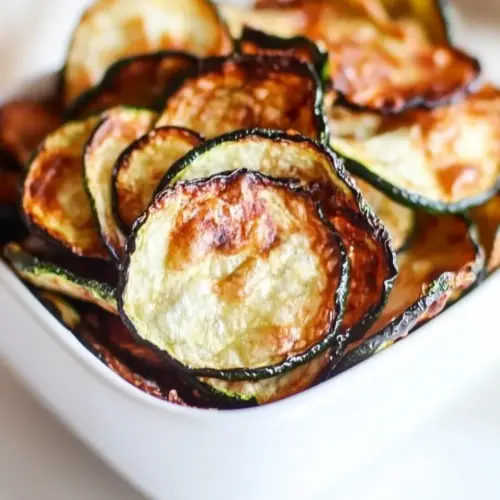
Oven Baked Zucchini Chips
Oven Baked Zucchini Chips are a crispy, savory snack made with thinly sliced zucchini tossed in olive oil and a simple spice blend. These light, crunchy chips are an easy summer appetizer or healthy snack, perfect for easy weeknight gatherings and party platters. Try them for a guilt free crunch that still feels indulgent and satisfying.
Equipment
- Baking Sheet
- Parchment Paper
- Mixing Bowl
- Mandolin or sharp knife
- Paper towels
Ingredients
- 3 medium zucchini Provide bulk and mild moisture to the dish while offering a tender, slightly crisp texture when baked; slice evenly to ensure uniform cooking and avoid sogginess. Contain delicate flavor that balances seasonings and contributes vitamins and fiber to the chips.
- 1 tbsp olive oil Coat slices lightly to encourage even browning and crispness; drizzle or brush and toss to distribute without saturating. Carry and help meld the spices onto the zucchini surface while adding a subtle fruity richness.
- 1 tsp salt Season slices to enhance natural flavors and help draw out moisture for better texture; sprinkle evenly before baking for consistent taste. Assist in balancing the overall seasoning profile so the chips are savory without being overwhelming.
- 1 tsp pepper Add mild heat and aromatic sharpness to heighten flavor contrast; grind and distribute evenly for a uniform peppery kick. Complement other spices and provide a clean finish that brightens the baked chips.
- 1 tsp paprika Impart warm, smoky depth and a subtle color to the chips; dust slices evenly to create an appealing appearance and flavor. Work with salt and pepper to produce a layered, well-rounded seasoning profile.
Instructions
- Preheat oven to 350 degrees and line two baking sheets with parchment paper.: As the oven warms, you should feel the kitchen slowly become dry and warm, a comforting sign the environment is right for crisping rather than steaming. The sound of the oven clicking and the subtle hum is reassuring and sets the tempo. This temperature is chosen to slowly remove moisture without burning the edges. A common mistake is skipping parchment, which can cause sticking and uneven browning, or using too high a temperature that chars the edges before the centers dry. Make sure racks are centered so air circulates evenly.
- Use a mandolin to thinly slice the zucchini into discs. (It's okay to use a knife, just make consistently thin slices). Hold the zucchini vertically (straight down) to make circular discs. Hold the zucchini at an angle to make elongated diagonal cuts. Or hold the zucchini horizontally to make long zucchini chips. As you cut the zucchini, transfer the slices to paper towel to absorb the moisture. Once done, layer another piece of paper towel on top of the zucchini and gently press down to dry the zucchini slices as much as possible.: When slicing, you may smell the fresh green scent of the squash, and you will notice the smooth, cool surface as the blade kisses the vegetable. Thin slices dry faster and become crispier, which is why consistent thickness matters. The mandolin produces uniform discs quickly, but if using a knife, steady pressure and a controlled motion lead to even slices. A frequent error is uneven thickness, which leaves some pieces limp while others burn. Always watch your fingers and consider a guard with the mandolin for safety.
- Transfer the zucchini slices to a bowl and coat them with olive oil. Arrange zucchini on parchment paper lined baking sheets, making sure they do not overlap. Mix together salt, pepper and paprika, and sprinkle the spice mixture over the zucchini slices.: Vertical positioning yields round shapes that bake evenly along the circumference. You'll see neat discs that brown from the outer rim inward, creating a pleasing golden ring. If you hold the zucchini at an angle or horizontally you change the chip shape to diagonal or long chips, which can affect crisp time because surface area changes. Avoid overcrowding your cutting board, which can make slices stick together and tear when separated.
- Bake the zucchini chips at 350 degrees for 10 minutes. Flip them and bake for another 10 minutes. The time to complete the zucchini chips may vary depending on your oven. If they aren't done after being flipped once, let them continue to cook, flipping them every 5 minutes until each side is crisp and lightly browned. Chips along the edge of the baking sheet may crisp earlier than those in the center. Remove chips as they finish.: Pressing the slices between towels produces a quiet, satisfying squeezing sound and a faint vegetal aroma as surface water is drawn out. Drying is vital because excess moisture causes steaming during baking, which prevents crisping. A typical misstep is skimping on this step, leaving slices too wet. Pat firmly but gently, and replace towels as they become damp to keep pulling moisture away effectively.
- Once the baked zucchini chips are done, transfer them to a paper towel lined plate to absorb any extra oil. Zucchini chips can be stored in an air-tight container for 3 days.: This extra pressing step helps remove trapped water from the center of each slice, and you can feel the towel gaining warmth and dampness as it works. The touch test is useful, you should notice slices that feel almost dry to the touch. Skipping this can cost you crispiness later, and applying too much pressure could bruise slices, causing them to become limp, so press evenly and patiently.
- Transfer the zucchini slices to a bowl and coat them with olive oil: In the bowl the slices become glossy as the olive oil lightly coats each surface, which helps the spices cling and encourages even browning. I toss gently, watching that the oil is distributed without pooling. The visual cue is a subtle sheen, not a slick puddle. Too much oil will make them soggy and slow the drying process, while too little will yield pale chips that lack flavor, so aim for a light, even coat.
- Arrange zucchini on parchment paper lined baking sheets, making sure they do not overlap: Placing the slices with space around them ensures hot air circulates and edges brown uniformly. You will hear a faint clink as they settle on the sheet and see a regular pattern of circles. Overlapping leads to steam pockets that prevent crisping, and crowding is a common error that produces uneven batches. Leave a little breathing room and rotate sheets between racks if your oven has hot spots.
- Mix together salt, pepper and paprika, and sprinkle the spice mixture over the zucchini slices: The aroma of paprika becomes noticeable as the spices hit warm oil, while salt and pepper balance the sweetness of the squash. Even sprinkling matters a lot, because clumps of salt will make specific bites too intense. A frequent pitfall is uneven seasoning, so shake the mixture from a small sieve or use your fingers to ensure distribution.
- Bake the zucchini chips at 350 degrees for 10 minutes: During the first bake you may notice a faint toasty scent and the edges beginning to change color. This initial period sets the foundation for moisture loss. The oven will hum and you might glimpse lightly golden rims through the oven window. Avoid opening the door too often, which pulls heat out and extends cooking time. If you skip this timed start and leave them too long, the centers can dry out before edges brown, so check at the end of the interval.
- Flip them and bake for another 10 minutes: Flipping encourages even browning on both faces, and you may hear a softer sound as they slide and settle back. After flipping, watch for a turn from pale to golden and a fragile, dry texture. The reason for flipping is that one side often browns faster; neglecting to flip can leave one side underdone. If chips are not done after this stage, continue baking and flip every 5 minutes until crisp, which prevents overbrowning on a single side.
- The time to complete the zucchini chips may vary depending on your oven: Ovens have distinct hotspots and circulating patterns, which means pieces at the sheet edge often crisp sooner than the center. You should look for an even golden brown with a firm, brittle bite. A tip is to remove finished pieces as they crisp and let the rest continue cooking. A common mistake is baking for a set time without checking for visual cues, so rely on color and texture rather than the clock alone.
- Remove chips as they finish: When a chip is done it should have a light snap and a toasted aroma. Transfer finished pieces to a paper towel lined plate to absorb any residual oil, which keeps them tasting bright. Leaving chips on the hot sheet can cause carryover cooking and possible overbrowning, so moving them promptly is wise. Avoid stacking hot chips, which traps steam and softens them.
- Once the baked zucchini chips are done, transfer them to a paper towel lined plate to absorb any extra oil: The paper towel will quietly soak a little oil and keep the chips crisp. Let them cool briefly so they firm up fully; cooling is when structure sets. If you package them while hot, condensation can form and ruin the texture. A frequent oversight is storing warm chips immediately, which invites sogginess.
- Zucchini chips can be stored in an air-tight container for 3 days: Stored properly, chips maintain most of their texture for a few days, and a quick 10 minute reheat at low temperature restores crispness. I like to separate layers with parchment to avoid rubbing. The mistake people make is sealing them while still warm, which creates moisture and ruins the crunch, so always cool completely first.
Notes
- Dry thoroughly: Press slices between fresh paper towels until they feel almost dry, excess water is the enemy of crispness and will cause steaming during baking.
- Slice uniformly: A mandolin gives consistent thickness so pieces bake evenly, uneven slices will either burn or remain soggy which ruins the batch.
- Use light oil: Coat each slice lightly with olive oil so spices stick and edges brown without becoming greasy, too much oil prevents proper drying.
- Space them out: Leave breathing room between slices on the sheet, good air circulation is essential for uniform crisping and prevents steaming.
- Check early and often: Ovens vary, so begin checking toward the end of the suggested time and remove pieces that finish early to avoid burning the rest.
- Cool before storing: Let chips cool completely on a rack before sealing in an airtight container to prevent trapped steam from softening them.