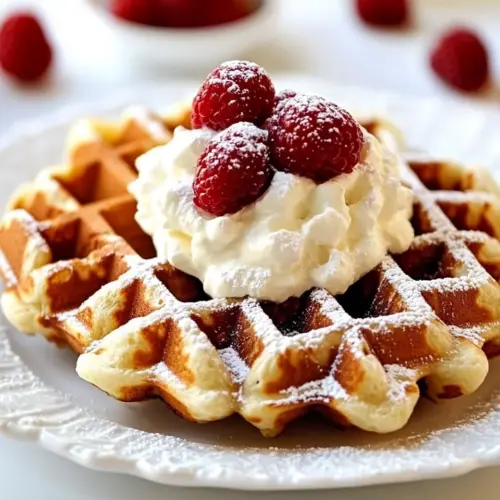
Our Favorite Sunday Waffles
Our Favorite Sunday Waffles are crisp edged and tender inside, with a light airy texture and warm vanilla aroma. This easy, classic batter uses simple pantry staples to produce consistent results, perfect for an easy weeknight breakfast or leisurely weekend brunch. The whipped egg whites give lift while the yolks add richness, making it a recipe worth trying for reliably delicious waffles.
Equipment
- Mixing Bowls
- Electric Mixer
- Waffle Iron
- Rubber spatula
Ingredients
- 2.25 cups all-purpose flour Provide structure and bulk to the batter, forming the base that combines with liquids and leaveners to create the waffle crumb. Sift or whisk to remove lumps and ensure even mixing for consistent texture. Careful measuring ensures proper ratio with liquids for tender, not dense, waffles.
- 3 tablespoons granulated sugar Add mild sweetness and help with browning during cooking, enhancing the waffle's golden crust. Dissolve into the batter so it evenly caramelizes on the waffle iron. Adjust slightly for personal taste, but maintain enough to balance flavors.
- 2 teaspoons baking powder Leaven the batter by releasing carbon dioxide when combined with wet ingredients, contributing to lightness and lift. Ensure even distribution by whisking into the dry mix to avoid dense spots. Fresh potency yields the best rise and airy texture.
- 1/2 teaspoon baking soda React with acidic components and contribute to additional lift and browning through chemical leavening when combined with wet ingredients. Use the correct amount to avoid metallic or soapy flavors while promoting tender interior and crisp exterior. Ensure it is measured accurately since it works differently than baking powder.
- 1/4 teaspoon kosher salt Enhance overall flavor by balancing sweetness and amplifying other flavors, while also slightly strengthening gluten formation. Dissolve into the dry mix to ensure even seasoning throughout the batter. Use kosher salt as specified for consistent salinity.
- 2 large egg whites Lighten the batter and increase volume when whipped, contributing to a tender, airy texture in the finished waffles. Beat until soft peaks if called for, or incorporate gently when separating eggs to maintain lift. Use fresh egg whites for optimal stability and foaming.
- 2 large egg yolks Enrich the batter with fat and emulsifiers, adding richness, color, and mouthfeel to the waffles. Combine with other wet ingredients to create a cohesive batter that yields tender crumb and improved flavor depth. Proper separation from whites helps control texture and lift.
- 2 cups whole milk Provide most of the liquid to hydrate dry ingredients, dissolve sugar and leaveners, and influence batter consistency and tenderness. Use whole milk for added fat and richness compared with lower-fat milks, which enhances flavor and browning. Adjust temperature to room temperature for better incorporation.
- 3 tablespoons vegetable oil Contribute fat to the batter, increasing moistness and improving crispness of the waffle exterior. Use a neutral oil like vegetable to avoid overpowering flavors while promoting even browning. Measure carefully to maintain proper batter viscosity.
- 2 teaspoons pure vanilla extract Add aromatic sweetness and depth of flavor, enhancing the overall profile of the waffles with warm vanilla notes. Mix into wet ingredients to distribute flavor evenly throughout the batter. Use pure vanilla extract for the most authentic flavor contribution.
Instructions
- In a large mixing bowl, whisk together the dry ingredients (flour, sugar, baking powder, baking soda and salt).: The air smells faintly of flour and sugar as you combine all purpose flour , granulated sugar , baking powder , baking soda and kosher salt . You should hear a soft rustle and see a uniform pale mixture, with tiny specks of salt and baking soda dispersed. This step matters because uniform distribution prevents pockets of leavener that could create uneven rise. A common mistake is scooping flour directly with a cup and packing it, which leads to dense waffles. Use a light spooning motion into the cup to keep the texture light and consistent.
- In another mixing bowl, whisk together egg yolks, milk, oil and vanilla. Add to the dry ingredients and stir in.: At this point the bowl gains a glossy sheen as the egg yolks emulsify with whole milk and vegetable oil , releasing a faint sweet dairy scent with warm vanilla notes. The liquid should be smooth and slightly viscous, indicating proper blending. This step hydrates the flour and creates a batter that will be cohesive once combined. If you skip thorough whisking, you may end up with streaks of oil, causing uneven texture in cooked waffles. Whisk until silky and uniformly colored.
- In another mixing bowl, whip the egg whites with an electric mixer until stiff peaks form.: When you pour the liquid into the dry bowl you will notice a quick change in texture, from powder to a loose batter that clings slightly to your whisk. The batter should be mixed just until the dry streaks disappear, with a few small lumps accepted. Overmixing activates gluten and leads to chewy waffles, which robs them of the airy interior we want. If you see bubbles forming immediately, that is normal from the leaveners, but avoid vigorous beating which can make the final texture tough.
- With a rubber spatula, gently fold in the whipped egg whites to the batter. Stir until no white streaks remain.: The transformation here is dramatic, from clear, runny whites to a cloudlike, glossy mass that holds a peak. You will hear a soft whipping cadence and see the whites thicken and brighten. Stiff peaks mean the whipped whites will stand upright without collapsing when you lift the beaters. This aeration is why the waffles gain such lightness. Undermixing leaves soft peaks that deflate, while overmixing can make the whites grainy; stop when peaks hold their shape but still look moist.
- Preheat the waffle iron and fry 1/4 cup of batter at a time until the waffles are golden brown.: Folding should be deliberate and gentle, the spatula slicing through the batter and turning it over to preserve the trapped air. You will notice subtle swirls where the whites meet the yolk batter, and the sound is quiet, soft folding rather than noisy stirring. This technique keeps the batter airy, which is essential for tall, fluffy waffles. A common error is aggressive stirring that knocks out the air, yielding dense results. Fold until white streaks vanish but the batter still looks light and airy.
- Serve immediately.: As the iron heats, it emits a sweet, toasty perfume and a faint metallic warmth. When you pour a scant 1/4 cup portion of batter, you will hear a gentle hiss and see batter spread and bubble, then begin to set. Look for a deep golden brown color at the edges and a crisp surface; that signals readiness. Cooking too long can dry them out, while too short leaves them pale and soggy. Avoid opening the iron too soon, which can tear the waffle and interrupt even browning.
- Serve immediately: The final moment brings steaming waffles with crisp edges and a soft interior releasing warm vanilla notes and a hint of caramelized sugar. Serve right away to enjoy the contrast of textures at their peak. If you must hold them, keep cooked waffles in a single layer on a rack in a warm oven to preserve crispness, because stacking traps steam and softens the exterior. A frequent mistake is stacking directly on a plate, which causes sogginess quickly.
Notes
- Swap the oil for melted butter if you prefer a richer flavor, which will add a toasty depth to the batter.
- Adjust the milk to a slightly lower fat option to reduce richness, though this may yield a less tender interior.
- Infuse the milk with a cinnamon stick or citrus peel briefly warmed to add subtle aromatic notes without changing the recipe structure.
- Boost the vanilla by using a vanilla bean paste for a more pronounced aroma and flecks of bean throughout the batter.
- Scale the batter to feed more people, keeping the same ratios and mixing method to preserve texture and lift.