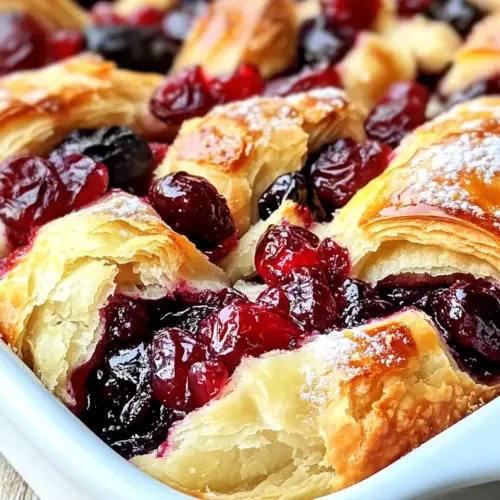
Orange Cranberry Croissant Bake Recipe
Orange Cranberry Croissant Bake Recipe combines buttery croissants with bright orange juice and tart cranberries for a cozy, slightly crisp custard bake. Easy to assemble and perfect for a holiday brunch or easy weeknight breakfast, it offers a tender interior and golden top. Make it ahead to save time and enjoy a bakery style treat at home, a sure crowd pleaser.
Equipment
- Baking Pan
- Mixing Bowl
- Whisk
- Oven
- Wire Rack
Ingredients
- 10 mini croissants sliced Sliced to provide buttery, flaky layers that soak up the custard base and create a rich, textured bake; arrange evenly to ensure consistent baking and toasted edges. Reserve any torn pieces to press into gaps so the dish holds together and yields varied bite textures.
- 1/2 cup orange juice Poured in to add bright citrus flavor and moisture while helping the custard set; balances sweetness and complements the tart cranberries for a fresh finish. Use evenly distributed juice so each croissant piece absorbs a bit of acidic brightness without becoming soggy.
- 1/2 cup fresh cranberries Scattered to contribute bursts of tartness and visual color that contrast the richness of the croissants and custard; can be halved if preferred for more even distribution. Fresh cranberries also release juices while baking, enhancing the overall tang and preventing the bake from tasting overly sweet.
- 3/4 cup half and half or whole milk Whisked in as the creamy liquid component that forms the custard with eggs, providing tenderness and a silky mouthfeel; choose half and half for richer results or whole milk for a lighter texture. Ensure it's well combined with eggs and sugar so the mixture sets evenly and coats the croissant pieces thoroughly.
- 2 large eggs Beaten to create structure for the custard, helping it set around the croissant and bind the bake together; eggs add richness, lift, and a smooth custard consistency. Whisk thoroughly with the dairy and sugar to avoid streaks and to promote a uniform, creamy interior after baking.
- 1/2 teaspoon vanilla Added to infuse a sweet, floral aroma and deepen the overall flavor of the custard; helps round out the citrus and cranberry notes without overpowering them. Measure carefully to preserve balance, as vanilla enhances perceived sweetness and warmth in the finished dish.
- 1/4 cup granulated sugar Sprinkled into the custard mixture to sweeten the bake and aid caramelization on the croissant surfaces; dissolves when mixed with the liquids to create an even sweet base. Adjust slightly if you prefer a less-sweet finish, keeping in mind cranberries add tartness that offsets sugar.
- powdered sugar for dusting Dusted over the finished bake to add a light, decorative sweetness and a delicate contrast against golden pastry; creates an attractive presentation and a subtle powdered crunch. Apply just before serving to maintain a fresh, snowy appearance and prevent melting into the warm custard.
Instructions
- Preheat oven to 350 degrees F.: Warm air carrying a faint toasty scent is your first clue that the oven is ready, and preheating ensures even baking from the moment the dish goes in. You should feel a steady heat when you open the door, and the interior racks will be at the right temperature to brown the tops without overcooking the center. If you skip preheating, the bake may cook unevenly, with underdone custard and over-browned edges. A quick troubleshooting tip is to use an oven thermometer to confirm the actual temperature, ovens can be off by 10 degrees or more. The sound of the oven fan or the click when it's finished warming is a good signal that it's time to proceed.
- Butter a 9" x 7" (or 8" square) baking pan. Arrange croissant slices in a single layer on the bottom of the dish. Drizzle half of orange juice over croissants. Sprinkle half of cranberries over slices.: As you place the croissant slices, notice the way they compress slightly under your fingers, forming a receptive sponge for the custard. Buttering the pan adds flavor and helps with release, and an even single layer allows the custard to distribute uniformly. The first drizzle of orange juice should be measured and applied to ensure bright citrus in the lower layer, while the first scattering of cranberries gives pockets of tartness. A common error here is packing the slices too tightly, which stops the custard from penetrating; leave a touch of space so the liquid can travel. Visually, the base should look covered but not drowning in liquid.
- Arrange second layer of croissant slices. Drizzle with remaining orange juice. Add remaining fresh cranberries.: The top layer builds height and texture, and when you drizzle the rest of the orange juice , it should bead slightly on the flakes of the croissants rather than pooling. Scatter the remaining cranberries so they punctuate the surface, which creates attractive color and bursts of flavor as they soften. Pay attention to balance, keeping the top layer loose enough to brown properly. A common mistake is over-saturating the second layer, which can lead to soggy top pieces that won t crisp up. The baked top should end up golden and inviting, not pale.
- In a mixing bowl, whisk together half and half, eggs, vanilla and sugar. Pour over the dish.: When you whisk the half and half or whole milk with the eggs , aim for a smooth emulsion where the sugar has dissolved and the liquid glistens. The aroma will pick up a gentle sweet cream scent with vanilla notes, and pouring it over the layered pan should be done slowly to encourage even absorption. Pour along the edges as well as the center so the custard spreads. If the custard seems too thin, double check your measurements; a too-thin mixture can fail to set nicely. One troubleshooting note is to avoid over-whisking, which creates froth that can result in an airy texture rather than a dense custard. Visual cues to watch for are uniform wetting of the croissant pieces and a glossy surface before baking.
- Bake for 30 to 33 minutes or until the top is golden brown, top croissants are crispy and the custard layer is set.: As the bake progresses, your kitchen will fill with a warm citrus and buttery aroma. Listen for a faint crackle as the edges crisp, and look for a golden top that springs slightly when tapped. The center should no longer wobble like liquid, indicating the custard has set; it will jiggle a bit but not flow. If you see excessive browning before the center is set, tent with foil to prevent burning while allowing the interior to finish. A common error is relying strictly on the clock; instead, use visual and tactile signals to know when it is done. When correct, you will see a uniform golden crust and feel a gentle resistance when the center is nudged.
- Cool to room temperature before serving.: Cooling lets the custard finish setting and makes the bake easier to slice, producing cleaner portions with intact layers. During this time, the residual heat completes the final set, and the scent will mellow leaving a balanced orange and cranberry note. Resist the temptation to cut while piping hot, as the custard can be loose and runny. If you need to speed things up, place the dish on a wire rack to allow air circulation, but avoid refrigeration until it reaches room temperature, which can change texture. Proper cooling yields slices that hold shape, showcasing the tender interior and crisp edges.
Notes
- Choose slightly stale croissants: A day old rolls or croissants absorb custard more consistently than very fresh ones, preventing a soggy interior while still yielding a tender center.
- Measure liquids carefully: Especially the orange juice and dairy, since small differences change the custard set; use a liquid measuring cup for accuracy.
- Whisk eggs thoroughly: Ensure the eggs are fully blended into the dairy to avoid streaks of cooked egg in pockets after baking.
- Distribute fruit evenly: Scatter the cranberries across both layers so each bite gets a balance of tartness and sweetness.
- Watch the bake visually: Rely on color and a slight spring in the center to judge doneness rather than the timer alone.
- Dust at the last minute: Add the powdered sugar just before serving so it stays bright and does not melt into the warm top.
- Use a wire rack for cooling: It promotes even cooling and prevents the bottom from steaming and getting soggy once out of the oven.