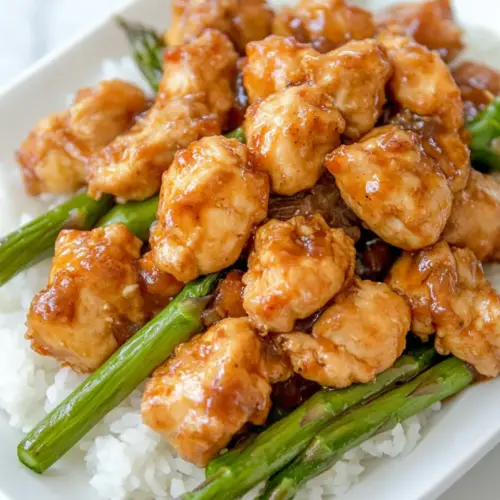
Orange Chicken and Asparagus
Orange Chicken and Asparagus balances bright citrus, toasty sesame, and tender chicken for an easy weeknight dinner. The glossy orange glaze clings to strips of chicken and vibrant asparagus, creating a mix of sweet, salty, and nutty flavors. Quick to make and pantry friendly, this dish is perfect when you want something fast yet flavorful.
Equipment
- Large Skillet
- Small Bowl
- Whisk
Ingredients
- 1 tbsp sesame oil Adds a nutty aroma and helps sear the chicken while preventing sticking; used at the start of cooking to build flavor and transfer heat evenly across the pan.
- 4 oz chicken sliced into strips Provides lean protein and texture to the dish; sliced into strips for quick, even cooking and to absorb the orange glaze and seasonings efficiently.
- 1 tsp minced garlic Imparts a sharp, savory depth and aromatic foundation when sautéed; minced form disperses flavor throughout the sauce and into the chicken.
- 1/4 tsp red pepper flakes Contributes a touch of heat and a subtle tingling that balances the sweet orange glaze; used sparingly to enhance complexity without overwhelming the dish.
- 2 cups asparagus chopped Offers a bright, crisp vegetable component and fresh green color; chopped pieces cook quickly and provide a tender-crisp contrast to the chicken.
- 1 tsp soy sauce Delivers salty, umami richness to round out the sweet and citrus elements; used in small quantity to season both the protein and sauce.
- 1 tsp honey Adds natural sweetness and helps create a sticky, glossy finish on the chicken; dissolves into the sauce to balance acidity from the orange.
- 1 tsp sesame seeds Provides a crunchy finish and visual contrast when toasted; sprinkled over the finished dish to add texture and a mild nutty flavor.
- 1 juice and zest of orange Contributes both bright citrus flavor and essential acidity; juice brings tang while zest intensifies aroma, brightening the sauce and cutting richness.
- rice (optional) Serves as an optional neutral starch to absorb sauce and make the meal more filling; cooked rice pairs with the orange chicken and soaks up flavorful juices.
Instructions
- Heat sesame oil in a large skillet. Sauté sliced chicken, garlic and red pepper flakes for about 7 minutes. Add chopped asparagus and cook for an additional 3 minutes.: The moment the oil warms you should notice a glossy surface and a faint nutty scent rising. A properly heated pan will cause a quick sizzle when you drop a piece of chicken in. This initial sear is critical for building flavor through caramelization, and it helps prevent the chicken from steaming. A common mistake is using oil that is either too cool, which leads to pallid meat, or too hot, which makes the exterior burn before the interior cooks. Keep your heat medium to medium high and let the oil shimmer before proceeding.
- In a small bowl, whisk together soy sauce, honey, sesame seeds, and juice and zest of 1 orange. Add to skillet and cook for 1 minute. Serve plain or over rice of your choice.: As the chicken hits the pan you will hear satisfying sizzling, and the edges should start to take on light golden brown color within a minute or two. The garlic will perfume the oil and red pepper flakes will bloom, releasing their heat. This combination builds a savory foundation for the dish. Stir occasionally so all pieces brown evenly, and watch the garlic carefully because it can go from fragrant to bitter if it darkens too much. Avoid overcrowding the pan, or the chicken will steam and lose that desirable sear.
- Add chopped asparagus and cook for an additional 3 minutes: When you add the asparagus you will hear a fresh, higher pitch sizzle and see the color turn vivid green quickly. The goal is tender crisp, where the spears are softened but still snap when bitten. Stir so the asparagus heats through and picks up some of the pan fond from the chicken . A typical error is cooking the vegetable too long, which results in a limp texture and dull color. Keep the timing tight to preserve brightness and a pleasant mouthfeel.
- In a small bowl, whisk together soy sauce, honey, sesame seeds, and juice and zest of 1 orange: As you whisk the sauce components you should notice the orange aroma intensify, and the honey will help bind the mixture into a glossy glaze. This mixture balances sweet, salty, and nutty notes, and combining them off heat ensures the flavors marry uniformly before they hit the pan. If you add the sauce without mixing, pockets of concentrated sweetness or salt can form, producing an uneven flavor. Use a small bowl and whisk until the honey dissolves and the zest is well distributed.
- Add to skillet and cook for 1 minute: When you pour the sauce into the hot skillet you will hear a brief burst of sizzle and see it reduce slightly as it heats. In this short minute the sauce will coat the chicken and asparagus , gaining a glossy finish and intensified aroma. The citrus oils from the zest will lift at the end, and the sesame seeds will toast a touch in the heat. Be mindful not to overcook during this final minute, or the honey can harden and the orange bright notes will fade. Stir gently and remove from heat once the sauce clings to the pieces.
- Serve plain or over rice of your choice: The finishing cue is when the pan glistens and each piece is evenly coated; at that point the dish is ready to plate. Serving over hot rice lets the grains soak up the sauce, creating a satisfying contrast between fluffy starch and sauced proteins. If you serve it plain, focus on arranging the asparagus so its color and texture stand out. A common oversight is letting the food sit in the pan too long after cooking, which can lead to sogginess; transfer to a warm dish promptly for the best texture.
Notes
- Prep first, slice the chicken and chop the asparagus before heating the pan so you can cook without pausing.
- Control heat, keep the pan at medium to medium high so you get browning without burning the garlic or overcooking the asparagus.
- Mix the sauce thoroughly, whisk the orange, honey, soy, and sesame seeds until smooth so the glaze is even when added.
- Use fresh citrus, always zest before juicing and include both to maximize aroma.
- Serve immediately, transfer from the pan to a warm plate to preserve the crisp tender texture of the asparagus.