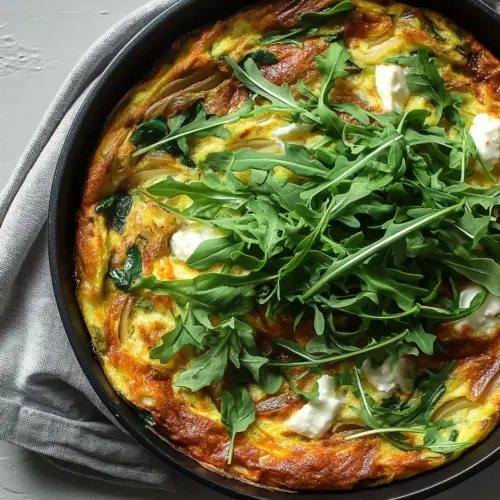
Onion Frittata with Goat Cheese and Arugula
Onion Frittata with Goat Cheese and Arugula is a creamy savory egg dish studded with sweet caramelized onion and bright pockets of tangy goat cheese, finished with a peppery arugula salad. This easy weeknight dinner or brunch option blends silky custard texture with crisp greens for a satisfying, effortless meal you will want to make again.
Equipment
- 10-inch cast iron skillet
- Whisk
- Mixing Bowl
Ingredients
- 1 large yellow onion Slice finely and sauté until translucent and golden to provide a sweet, savory base and build deep caramelized flavor for the frittata.
- 1 tablespoon butter Melt gently to cook the onions and enrich the pan with a silky, buttery mouthfeel that helps brown ingredients without burning.
- 1/8 teaspoons ea salt Season sparingly to enhance overall flavor balance and draw out the natural sweetness of the onions without overwhelming other components.
- 1 tablespoon herry vinegar Brighten with a splash during cooking to add a subtle tang that cuts through the richness and lifts the finished dish.
- 6 large eggs Whisk thoroughly and combine with cream to form the custardy foundation that sets into a tender, protein-rich frittata.
- 3 tablespoons heavy cream Enrich the eggs to create a creamier, more luxurious texture and help the frittata hold together with a soft, custard-like center.
- 1/4 teaspoons alt Adjust modestly to reinforce seasoning in the egg mixture and maintain a well-balanced savory profile throughout the dish.
- 1/4 teaspoon black pepper Add freshly ground for a warm, slightly sharp note that complements the eggs and enhances overall depth of flavor.
- 1 ounce crumbled goat cheese Crumble over the finished frittata to contribute tangy, creamy pockets that contrast the eggs and add a pleasant richness.
- 2 cups arugula Toss lightly with lemon and oil to introduce a peppery, fresh green contrast that brightens each bite and adds texture.
- 1 tablespoon olive oil Drizzle to dress the arugula or finish the frittata surface, providing fruity richness and medium-bodied fat for flavor carry.
- 1 teaspoon lemon juice Squeeze sparingly into the arugula dressing to introduce a zippy acidity that balances the goat cheese and eggs.
- 1/2 teaspoon lemon zest Grate finely and sprinkle into the salad or dressing to release aromatic citrus oils that complement the peppery greens and tangy cheese.
- 1/4 teaspoons tone ground mustard Whisk into the dressing to add a subtle, sharp complexity that helps emulsify the oil and lemon for a cohesive dressing.
- 1/8 teaspoon black pepper Sprinkle a little to add a mild peppery finish and reinforce seasoning without overpowering delicate flavors.
- 1/8 teaspoons alt Use judiciously to fine-tune seasoning in the dressing or egg mixture, ensuring a balanced and well-seasoned final dish.
Instructions
- Peel and cut the onion in half. Cut each half into thin slices, roughly 1/8” thick. Heat a 10” cast iron skillet over medium-low heat. Add the olive oil, followed by the onions. Sprinkle a little salt over the onions, reduce the heat to low, and cook until the onions are soft and starting to brown, 25 to 30 minutes or so (see note). Measure in the vinegar, scrapping up any bits of onion stuck to the pan. When the onions are almost done, preheat the oven to 425˚F.: As the knife meets the onion , notice the papery skin detach and the layers reveal themselves visually, a clean, crisp sound as you slice. Keeping the slices uniform, about one eighth inch thick, ensures they soften at the same rate. The why here is consistency, it prevents some pieces from burning while others remain raw. A frequent mistake is slicing unevenly, which leads to mixed textures in the finished dish; take a few extra seconds to steady your hand for even slices.
- Whisk together the eggs, heavy cream, salt, and pepper; making sure to not overly beat the egg mixture. Pour into the pan and let cook until the sides begin to set. Sprinkle the goat cheese over the egg mixture and transfer the skillet to the oven. Continue to cook for 10 to 12 minutes until the frittata is puffed and starting to brown on top.: The pan warms slowly, and you can feel the steady radiance when you hover your hand above it. Cast iron holds heat evenly, which helps the onion cook gently without scorching. This method matters because aggressive heat will brown the edges too fast, creating bitter flavors. Avoid turning the heat to high in an attempt to speed things up, as that produces uneven caramelization and can make the onions taste burned.
- While the frittata is baking, place the arugula in a bowl. In a small bowl, whisk together the olive oil, lemon juice, zest, mustard, pepper, and salt. Pour over the arugula and toss to combine.: When the oil shimmers faintly, the first sizzle should be soft, not violent. The sound will be a gentle hiss as the onions meet the pan and begin to release moisture. This stage is critical for building sweetness, since the oil helps transfer heat evenly and encourages color development. A common error is using too little oil which causes sticking and uneven browning; ensure a thin coating on the pan.
- Once the frittata is done, let cool slightly. Top with the arugula and serve.: The salt draws moisture from the onion , encouraging them to soften instead of crisping immediately. Lowering the heat creates a slow transformation, and you will see translucence followed by pale golden edges. The reason for low heat is to allow sugars to develop without burning. Many cooks make the mistake of keeping the heat too high, which results in bitter, unevenly cooked onion.
- Cook until the onions are soft and starting to brown, 25 to 30 minutes: Over the course of this time you will notice the aroma shift from sharp and sulfurous to sweet and savory, and small browned bits will form on the pan surface. This patient cooking develops deep flavor that becomes the backbone of the frittata. If you rush this step you lose complexity; resist the urge to stir constantly, instead stir occasionally to encourage even browning.
- Measure in the vinegar scraping up any bits of onion stuck to the pan: When you add the vinegar, it will hiss and deglaze the skillet, and you will see the browned fragments lift and dissolve into a glossy glaze. This little acid brightens the cooked onion and prevents the pan fond from tasting flat. The why is that acid balances sweetness and intensifies savory notes. A mistake here is adding too much vinegar at once, which can make the mixture sour; a single measured splash is ample.
- When the onions are almost done preheat the oven to 425°F: As the oven climbs to temperature, the kitchen will gain a dry, warm hum. Preheating ensures the frittata finishes evenly with a gentle puff and some browning on top. This is important because a cold oven will prolong baking and alter texture. Do not skip preheating as it changes how the eggs set and how the top browns.
- Whisk together the eggs heavy cream salt and pepper: The whisking should be just enough to combine, leaving the mixture slightly frothy but not fully aerated. You will see a uniform pale yellow, with wisps of cream folded in. This matters because overbeating introduces too much air, which can make the frittata rise and fall oddly. Avoid vigorous whipping, which leads to a dry, spongy texture instead of the desired custard.
- Pour into the pan and let cook until the sides begin to set: As the liquid contacts the warm skillet it will hiss faintly, and the edges will transition from glossy to matte as they begin to coagulate. You want a slightly jiggly center with set edges, which signals the right moment to finish in the oven. The technique is important because finishing in the oven gently cooks the center without overbrowning the base. A common error is waiting too long before transferring, which can overcook the bottom.
- Sprinkle the goat cheese over the egg mixture and transfer the skillet to the oven: The goat cheese will soften and melt into creamy pockets as the frittata bakes, creating little tangy surprises. In the oven, the top will puff and start to color, and the cheese forms golden edges where it meets heat. This step matters for textural contrast and flavor pockets. Avoid adding too much cheese, which can weigh the custard down and make the center set unevenly.
- Continue to cook for 10 to 12 minutes until the frittata is puffed and starting to brown on top: During these minutes the air in the oven lifts the custard slightly and the surface gains gentle color, a sign the proteins have set. You will notice a subtle eggy fragrance and small bubbling at the edges. This technique ensures a tender interior while providing a visually appealing top. The pitfall is overbaking, resulting in a dry, crumbly texture instead of silky custard, so watch closely near the end of the time.
- While the frittata is baking place the arugula in a bowl: As the arugula awaits the dressing, its leaves are cool and crisp, offering a peppery counterpoint to the warm frittata. Preparing the salad now ensures it is fresh and bright when the frittata comes out of the oven. The reason to assemble it now is timing, so everything finishes together. If you dress the greens too early they become limp, so hold off on tossing until just before serving.
- In a small bowl whisk together the olive oil lemon juice zest mustard pepper and salt: The dressing will emulsify into a slightly glossy dressing that clings to the arugula . The lemon adds immediate aroma and lift while the mustard helps bind the oil and acid. This step matters because a balanced dressing makes the greens pop and contrasts the rich frittata. A mistake here is underseasoning, which leaves the salad flat against the richer elements.
- Pour over the arugula and toss to combine: The sound of the leaves moving and the way the dressing beads on the surface is satisfying, and you will notice the color deepen slightly as the leaves are coated. Tossing ensures each leaf has a whisper of dressing, giving consistent flavor. The why is even seasoning and texture contrast. Avoid overdressing, which can drown the delicate pepperiness of the arugula .
- Once the frittata is done let cool slightly then top with the arugula and serve: After removing the skillet from the oven you will see a slightly domed top that settles a touch as it cools. Letting it rest helps the interior finish setting and keeps slices neat. Adding the fresh arugula right before serving provides that pleasing temperature contrast and textural lift. A common mistake is cutting immediately, which can cause the frittata to weep or lose shape; allow a short rest for cleaner slices.
Notes
- Use room temperature eggs to help the custard set evenly and reduce cooking time, since cold eggs shock in a hot pan and can produce uneven texture.
- Slice the onion uniformly so all pieces soften at the same pace, avoiding burnt edges and raw centers that spoil the overall mouthfeel.
- Cook the onion low and slow for deep savory sweetness; rushing this step with high heat yields bitter char rather than caramelized complexity.
- Measure the vinegar and add it at the end of cooking the onions to deglaze and lift flavor without making the mixture overly acidic.
- Finish in a hot oven so the top puffs and browns gently while the center remains tender, rather than overcooking on the stovetop.
- Dress the arugula at the last minute to keep it crisp and bright, ensuring a refreshing contrast to the warm, creamy frittata.