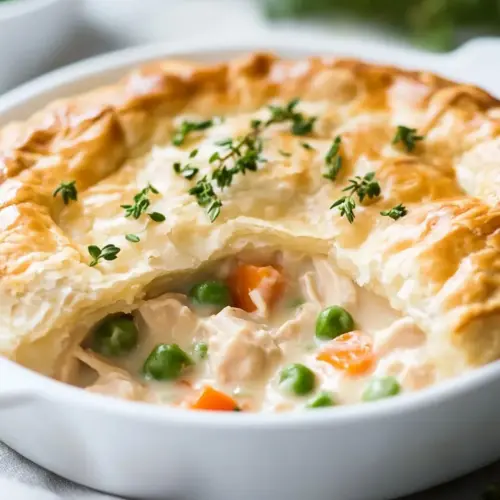
One Skillet Chicken Pot Pie
One Skillet Chicken Pot Pie is a creamy, comforting, easy weeknight dinner featuring tender shredded chicken, sweet peas, and buttery puff pastry. The rich roux thickens into a silky sauce that pairs perfectly with a golden, flaky top. It is a hands on yet forgiving recipe that makes an inviting family meal you will want to cook again and again.
Equipment
- Ovenproof skillet
- Oven
- Knife
Ingredients
- 2 cups cooked shredded chicken Provide shredded, cooked chicken as the primary protein that fills the pot pie, adding hearty texture and savory flavor; toss into the filling toward the end to warm through without becoming dry.
- 1/2 cup unsalted butter Melt into the skillet to sauté vegetables and create a rich base; butter also contributes lusciousness to the sauce and helps brown the pastry slightly when brushed on top.
- 1 cup finely chopped onion Soften and sweeten the filling by sweating until translucent; onion builds aromatic depth and balances the richness of the sauce.
- 1 finely chopped celery rib Add a subtle, crisp celery bite and vegetal aroma when finely chopped and sautéed; celery enhances classic pot pie flavor and contrasts softer vegetables.
- 1 1/2 cups diced carrots Provide tender, slightly sweet body to the filling when diced and cooked through; carrots add color, texture, and nutritional value to the pot pie.
- 2 cloves minced garlic Infuse a sharp, savory aroma when minced and briefly cooked with the vegetables; garlic brightens the overall flavor of the filling.
- 1/2 cup all-purpose flour Thicken the pan mixture into a smooth, velvety sauce by forming a roux with fat and flour; this creates the necessary viscosity to bind the chicken and vegetables.
- 1 teaspoon salt Season the filling to enhance all flavors and control taste; salt also helps draw moisture from vegetables during cooking for better texture.
- 1/2 teaspoon dried thyme Contribute warm, slightly floral herb notes to the filling; dried thyme pairs well with poultry and helps create a classic pot pie profile.
- 1/2 teaspoon poultry seasoning Introduce a blended mix of herbs and spices that complements poultry; poultry seasoning adds complexity and familiar savory notes.
- 1/2 teaspoon black pepper Add mild heat and peppery warmth to balance richness; freshly cracked black pepper lifts the overall flavor of the dish.
- 1 3/4 cup chicken broth Supply concentrated savory liquid to form the base of the sauce and enhance chicken flavor; chicken broth provides moisture and depth for simmering.
- 1 cup whole milk Enrich the sauce with creaminess and a mild dairy sweetness when combined with broth; whole milk softens texture and yields a silkier filling.
- 1 cup frozen peas Bring pops of color and a hint of sweetness when folded in near the end; frozen peas add freshness and contrast to the creamy filling.
- 1 sheet puff pastry dough Create a golden, flaky top that seals in filling when rolled and placed over the skillet; puff pastry gives a light, buttery crust that complements the savory interior.
- 1 egg Seal and glaze the pastry when beaten and brushed on top before baking; egg provides shine, color, and helps any edges adhere.
- 1 tablespoon water Thin the beaten egg for an even glaze by mixing with water; this reduces viscosity and helps achieve a smooth, glossy finish on the pastry.
Instructions
- Preheat oven to 350 degrees Fahrenheit. Melt 1/2 cup unsalted butter in an ovenproof skillet over medium-high heat and add the 1 cup finely chopped onion and 1 finely chopped celery rib.: You will notice a faint warming of the kitchen as the oven comes up to temperature, which helps set the stage for finishing the pie. Preheating ensures the pastry begins to brown immediately upon entering, producing an even flaky top. A common mistake is popping the pie into a cool oven, which can result in a soggy crust, so always wait until the oven reads the correct temperature.
- Cook for 3-5 minutes or until onions are translucent. Add the 1 1/2 cups diced carrots and 2 cloves minced garlic and cook for 2-3 minutes or until the carrots are tender.: As the butter liquefies, it will hiss gently and take on a slightly nutty aroma, which perfumes the onion and celery . The onions will begin to look glossy and soft; that translucence signals you have released their sweetness. If the heat is too high, the butter can brown quickly and scorch the aromatics, so aim for a steady medium-high and adjust if you see rapid browning.
- Stir in the 1/2 cup all-purpose flour, 1 teaspoon salt, 1/2 teaspoon dried thyme, 1/2 teaspoon poultry seasoning, and 1/2 teaspoon black pepper. It should make a thick paste.: The pan will fill with a mellow savory scent as the onion softens and the carrots begin to release their sweet perfume. The garlic will add a warm, fragrant lift, but it browns quickly so watch closely. Undercooked carrots will feel hard and detract from the creamy texture you want, while overcooked vegetables can become mushy, so aim for a tender bite.
- Slowly whisk in the 1 3/4 cup chicken broth and 1 cup whole milk and bring it to a simmer. Simmer for 2-3 minutes or until thickened. Mix in the 2 cups cooked shredded chicken and 1 cup frozen peas and flatten the filling to create an even surface.: When you add the flour to the fat, it should coat the vegetables and form a paste that smells toasty once it cooks through. This step is crucial because it removes that raw flour taste and creates the foundation for a silky sauce. Stir continuously for about a minute so the spices bloom with the heat. If you skip cooking the flour, the finished filling can taste pasty, so take a moment here for the best texture.
- Slice the 1 sheet puff pastry dough into 12 even strips. Lay strips on top, weaving them together. Whisk 1 egg and 1 tablespoon water together and brush on top of puff pastry.: As you add the liquids gradually, whisking keeps the sauce smooth and free of lumps, and a gentle simmer will coax the mixture into a glossy, thickened consistency. You will see tiny bubbles and feel a subtle steam rise from the pan, and the aroma deepens into something rich and inviting. Simmer for 2 to 3 minutes until the sauce coats the back of a spoon. A common pitfall is adding the liquid too quickly, which can create lumps; patience here rewards you with a velvety texture.
- Bake the pie for 25 minutes or until golden brown. Let sit for 5 minutes before serving.: The pan will hiss quietly as the filling reduces slightly and the sauce clings to the chicken . Stirring the filling lets the chicken heat through and the frozen peas defrost without losing their vibrancy. Flattening the surface helps the pastry sit neatly on top and bake uniformly. A mistake to avoid is over stirring after adding the pastry later, which can break down the filling texture.
- Slice the 1 sheet puff pastry dough into 12 even strips: Cold puff pastry will feel stiff and slightly tacky, and slicing it cleanly sets you up for a tidy weave. Use a sharp knife or pastry cutter for straight edges, and if the dough softens, chill it briefly to keep its structure. Warm pastry loses its lift in the oven, so keep it chilled until you are ready to place it on the filling.
- Lay strips on top, weaving them together: As you arrange the strips, you'll hear a soft rustle and see the pastry take on a delicate lattice pattern that promises a crisp finish. The weaving creates vents that release steam evenly while baking, which helps the pastry brown and stay flaky. If strips overlap too densely, the steam may not escape properly and the pastry could steam rather than crisp, so leave small gaps for breathing.
- Whisk 1 egg and 1 tablespoon water together and brush on top of puff pastry: The egg wash will glisten when applied and gives the pastry that beautiful golden, shiny surface after baking. Brush evenly, reaching the edges for uniform color. Applying too heavy a coat can cause the wash to pool and create uneven browning, so aim for a light, consistent layer.
- Bake the pie for 25 minutes or until golden brown: In the oven, the kitchen fills with a toasty, buttery aroma as the pastry puffs and browns. You will see the edges become a deep golden color and the weave take on a crisp look. Baking until golden ensures the pastry is fully cooked and flaky while the filling stays heated through. Opening the oven too often can lower the temperature and lengthen the bake time, so rely on visual cues instead of frequent checks.
- Let sit for 5 minutes before serving: Resting allows the filling to settle and thicken slightly, so when you serve, it will hold together instead of spilling out. The steam will dissipate enough for safe eating, and the flavors have a moment to marry. Cutting into it immediately can lead to a runny filling and hot steam that can scald, so patience yields cleaner slices and safer serving.
Notes
- Swap the protein Use leftover roasted chicken or rotisserie chicken for convenience; both soak up the sauce beautifully and shorten active time.
- Make it dairy lighter Substitute part of the milk with a lower fat milk if you want a lighter filling, but keep the texture by not over thinning the sauce.
- Herb boost Add a pinch more dried thyme or a sprinkle of additional poultry seasoning for a more pronounced herb profile that complements the chicken.
- Vegetable forward Increase the diced carrots and peas quantities slightly to make a more vegetable centric version while keeping the same sauce ratio.
- Stovetop finish If you lack an ovenproof skillet, assemble the filling in a skillet and transfer to a pie dish before topping, it achieves the same results with a bit more cleanup.