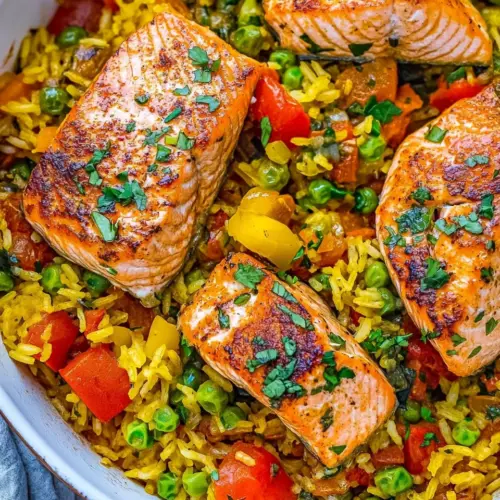
One Pot Salmon And Rice
One Pot Salmon And Rice is an easy weeknight dinner that combines flaky, seared salmon with fragrant, turmeric kissed rice. This creamy yet light skillet meal balances savory broth, bright lemon, and warm spices for a satisfying family friendly plate you can make in one pan. Try it tonight for a quick, flavorful dinner that cleans up fast.
Equipment
- COOKLOVER Nonstick Saute Pan Induction Skillet with lid 9.5 inch – Black
Ingredients
- 4 salmon fillets Place and cook to provide the main protein and rich, flaky texture that anchors the dish; sear to develop a golden crust before finishing with the rice to absorb flavors. Handle gently to avoid overcooking and maintain moistness while the rice simmers underneath. Season lightly prior to searing so the fillets contribute savory juices to the cooking liquid throughout the one-pot process.
- 1 teaspoon seasoning salt Season and brighten the fish and rice mixture with a balanced salty, slightly spiced profile that enhances other spices without overpowering them. Sprinkle during initial seasoning and adjust at the end to taste, keeping in mind that the bouillon and broth contribute additional salt. Use sparingly for controlled salting, especially if using low-sodium broth.
- 3 tablespoons olive oil (divided) Divide and use to sauté aromatics and sear the salmon while reserving a small amount to finish the dish with a sheen; provides richness and helps carry fat-soluble flavors. Heat the majority to medium-high for browning, then reduce heat for gentle simmering with rice and broth. Choose quality extra virgin olive oil for flavor, but avoid smoking by controlling pan temperature.
- 1 large onion (finely diced) Finely dice and soften to create a sweet, savory aromatic base that supports the rice and complements the salmon; cook until translucent to release natural sugars. Combine with peppers and garlic early in the process to build depth of flavor in the one-pot method. Stir frequently to prevent browning too quickly and to meld with spices and bouillon.
- 1 medium green bell pepper (finely diced) Finely dice and sauté to add fresh vegetal sweetness and mild crunch that contrasts with tender rice and fish; cook until just softened to retain color. Pair with the red bell pepper for balanced sweetness and visual appeal. Toss with aromatics and spices so its juices help flavor the cooking liquid.
- 1 medium red bell pepper (finely diced) Finely dice and sauté to contribute bright color and a sweeter pepper note that complements the green pepper and onion; soften until slightly tender. Combine with other aromatics to create a layered base that the rice will cook in and absorb. Use to enhance both flavor and presentation when garnished at the end.
- 3 cloves garlic (minced) Mince and cook briefly to release a pungent, savory aroma that boosts overall depth; add toward the end of the sauté to avoid burning. Allow the garlic to bloom in the oil with the other aromatics so it infuses the rice and broth with its flavor. Adjust quantity based on desired pungency but avoid over-browning which causes bitterness.
- 1 cube chicken bouillon Crumble and dissolve into the simmering broth to amplify savory, umami depth and mimic a richer stock when combined with the chicken broth. Stir in early with the liquids so it fully dissolves and seasons the rice evenly. Reduce additional salt if the bouillon is high in sodium to maintain balance.
- 1 teaspoon paprika Sprinkle to lend a warm, slightly smoky sweetness that enhances the salmon and rice without dominating; integrate with other spices during sautéing. Use during the aromatic stage to toast briefly and unlock flavor. Complement with paprika for color and a subtle depth that pairs well with turmeric and bouillon.
- 1 teaspoon turmeric Add to impart a warm earthy color and subtle peppery-earthy flavor that brightens the rice visually and flavor-wise; introduce with the spices so it can bloom in the oil. Use sparingly to avoid overwhelming the palate and to keep the rice visually appealing. Combine with lemon at the end to lift the overall profile.
- salt and pepper (to taste) Taste and adjust to achieve final seasoning balance; use both to accentuate natural flavors and provide contrast to the spices and bouillon. Add modestly during cooking and finish with a final sprinkle to suit preference. Remember that broths and bouillon contribute salt, so season gradually.
- 1 1/2 cups long grain rice (rinsed) Rinse and cook to provide the starchy base that absorbs flavors and liquid from the broth, aromatics, and salmon; ensure grains are rinsed to remove excess surface starch for separate, fluffy results. Add to the pot after sautéing aromatics and toasting briefly so each grain picks up spice and oil before simmering. Measure precisely and maintain the correct liquid ratio to achieve tender rice.
- 3 cups chicken broth (low sodium, or vegetable broth) Pour and simmer to supply the cooking liquid that hydrates the rice and infuses savory depth; choose low-sodium or vegetable broth to control final saltiness. Warm slightly before adding to the pot to avoid temperature shocks and ensure steady simmering. The broth works with bouillon and aromatics to build a cohesive, flavorful base.
- 1 lemon (zest and juice) Zest and squeeze to introduce bright citrus oils and acidic juice that cut through richness and elevate flavors; add zest earlier for aromatic lift and juice at the end for fresh acidity. Use sparingly so the lemon complements rather than overpowers the delicate salmon and rice. Consider reserving a little juice to finish the dish for a lively final note.
- 1 tablespoon fresh parsley (for garnish) Chop and sprinkle as a fresh green garnish to add a herbaceous finish and subtle color contrast; scatter just before serving to preserve freshness. Use basil or parsley sparingly to avoid masking the lemon and delicate fish flavors. Fresh parsley also adds a mild earthiness that ties together the seasonings and vegetables.
Instructions
- Start by seasoning the salmon fillets with seasoning salt on both sides.: As you touch each fillet you should feel its firmness, and the brief act of seasoning lets the salt begin to coax out moisture for a better sear. The aroma will be subtle but satisfying, and lightly patting the seasoning in ensures it sticks. A common mistake is over salting at this stage, which can draw out too much moisture; season conservatively and adjust later if needed.
- In a large skillet, heat 1 tablespoon of olive oil over medium-high heat. Place the salmon fillets skin-side down (if they have skin) and sear for about 2-3 minutes per side, just to get a nice color. Remove the salmon from the skillet and set aside.: You will hear a sharp sizzle as the salmon hits the hot oil, and that sound is your cue that the pan is properly hot. The surface should develop a golden or slightly crisp edge, which locks in flavor and creates texture contrast. When you lift the fillet to flip, it should release easily from the pan, indicating the crust has formed. Avoid moving the fillet too soon, or it will stick and tear; let it sear undisturbed for the suggested time.
- In the same skillet, reduce the heat to medium and add an additional 2 tablespoons of olive oil. Add the chopped onion, bell peppers and cook until translucent, about 3-4 minutes. Stir in the minced garlic and cook for another minute until fragrant.: As the onion softens, you will notice a sweet, caramel scent rising, and the bell peppers will release a vegetal perfume that complements the garlic . The gentle sizzling should sound steady but not aggressive, meaning the pan is at the right temperature. If the vegetables start to brown too quickly, lower the heat to prevent bitterness, because burnt vegetables will dominate the dish.
- Add the rinsed rice, chicken bouillon, paprika, turmeric, salt and pepper to the skillet and stir for a couple of minutes to lightly toast it.: Toasting the rice creates a nutty aroma and helps each grain stay separate once cooked, giving better texture. Stirring gently for a few minutes will coat the grains with oil and spices, releasing fragrant steam and deepening the color. A frequent error is skipping the toast step, which can lead to a less flavorful, stickier final result; take these minutes for nuance.
- Pour in the chicken or vegetable broth, and add lemon zest. Bring the mixture to a simmer.: As the broth hits the pan you will see steam rise and aromatic bubbles forming, signaling that flavor is being absorbed. The lemon zest releases essential oils that perfume the liquid, layering brightness under the savory notes. Keep the heat controlled so the simmer is gentle; a boil will agitate the grains and can make the rice cook unevenly.
- Gently place the seared salmon fillets on top of the rice. Cover the skillet with a lid and let it cook over low heat for about 18-20 minutes, or until the rice is cooked through and the salmon is flaky.: The covered skillet becomes a steamy oven, and you should hear a soft hush of steam rather than violent bubbling. Visual cues include the broth being absorbed and the salmon turning opaque in the center. Resist the urge to lift the lid frequently, because escaping steam alters cooking time and can result in undercooked rice or dry fish.
- Once everything is cooked, drizzle lemon juice over the salmon and rice. Check for seasoning and adjust if needed.: The first inhale after opening the lid will be rich and citrus bright, and a gentle squeeze of lemon will sharpen the flavors and balance the richness of the salmon . Taste the rice to judge whether you need more salt or a pinch of pepper. A common oversight is over adjusting salt after reduction, so add small amounts and taste between adjustments.
- Sprinkle chopped parsley and/or lemon wedges over the dish and serve warm.: The final garnish adds color and a fresh herb aroma that lifts each bite, and serving warm keeps the textures in harmony. When plating, spoon some of the rice so it cushions the fillet, preserving the sear on the fish. Avoid waiting too long to serve, because the salmon and rice are best enjoyed soon after cooking when the contrast between textures is most pronounced.
Notes
- Adjust Spice Levels Expand the original note into a practice: if you prefer more heat, add a pinch of red pepper flakes while sautéing the peppers; if you want milder notes, omit them and let the paprika carry the warmth. Taste as you go, because a little goes a long way and you can always add more at the end.
- Choosing the Right Rice Long grain rice is recommended for texture, but if you only have another type, adjust liquid and cooking time. Rinse thoroughly and keep an eye on absorption, adding a splash more broth if needed near the end to avoid dryness or sticking.
- Salmon Skin Option If your fillets have skin leave it on for cooking it helps keep moisture in and crisps nicely against the pan; if you prefer not to eat it you can peel it off after cooking when it will separate easily.
- Vegetable Variations Feel free to fold in quick cooking vegetables like peas or spinach at the end of cooking to boost color and nutrition; add them in the last two minutes so they wilt but retain brightness.
- Broth for Flavor Use good quality chicken or vegetable broth for depth taste low sodium versions so you control salt; concentrate flavors come through more clearly with better broth.