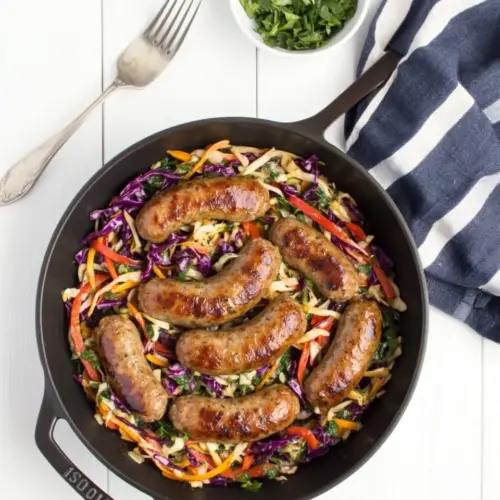
One Pot Paleo Sausage and Slaw Skillet
One Pot Paleo Sausage and Slaw Skillet delivers juicy browned sausage and tender wilted slaw in a speedy, one pan meal. This easy weeknight dinner is savory, slightly spicy, and texturally exciting, making it ideal for busy evenings when you want bold flavor with minimal cleanup, perfect for meal prep or a cozy family plate.
Equipment
- High sided sauté pan
- Tongs
Ingredients
- 4 hot Italian sausage links uncooked, for paleo/whole30 be sure to read ingredients to determine if they are compliant Provide savory, spicy base flavor and substantial protein; cook thoroughly to render fat and brown evenly, turning to develop caramelized exterior and internal doneness for food safety.
- 1 tablespoon olive oil or oil of choice Add light fruitiness and healthy monounsaturated fat to aid browning and prevent sticking; heat gently to shimmer before adding aromatics to build a pan sauce.
- 1 large onion sliced Contribute sweet, mellow onion flavor and moisture; slice to even thickness so they soften uniformly and form a flavorful bed for the other vegetables and sausage.
- 1 red bell pepper sliced Introduce bright, crisp sweetness and color contrast; slice and sauté until just tender to maintain texture while blending with the slaw components.
- 1 bag of slaw with kale cabbage, Brussels sprouts and broccoli slaw (such as Cruciferous Crunch from Trader Joe's or Sweet Kale Salad from Costco/Kroger) about 10 ounces or 6 cups. Provide a mix of shredded cruciferous vegetables that add bulk, texture, and nutritional fiber; use directly from the bag and stir into the skillet to wilt evenly without overcooking.
- 4 garlic cloves minced Deliver pungent, aromatic intensity that amplifies savory notes; mince finely and add toward the end of sweating to avoid burning and to preserve fresh garlic aroma.
- 1/2 teaspoon paprika Lend warm, slightly smoky depth and enhance color; measure precisely to avoid overpowering and sprinkle evenly during cooking for balanced seasoning.
- 1/2 teaspoon dried oregano Offer an earthy, Mediterranean herbal note that complements sausage and vegetables; sprinkle dried oregano during sautéing so its oils bloom and infuse the dish.
- 1/4 teaspoon red pepper flakes optional, or to taste Impart controlled heat and a subtle smoky kick when desired; add sparingly and adjust to taste so the overall spiciness complements rather than overwhelms.
- salt to taste Provide essential seasoning to elevate and balance flavors throughout the dish; taste and adjust gradually, adding small pinches until desired seasoning level is reached.
- pepper to taste Give subtle aromatic sharpness to define savory edges and balance richness; freshly ground is ideal, added to taste at the end to preserve volatile flavor compounds.
Instructions
- In a high sided sauté pan, add enough water to submerge the sausages. Bring the water to a boil and then turn off the heat. Add the sausages to the water and cover. Allow to sit for 7 minutes. Drain water and then brown sausages. You may need to add a tiny bit of oil to the pan if they are sticking.: The first thing you will notice is the steam from the hot water bath, which gently warms the sausage and helps ensure even cooking. After they rest covered for seven minutes, the links feel plump and springy, and draining them prevents dilution of the browning stage. When you brown them, aim for a deep golden crust, which develops a rich, savory aroma and adds texture. If they stick, a splash of olive oil loosens them and encourages caramelization. One common mistake is rushing the browning at too high heat, which chars the exterior before the center is warm, so moderate your flame and turn frequently for an even crust.
- Once sausages are browned and reach an internal temperature of 165°F, remove from pan. Reduce heat to medium and add 1 tablespoon of oil to the pan. Once hot, add the onions and season with a little salt. Cook for about 2 minutes, then add the bell pepper and cook for another 2 minutes, until onion and bell pepper have softened. Add the garlic and spices, cook for about 30 seconds, until fragrant.: After removing the sausage , the pan should show browned bits that smell deeply savory. Lowering the heat to medium and adding oil helps deglaze those bits as the onion and bell pepper release moisture and sweetness. The onion will begin to turn translucent and smell sweet within minutes, and the bell pepper will add a bright, vegetal scent. When the garlic hits the hot oil, a sharp, mouthwatering aroma blossoms almost instantly, signaling readiness for the next step. Avoid leaving the garlic unattended, because it can go from fragrant to bitter in seconds.
- Add the slaw to the pan. The pan will be very full at first, carefully mix the slaw in and it will start to wilt and reduce in volume. Continue to stir, until everything is combined and slaw is wilted, about 5 minutes. Taste and season with more salt and pepper if needed.: As you add the bag of slaw , the first sensory cue is the cooling hiss as the moisture hits the pan, followed by a softening rustle as you stir. Over several minutes, the colorful shreds will lose some rigidity and collapse into tender, glossy strands that absorb the savory fond. Taste early to calibrate salt and pepper because the vegetables concentrate as they wilt. A frequent slip at this point is overcrowding the pan without stirring, which can leave some pieces undercooked; be patient and fold constantly until the texture is even.
- Add the sausages back to the pan, stirring slaw as needed, until sausages are warmed. Serve right away.: When you return the sausage to the skillet, the sound shifts to a gentle, restorative sizzle as the meat rewarms and the fats mingle with the wilted slaw . The final aroma should be balanced, showing sweet onion , nutty browned meat, and a hint of spice. Warm through until the internal temperature of the sausages is stable and the whole pan looks glossy and unified. Serve immediately so the contrast between warm, juicy sausage and tender-crisp slaw is at its best. A common error is letting the skillet sit too long before serving, which flattens textures and cools the dish unevenly.
Notes
- Swap the sausage flavor Try a milder or herbier sausage if you prefer less heat, or choose a spicier link for more kick; just be mindful of added ingredients if you follow a paleo plan.
- Adjust the heat level Reduce or omit the red pepper flakes if you want a gentler palate, or add a pinch more for guests who like things lively.
- Choose a different oil Use avocado oil for a higher smoke point when browning, which can help if your pan runs hot.
- Make it heartier Double the sausage for a protein forward meal, keeping the same vegetable volume so the dish remains balanced.
- Serve family style Keep everything in the skillet for a rustic presentation that also keeps the food warm at the table.