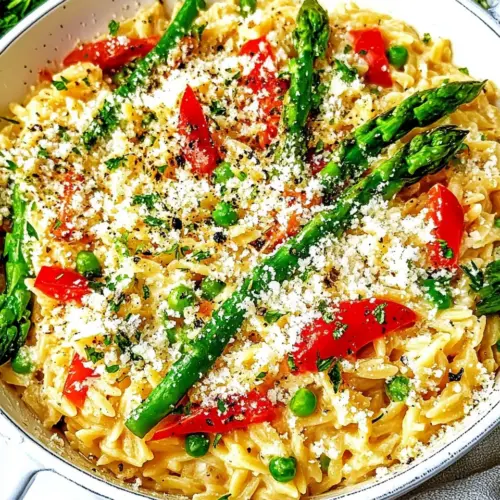
One Pot Orzo Primavera
One Pot Orzo Primavera is a creamy, bright, and easy weeknight dinner that balances tender orzo with crisp spring vegetables. The sautéed onion and garlic build savory depth while parmesan cheese and a splash of half and half create a silky finish. Quick to make and full of fresh flavors, it is a compelling reason to cook tonight.
Equipment
- Large Pot
- Wooden Spoon
- Measuring Cups
Ingredients
- 1 tablespoon olive oil Heat or sauté in a skillet to provide the cooking fat and a subtle fruity flavor; olive oil also helps prevent sticking and carries aromatics through the dish. Use a high-quality extra-virgin for finishing or a light olive oil for higher-heat sautéing.
- 1 medium brown onion chopped Sauté until softened and translucent to build a sweet, savory base and add body to the sauce; chopping increases surface area for even cooking. Browning gently enhances depth without overpowering the delicate vegetables.
- 4 cloves garlic finely chopped Mince finely and sweat briefly to release pungent, aromatic oils that perfume the entire dish; garlic delivers bright, savory notes that complement the vegetables and cheese. Avoid burning by adding garlic later in the sautéing process for a mellow, nutty flavor.
- 1 head broccoli cut into florets, discard stem Steam or toss into the pot as florets to provide a tender-crisp texture and a mild, slightly bitter green flavor; discarding the stem ensures even cooking and a pleasing mouthfeel. Broccoli adds color, vitamins, and a hearty counterpoint to the orzo.
- 21 ounces asparagus cut into 2-inch pieces, woody ends snapped off Trim woody ends and cut into 2-inch pieces to contribute an earthy, grassy sweetness and a firm bite that cooks quickly; asparagus complements the primavera profile and adds seasonal freshness. Snapping off the tough ends improves texture and prevents fibrous pieces in the dish.
- 8 ounces dry orzo pasta Simmer in the pot to act as the primary starch that soaks up broth and flavors; orzo offers a rice-like texture that binds the vegetables and sauce into a comforting one-pot meal. Choosing dry orzo ensures proper absorption and al dente results.
- 2 1/2 cups low sodium vegetable broth (or stock) Pour over the orzo and vegetables as the cooking liquid to hydrate the pasta and infuse savory umami; low sodium stock provides control over final seasoning while adding depth. Adjust quantity as needed for preferred sauciness and to achieve proper pasta doneness.
- 3/4 teaspoons salt Season during cooking to enhance overall flavor and help bring out natural tastes of vegetables and broth; measured salt ensures baseline seasoning for the dish. Reserve a small amount to adjust at the end, since cheese and broth can add additional saltiness.
- 3/4 cup frozen peas Stir in towards the end of cooking to add pops of bright sweetness and tender texture; frozen peas thaw quickly and retain color and nutrients when added briefly. Peas balance the savory components and contribute fresh green flecks throughout the orzo.
- 1/2 cup fresh grated parmesan cheese Fold in for richness, umami, and a creamy, slightly salty finish that rounds the sauce; freshly grated parmesan melts evenly and deepens savory notes. Parmesan also helps thicken the mixture slightly and adds a nutty complexity.
- 1/3 cup half and half option to use reduced fat cream Whisk or stir in to enrich the sauce with creamy texture and mellow dairy flavor; half and half lightens the mouthfeel without making the dish overly heavy. Using reduced-fat cream is an option to cut calories while preserving creaminess.
- 2 tablespoons lemon juice freshly squeezed Squeeze in at the end to brighten flavors and cut through richness with fresh acidity; lemon juice lifts the vegetables and enhances the savory components. Freshly squeezed juice provides the cleanest, brightest citrus character.
- 1 pinch salt extra to taste if needed Season as needed to taste for final adjustments and to balance flavors after adding cheese and broth; an extra pinch can elevate seasoning without overpowering. Use sparingly and taste as you go to avoid over-salting.
- 1 pinch pepper extra to taste if needed Season as needed to finish and introduce subtle heat and contrast that enhances overall flavor complexity; freshly ground pepper helps define other tastes. Add a pinch and adjust to preference to avoid overwhelming delicate vegetables.
- 1 cup grape tomatoes or cherry tomatoes, halved Toss in at the end to introduce bursts of juicy sweetness and a pleasing acidic counterpoint; halved grape or cherry tomatoes add texture and color. Gentle warming preserves their fresh flavor and prevents them from becoming mushy.
- 1 pinch fresh parsley to serve Garnish over the finished dish to impart a fresh herbal aroma and mild, slightly peppery flavor that brightens each bite; chopped parsley also adds visual contrast. Sprinkle just before serving to retain vibrant color and fragrance.
Instructions
- Heat the olive oil in a large pot over medium-high heat. Fry the onion for 2-3 minutes until transparent. Add in the garlic and cook until fragrant; add the orzo and fry to brown slightly (about 2 minutes) in the oil.: The moment you first heat the olive oil you should notice a faint, fruity aroma rising from the pan, and when the onion softens the kitchen will take on a warm, sweet scent. Listen for a gentle sizzle as the onion hits the pan; that sound tells you the oil is hot but not smoking. The translucence of the onion is the visual cue to add the garlic , which will perfume the oil quickly. When you toss in the orzo , it should shimmer and begin to take on a slightly toasted tone, releasing a toasty, nutty aroma that deepens the dish. This step matters because the initial browning creates layers of flavor for the whole pot, otherwise the final dish may taste flat. A common mistake is letting the garlic burn; keep the heat moderate and stir frequently to prevent bitterness.
- Next, add in the broccoli florets and asparagus pieces, stirring occasionally for a further 2 minutes to absorb all the flavours in the pot.: When the broccoli and asparagus hit the pan they should make a lively sizzling sound as they meet the warm oil, releasing vegetal aromas that mingle with the toasted orzo . Stirring helps their surfaces warm evenly so they begin to soften but remain bright. You want to see edges slightly becoming glossy and vibrant color maintained, which ensures a pleasing snap in the finished dish. This quick pre-cook matters because it allows the vegetables to start releasing their juices, which will mingle with the broth and enhance the dish. Avoid overcrowding the pot, or the vegetables may steam and lose that desirable texture.
- Pour in the broth along with 3/4 teaspoon of salt. Give it a good stir to combine.: As you add the warm vegetable broth , you will hear a louder simmer as the liquid meets the hot ingredients, carrying steam that smells savory and herbaceous. Stirring distributes the salt and prevents dry pockets of orzo from sticking to the bottom. The liquid should flow freely around the pasta and vegetables, and you will notice the pan surface reflecting the broth. This step is crucial because even distribution ensures even cooking and consistent seasoning. A frequent error is pouring in cold liquid too quickly and shocking the pot, which can slow cooking; using room temperature or warm broth smooths the process.
- Bring to a boil; cover and reduce heat down to low and allow to cook for 5-6 minutes, until most of the liquid has absorbed, while stirring occasionally.: When the pot first comes to a boil you will see vigorous bubbling and a strong steam plume; that is the point to lower the heat so the liquid simmers calmly. Covering traps steam and helps the orzo cook through uniformly, while periodic stirring ensures nothing clings to the bottom. After a few minutes the surface will calm and you will observe the liquid level dropping as the orzo swells and absorbs flavors. This timing produces a tender but slightly toothsome texture. If you skip covering, the broth may evaporate too quickly and leave the pasta undercooked; conversely if you never check, the bottom can stick.
- Uncover the pot and add in the peas and parmesan cheese. Stir gently to combine with the rest of the ingredients, and continue to cook on low heat for about 2-3 minutes until the peas have cooked through, the cheese has melted, and the pasta is cooked to your liking, while stirring occasionally.: When you remove the lid the aroma brightens, and adding the peas and freshly grated parmesan cheese introduces both sweetness and creamy umami. Stirring gently melts the cheese into a glossy coating on the orzo , while the frozen peas lose their frost and pop tenderly. Watch for a smooth, slightly thickened sauce clinging to the pasta and for the peas to regain their vivid green color. This gentle finishing heat keeps the texture balanced and prevents the cheese from clumping. A typical pitfall is overheating which can cause the cheese to separate; keep the temperature low and stir steadily.
- Take off the heat. Stir the half and half through to combine well and squeeze in the lemon juice. Mix through; taste test and add more salt and pepper if desired.: Off the heat, the aromas become more nuanced and the sizzling subsides, leaving a warm, comforting scent. Stirring in the half and half should create a silky sheen, and the fresh lemon juice will lift the flavors with a bright citrus note that cuts through the creaminess. Taste carefully, because the finishing salt will highlight all components, and adjust seasoning with tiny increments. This step matters because it balances richness and brightness for a rounded bite. A common error is adding too much acid at once; add the lemon juice gradually to avoid overpowering the dish.
- Garnish with the fresh chopped parsley; top with the grape tomatoes and serve immediately.: When you sprinkle the chopped parsley , the aroma of fresh herbs brings a clean, lively contrast to the creamy pot, and the halved grape tomatoes offer juicy bursts that punctuate each mouthful. Serving straight away preserves the texture contrasts between the creamy orzo and the crisp vegetables. The visual of bright greens and red tomatoes against the glossy pasta makes the plate inviting. If you let it sit too long before serving, the textures will soften and the dish loses some of its vibrancy, so serve promptly for the best experience.
Notes
- Oil choice Swap olive oil for a neutral oil if you prefer a subtler flavor, but note that olive oil adds a fruity background that supports the aromatics.
- Broth adjustments Low sodium vegetable broth gives you control over seasoning; if using a salted broth, reduce added salt to taste to avoid over seasoning.
- Pasta alternatives If you cannot find orzo, another small pasta like acini di pepe will cook similarly, though timings may vary slightly so watch for doneness.
- Milk choice The half and half can be swapped for reduced fat cream or whole milk for a lighter or richer finish, but cream will make the dish silkier while milk keeps it lighter.
- Cheese tip Use freshly grated parmesan cheese for optimal melting and umami; prepacked grated variants may not melt as smoothly.
- Vegetable swaps Feel free to swap the broccoli or asparagus for other quick cooking spring vegetables while retaining similar cut sizes to ensure even cooking.