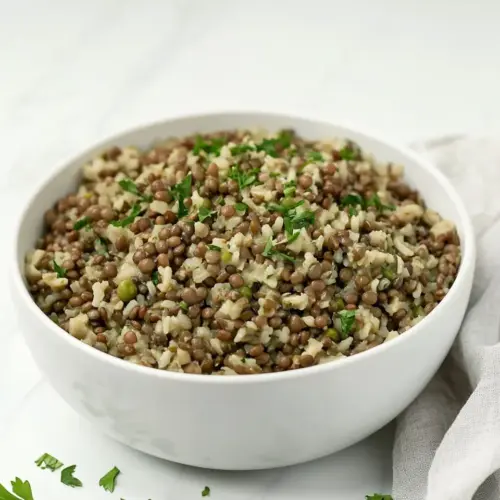
One Pot Lentils and Rice
One Pot Lentils and Rice is a creamy yet textured, easy weeknight dinner that blends nutty brown rice with hearty French lentils in savory chicken broth. It reheats beautifully and requires minimal cleanup, making it ideal for busy evenings and meal prep. Try it when you want a wholesome, comforting bowl with bright herbal finish.
Equipment
- Large saucepan
- Fine mesh sieve
- Fork
Ingredients
- 1 cup French lentils, raw Provide earthy, firm-textured pulses that hold shape during cooking and contribute protein and fiber to the dish; require rinsing and a gentle sauté or pre-soak if desired to ensure even cooking. Absorb flavors from the broth and aromatics while still offering a slightly peppery bite that complements rice and herbs. Cook to tender but slightly al dente to maintain texture in the one-pot preparation.
- 1 cup brown rice, raw Contribute a chewy, whole-grain base that adds body and nutty flavor while balancing the lentils’ earthiness; rinse to remove excess starch and ensure even cooking. Pair with the lentils so grains absorb broth and meld flavors, creating a cohesive pilaf-like consistency. Require sufficient liquid and simmering time to become tender without turning mushy.
- 1 tablespoon butter, unsalted Provide a rich, silky mouthfeel and mild savory depth that helps coat grains and pulses, enhancing overall flavor and richness; use sparingly to avoid greasiness. Melt early in the cooking process to sauté aromatics or finish the dish for gloss and subtle dairy notes. Can be substituted with oil if a non-dairy option is needed, but butter uniquely contributes a rounded taste.
- 3 1/2 cup chicken broth, low-sodium Serve as the primary cooking liquid that infuses the lentils and rice with savory seasoning while controlling final texture and moisture; low-sodium broth allows for precise salt management. Supply minerals and umami to deepen the dish’s flavor profile, and determine cooking time based on liquid-to-grain ratios. Warm before adding for consistent simmering and gentle absorption.
- 3 tablespoon parsley, fresh Add bright, herbaceous freshness and a clean, slightly peppery finish that lightens the rich, starchy elements; chop finely for even distribution. Stir in at the end of cooking or as a garnish to preserve color and delicate flavor. Enhance aroma and visual appeal while providing a subtle contrast to warm, savory components.
- 3 tablespoon green onion Offer a mild oniony crunch and fresh, sharp green flavor that livens the dish and adds subtle allium notes without overpowering the other ingredients; slice thinly for texture. Sprinkle on as a final garnish or fold in near the end of cooking to retain color and brightness. Complement parsley and balance the earthy lentils and rice with a crisp finish.
Instructions
- Rinse rice (we prefer long grain brown rice) and lentils thoroughly in three changes of water. Drain well.: The moment you begin rinsing, you will notice cloudy water becoming clearer, and that clarity matters because it removes excess surface starch and dust which can otherwise make the pot gluey. Rinsing also helps prevent off flavors from storage dust. I use a fine mesh sieve and gently swish until the water runs almost clear. A common mistake is rushing this step, which leaves starch behind and causes a tacky texture; take the time to rinse in multiple changes until the water looks clean.
- In a large saucepan over medium heat, melt the butter. Add the drained rice and lentils and toss until well-coated.: When the butter hits the pan you should hear a soft hiss and smell a warm, toasty note as it melts. Coating the brown rice and French lentils briefly in fat helps each grain pick up flavor and creates a slight toasting that improves depth. Use a wooden spoon to toss gently so the grains are evenly slicked and glistening. Avoid overheating the butter to the point of browning, because burnt butter will impart a bitter edge; moderate heat keeps the flavor sweet and nutty.
- Add broth and bring to a boil. Reduce to low heat and simmer, covered, undisturbed, for 30-40 minutes, until broth is mostly absorbed and rice and lentils are tender.: As you pour in the warm chicken broth , you will smell savory steam and see the pot come alive with bubbles. Bringing the mixture to a full boil encourages even absorption when you reduce the heat. Watch for a steady rolling boil, then immediately reduce the heat to maintain a gentle simmer. If you let it stay at high boil, the liquid may evaporate too quickly and the grains can become unevenly cooked, so lower the heat as soon as it reaches a boil.
- Remove from heat and let rest 5-10 minutes before fluffing with a fork. (Avoid stirring vigorously, as that creates too creamy a texture. The rice and lentils are best when the grains are tender, but separate.): During the long, quiet simmer you will hear faint, occasional tiny pops as the liquid is absorbed and the pot breathes. This undisturbed period is crucial because movement can break the grains and release starch, which makes the texture creamy instead of separate. Check visually near the end: the broth should be mostly gone and the grains should look plump and tender. A frequent error is lifting the lid to stir repeatedly, which leads to a mushier result; resist opening and stirring, trust the timing and the visual cues.
- Fold in parsley and green onions, and serve.: Once the pot is off the stove, a short rest allows residual steam to finish cooking and helps the grains settle, producing a lighter, fluffier texture. You may notice the aroma deepen as it sits. Use a fork to fluff gently so that the grains separate without mashing. If you try to fluff while it is too wet or immediately after high heat, you risk creating a gummy texture, so allow the short rest to do its work.
- Fold in parsley and green onions, and serve: The moment you fold in chopped parsley and sliced green onion , a bright, herbaceous scent will lift from the bowl, adding contrast to the savory base. Folding preserves the fresh color and texture of the herbs, which should remain vibrant and slightly crisp. I recommend adding them off heat so they keep their freshness. A common slip is adding them too early in the cooking process, which wilts the herbs and mutes their flavor; delay until the end for the best brightness.
Notes
- Rinse thoroughly before cooking to remove surface starch and dust, this keeps the finished dish from becoming gummy.
- Use low sodium broth so you control the salt level, and adjust seasoning at the end for balance.
- Toast in butter briefly to add a toasty depth, but keep the heat moderate to prevent bitterness from burned butter.
- Simmer undisturbed so the brown rice and French lentils cook evenly, stirring can break grains and make the texture too creamy.
- Let it rest for five to ten minutes off heat before fluffing, this step improves separation and mouthfeel.