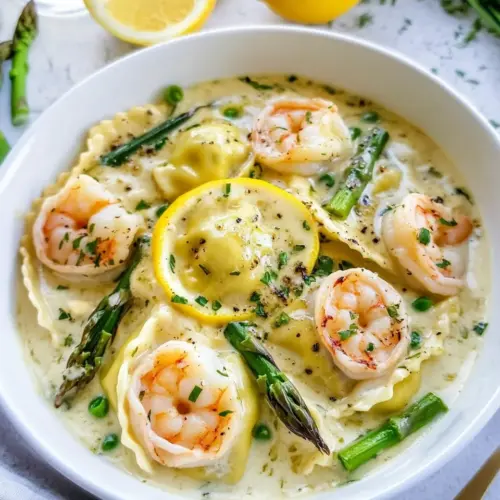
One Pot Lemon Garlic Cream Ravioli with Shrimp and Asparagus
One Pot Lemon Garlic Cream Ravioli with Shrimp and Asparagus is a creamy, bright, and easy weeknight dinner that combines pillowy ravioli, tender shrimp, and snappy asparagus. The lemon and garlic lift the rich sauce, making each forkful satisfying but not heavy. Perfect for a quick weeknight meal or a relaxed dinner with friends, this recipe comes together in about 25 minutes and always impresses.
Equipment
- Large nonstick sauté pan
- Whisk
- Spatula
Ingredients
- 1 pound medium shrimp peeled and deveined, tails on or off Season and cook quickly for a tender, flavorful protein; adds mild sweetness and absorbs garlic-lemon sauce while providing substance to the dish.
- 1 tablespoon butter Meld into pan fat to brown shrimp and aromatics; contributes a rich mouthfeel and helps create a glossy sauce base when combined with oils.
- 1 tablespoon olive oil Sauté aromatics and start the sauce; provides a fruity, savory medium for cooking shallots, garlic, and shrimp while preventing sticking.
- 1/2 teaspoons salt Enhance overall seasoning and balance flavors; draws out moisture from aromatics and brightens the savory components when added sparingly.
- 1/8 teaspoon pepper Add subtle heat and depth; sharpens flavors and provides a counterpoint to creamy elements without overpowering the dish.
- 1 tablespoon butter Enrich sauce texture and flavor during sautéing; combines with oils to create silky notes and helps finish the sauce.
- 1 tablespoon olive oil Support sautéing and flavor development; supplies a stable cooking fat with a complementary flavor profile to butter.
- 1 shallot, chopped Provide sweet, mild onion flavor and aromatic complexity; softens when cooked and forms part of the savory base for the sauce.
- 3 -4 garlic cloves, minced Impart pungent, aromatic depth and savory warmth; infuse the oil and butter with bright, garlicky notes that complement lemon and cream.
- 1/4 -1/2 teaspoon red pepper flakes Introduce a touch of heat and complexity; adds gentle spiciness that lifts the creamy sauce and enhances shrimp without dominating.
- 1 cup asparagus chopped into 1” pieces Contribute fresh, crisp texture and a green note; cooks quickly to tender-crisp pieces that add color and vegetal balance.
- 3 cups low sodium chicken broth Form the primary liquid for simmering and flavor foundation; supplies savory depth and helps cook ravioli and vegetables evenly.
- 1 cup milk Provide creaminess and body to the sauce; thins the broth slightly and contributes dairy richness that blends with cream cheese.
- 1 tablespoon cornstarch Thicken and stabilize the creamy sauce; helps create a smooth, clingy texture so the sauce coats ravioli and shrimp evenly.
- 1/2 teaspoon dried basil Add herbaceous, slightly sweet Mediterranean flavor; complements basil-like notes already present and supports the sauce's aroma.
- 1/2 teaspoons salt Reinforce seasoning levels with balanced saltiness; ensures consistent taste throughout the dish and complements savory components.
- 1/4 teaspoon pepper Contribute mild heat and background spice; refines seasoning to align with other pepper measures and supports overall balance.
- 116 oz . pkg. quality refrigerated cheese ravioli Supply the main pasta element with tender, cheese-filled pockets; cooks in the liquid to absorb flavors and become the dish's centerpiece.
- 2 or 4 oz. cream cheese, cubed and softened (I use 1/3 less fat) Add tangy richness and creamy body; melts into the sauce to create silkiness and enhance the cheesy filling of the ravioli.
- 1/4 cup freshly grated Parmesan cheese Provide umami, salty complexity and a nutty finish; rounds out the sauce and adds depth when stirred in at the end.
- 3/4 cup frozen peas, thawed Introduce pops of sweetness, color, and textural contrast; thawed peas add brightness and a pleasant bite to the creamy assembly.
- 2 tablespoons lemon juice Brighten the sauce with citrus acidity and lift flavors; balances richness and complements seafood and herbs for a fresher finish.
- 2 teaspoons minced fresh parsley Garnish with fresh, aromatic herbiness and color; lends a clean, slightly peppery finish that ties together the lemon and garlic elements.
Instructions
- In a large nonstick sauté pan, melt 1 tablespoon butter with 1 tablespoon olive oil over medium-high heat. Add shrimp and season with salt and pepper. Sauté approximate 3 minutes, just until shrimp is opaque. Remove to a plate.: As the pan heats the fat will shimmer and you will hear a lively sizzle when the shrimp hits the surface, that quick sear locks in juices and creates a slightly caramelized exterior. The aroma shifts from raw sea notes to a toasty, savory scent, and you want the shrimp to be just opaque with a gentle spring when pressed. This technique matters because overcooked shrimp becomes rubbery and chalky, which ruins the contrast with the silky ravioli . One common mistake is crowding the pan, which drops the temperature and causes steaming instead of searing. If that happens the surface will look pale rather than browned; cook in batches or use a larger pan to keep the heat high.
- In the now empty pan, melt 1 tablespoon butter with 1 tablespoon olive oil. Add shallots and asparagus and sauté 2 minutes over medium-high heat. Add garlic and red pepper flakes and sauté 30 seconds.: The butter and oil will pick up any fond from the prior sear, giving immediate flavor lift as the shallot softens and the asparagus brightens to a vibrant green. You should see the edges of the shallot turn translucent with a faint golden tinge, and the kitchen fills with a warm, oniony aroma that signals readiness for the garlic. Adding the garlic and red pepper flakes briefly allows their oils to bloom, releasing a fragrant, slightly spicy perfume. This short cooking window is crucial, because prolonged exposure will burn the garlic and make it bitter. A frequent misstep is leaving the heat too high; if the aromatics brown too fast, lower the flame so they cook gently without charring.
- Add ravioli, milk, and half of the chicken broth. Mix remaining chicken broth with cornstarch and add to skillet along with dried basil, salt and pepper. Bring to a boil and immediately reduce to a simmer. Simmer just until ravioli is al dente (a minute or so less than package instructions), being careful not to overcook. Turn heat to low.: When you add the ravioli and liquids the pan will hiss and then settle into gentle bubbling; visually you will see the ravioli floating and the sauce begin to thicken as the cornstarch activates. The milk gives the sauce body while the broth offers savory depth, and combining broth with cornstarch first prevents lumps and ensures a glossy finish. Simmering just until the ravioli is al dente matters because overcooking will cause them to split and release filling, turning the sauce gummy. A common error is walking away—stir periodically and test a piece early so you stop cooking one minute before the package suggests, preserving texture.
- Push ravioli to one side of the pan and add cream cheese to the other side and whisk until mostly melted, followed by Parmesan cheese. Stir in peas, lemon juice and shrimp. Heat through and garnish with fresh parsley and additional salt/pepper/lemon juice/Parmesan to taste if desired.: As you create this small separation you will notice the cream cheese soften and sag into the heat, and whisking it in creates a velvety emulsion as the dairy melds with the reduced broth. The Parmesan cheese melts into a salty, umami sheen that rounds the sauce and helps it cling to the ravioli . This technique matters because tempering the dairy against low heat prevents graininess and achieves a silky mouthfeel. If the pan is too hot the cheeses can break and become oily, so reduce heat if you see separation. A frequent mistake is adding cold cream cheese which forms lumps; bring it closer to room temperature first so it blends quickly.
- Stir in peas, lemon juice and shrimp. Heat through and garnish with fresh parsley and additional salt/pepper/lemon juice/Parmesan to taste if desired: When you fold everything together the bright green of the peas and parsley contrasts visually with the pale sauce, and the air fills with a bright citrus note from the lemon juice . Reintroducing the cooked shrimp only needs a brief warm through so it stays tender and juicy rather than overcooked. This final assembly balances texture and flavor, letting the acid lift the cream and the herbs freshen each bite. A common oversight is reheating aggressively which toughens the shrimp and causes the sauce to split, so warm gently on low and taste to adjust seasoning at the end.
Notes
- Adjust creaminess If you want a lighter sauce, use 2 ounces of cream cheese instead of 4 ounces and increase the broth by a splash to maintain sauciness without richness overload.
- Control spice Reduce the red pepper flakes to 1/4 teaspoon for a mild plate, or omit entirely if serving children; add more at the end if you want extra heat.
- Ravioli timing Check a ravioli a minute before the package time because stove models vary; they should be tender but still hold shape.
- Swap dairy carefully If you need a lower fat option, choose 1/3 less fat cream cheese and 2 percent milk, but expect a slightly thinner sauce and adjust with a touch more cornstarch slurry to thicken if necessary.
- Make ahead Finish the sauce and keep components separate in the fridge for up to a day; reheat gently and fold in cooked shrimp and fresh parsley just before serving to preserve texture.