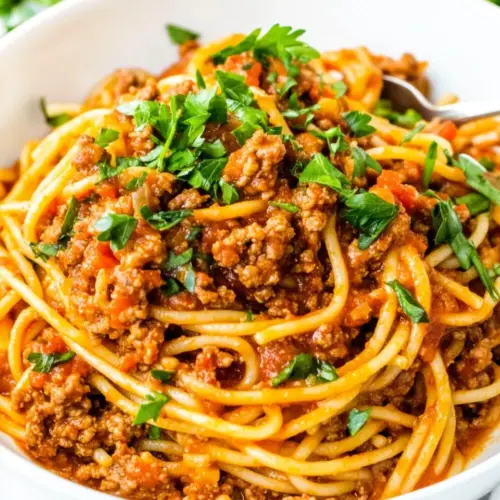
One Pot Ground Turkey Spaghetti
One Pot Ground Turkey Spaghetti is a quick and comforting one pot meal that combines lean ground turkey with rich marinara and spaghetti for an easy weeknight dinner. It’s savory, saucy, and straightforward to make, offering balanced protein and hearty pasta in about thirty minutes. Make it when you want minimal cleanup and satisfying flavor.
Equipment
- Dutch Oven
- Stove
- Wooden Spoon
- Tongs
Ingredients
- 1 tablespoon olive oil Heat and coat the pan to prevent sticking while providing a flavorful fat base for browning other components. Adds richness and helps distribute heat evenly for sautéing aromatics and turkey.
- 1 pound lean ground turkey Brown and crumble to develop savory depth and act as the main protein source for the dish. Releases juices and browned bits that enhance overall flavor when deglazed with liquids.
- 3 cloves garlic minced Mince finely and release aromatic, pungent flavors when sautéed to build the dish's savory foundation. Helps flavor the meat and sauce while dispersing evenly through the pasta.
- 1/2 cup onion diced Dice small to provide sweet, aromatic support and textural contrast when softened. Contributes moisture and enhances the savory profile after sweating with garlic.
- 1/2 teaspoons salt Season lightly to enhance and balance overall flavors, especially in the meat and sauce. Helps bring out natural tastes without overpowering other seasonings when added during cooking.
- 1/4 teaspoon pepper Sprinkle sparingly to introduce subtle heat and enhance savory notes across the dish. Balances flavors and counteracts sweetness from the marinara when adjusted to taste.
- 3 cups marinara 24-ounce jar Pour in as the primary tomato flavor and body, supplying acidity, sweetness, and umami to the sauce. Serves as the base liquid that clings to noodles and combines with broth for cooking.
- 2 1/2 cups low sodium chicken broth Add as the cooking liquid to properly hydrate pasta and meld flavors while keeping sodium moderated. Provides depth and a savory backbone that complements the marinara and meat.
- 1 teaspoon balsamic vinegar Stir in to brighten and subtly acidify the sauce, lifting heavier flavors and rounding out sweetness. Works as a small but effective flavor enhancer that balances the tomato base.
- 1 tablespoon italian seasoning Sprinkle to introduce a blend of dried herbs that infuse the sauce with classic Italian aromatics. Adds complexity and herbaceous notes while melding with tomatoes and meat.
- 1 tablespoon fresh parsley Fold in fresh for a final aromatic lift and mild, leafy flavor that freshens the finished dish. Provides visual appeal and a light herbaceous finish when sprinkled before serving.
- 8 ounces spaghetti noodles broken in half Break into shorter lengths and cook directly in the sauce to absorb flavors while saving time on separate pasta boiling. Creates a cohesive one-pot meal by cooking pasta until tender in the sauce.
Instructions
- Place a large dutch oven or large 5-7 quart pot on the stove. Turn the heat to medium high and add the olive oil.: Warmth fills the kitchen when a heavy pot heats up, and you should notice a faint shimmer on the base once it’s ready for oil. This initial heat helps the olive oil spread evenly and promotes a good sear on the ground turkey . If the pot is not hot enough the meat will stew instead of brown, losing those toasty flavors you want.
- Once the pot is warm spread the ground meat out in the pan to brown. Season the meat with salt and pepper. Stir and break up the meat as needed cooking it all the way through until brown, about 7-10 minutes.: The olive oil should flow freely and catch the light, releasing a soft aroma as it warms. Medium high gives immediate sizzle without smoking excessively. If the oil smokes, lower the heat to prevent bitter burned notes from forming.
- Add the garlic and onion and soften it with the meat for about a minute until fragrant.: You will hear an eager, steady sizzle as the surface of the ground turkey meets the hot oil, and the edges will gradually take on a golden tint. Leaving space and not overcrowding keeps moisture from trapping and steaming the meat, which prevents the desirable browned bits. If the meat releases a lot of moisture, give it time to evaporate so browning can resume.
- Add three cups of pasta sauce, low sodium broth, balsamic vinegar, italian seasoning and parsley to the pan. Give it a gentle stir to mix everything well.: As the meat browns, the simple act of seasoning brings out savory, meaty aromas and enhances depth. Salt helps proteins break down and develop a more complex crust, and pepper adds a subtle heat. Resist the urge to over salt early, since the marinara and broth will contribute sodium later.
- Break the spaghetti in half and add to the pot in small handfuls. Try to spread out the pasta in the pan. Alternating the direction you place the pasta in the liquid can help to spread it out so it doesn’t clump. Push the pasta gently under the liquid but don’t stir until it has cooked a little bit with the lid on the pot.: The rhythmic sound of breaking up the meat and the scent shifting from raw to roasted signals that flavor is building. Ensure no pink remains and the pieces are mostly separated for even texture. A common mistake is stopping too soon, leaving larger clumps that cook unevenly in the sauce.
- Bring the pot up to a boil, then cover the pot and turn the heat down to medium heat to simmer. Cook the pasta covered for about 13-15 minutes or until tender. Stir the pasta occasionally while it cooks to help keep it from clumping, about every five minutes. Cover the pot with the lid again to continue cooking.: The moment you add minced garlic and diced onion , a warm perfume will rise, and the onion will begin to look translucent. This brief softening releases sugars and aromatics that meld into the meat, creating a unified base. Avoid browning garlic dark brown, as it becomes bitter quickly.
- The pasta is done when it is tender. Shut off the heat and let the pasta stand for a 2-3 minutes to soak up a little more of the sauce. Serve with cheese or parsley and enjoy!: When the marinara , chicken broth , balsamic vinegar , italian seasoning , and parsley hit the pot, you’ll see a rich, glossy mixture form and smell a more layered aroma. The broth adjusts sauce consistency so the spaghetti can cook in it, while the vinegar brightens the tomato notes. If your sauce seems very thick or very thin, adjust liquid in small increments to reach a saucy but not soupy texture.
- Give it a gentle stir to mix everything well: The gentle stir blends flavors without making the sauce overly emulsified, preserving texture and preventing splatter. You want even distribution of seasoning so each spoonful tastes consistent. Vigorous stirring now can make the pasta stick later when added, so keep movements calm.
- Break the spaghetti in half and add to the pot in small handfuls: As you place broken spaghetti into the sauce, you will notice the strands begin to soften at the ends, sinking into the liquid. Adding in small handfuls helps the strands submerge and separate. If you dump all the pasta at once it can clump and cook irregularly, so take your time.
- Try to spread out the pasta in the pan: Spread the pieces so they lay in different directions and disperse through the liquid, which supports even cooking. The visual should be an even layer of pasta mostly submerged with occasional tips poking out. If large sections remain dry, gently press them under the surface so they hydrate evenly.
- Alternating the direction you place the pasta in the liquid can help to spread it out so it doesn’t clump: Changing the orientation of the strands as you add them creates cross layers that separate during cooking, producing individual twirlable pieces rather than a single glued mass. This small technique saves you from a glued together bowl later. If clumps form, separate them carefully with tongs before they fully soften.
- Push the pasta gently under the liquid but don’t stir until it has cooked a little bit with the lid on the pot: The pleasant simmer sound will soften into a steady bubble as the pasta begins to hydrate, and leaving it briefly undisturbed lets the surface glue over slightly, preventing breakage. Covering traps steam and expedites cooking. Stirring too early can release starch and encourage sticking.
- Bring the pot up to a boil then cover the pot and turn the heat down to medium heat to simmer: You will see lively bubbles as it nears a boil, then a calmer, steady simmer once you reduce the heat. This controlled simmer lets the pasta finish cooking without aggressive agitation, yielding tender pasta with a cohesive sauce. Boiling too hard can cause the liquid to reduce too rapidly and the pasta to stick.
- Cook the pasta covered for about 13 to 15 minutes or until tender: As it cooks, the sauce will thicken and the aroma will deepen, the spaghetti becoming pliable and infused with tomato flavor. Check for tenderness by tasting near the lower end of the recommended time frame. Overcooking leads to mushy noodles, so aim for al dente that will continue to soften slightly off the heat.
- Stir the pasta occasionally while it cooks to help keep it from clumping about every five minutes: Each gentle stir frees any strands that are sticking together and redistributes heat, helping the pasta cook uniformly. You should hear brief soft scraping sounds as strands release from the bottom. Avoid constant stirring which can release excess starch and make the sauce gluey.
- Cover the pot with the lid again to continue cooking: Resting under the lid conserves heat and allows the pasta to finish absorbing the sauce, melding flavors further. You’ll notice steam building and the sauce settling into a thicker coating on the noodles. If the pot seems overly wet at this point, remove the lid for a few minutes to reduce excess liquid.
- The pasta is done when it is tender: The texture should be springy yet cooked through, and the sauce will cling nicely to each strand. Taste a piece to confirm, and look for a uniform color where the pasta has absorbed tomato flavor. If it feels firm in the center, continue cooking briefly and check again.
- Shut off the heat and let the pasta stand for a 2 to 3 minutes to soak up a little more of the sauce: Standing time lets the residual heat redistribute and the sauce thicken further, yielding a more cohesive final dish. You may notice the steam settling and the sauce becoming silkier. Skipping this step can leave the dish a touch watery when plated.
- Serve with cheese or parsley and enjoy: When you plate, the fragrant herbs and any finishing garnish will lift the bowl visually and aromatically, inviting the first bite. A final sprinkle of fresh parsley brightens each forkful. If the pasta is too loose on the plate, spoon a little of the hot sauce back over the top to bind it together.
Notes
- Watch the sauce thickness The thickness of store bought marinara varies a lot, which directly affects how much chicken broth you need. If your sauce is very thin, reduce the broth a bit so the pot does not become soupy; if it is very thick, add the broth in small amounts until the pasta can move freely. Adjusting little by little prevents over correction.
- Browning builds flavor Taking time to brown the ground turkey rather than simply cooking it through creates caramelized bits that enrich the sauce. Use medium high heat and let the meat sit undisturbed long enough to color, then break it up. If the pan steams instead of browns, raise heat briefly to evaporate excess moisture.
- Break spaghetti strategically Break the spaghetti in half so it fits without crowding and lays in different directions for even cooking. As the pasta softens, gently press pieces under the surface so they absorb liquid uniformly. Avoid stirring aggressively right after adding to prevent clumping.
- Season gradually Salt and pepper should be added in stages because the marinara and broth contribute sodium too. Taste midway through cooking and again after standing, then adjust if needed. This prevents ending up with an overly salty final dish.
- Finish with fresh herbs Fresh parsley added at the end brightens the bowl and balances tomato richness. Add it off heat to keep the color and fresh flavor. If you only have dried herbs, use less and add earlier so they have time to rehydrate and meld.