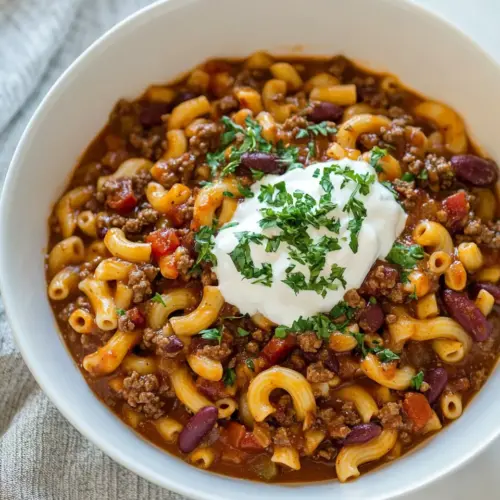
One Pot Chili Mac
One Pot Chili Mac is a creamy, cheesy, and slightly spicy one pot meal that feels like a warm hug on busy weeknights. This easy weeknight dinner combines savory ground beef, tangy crushed tomatoes, hearty kidney beans, and melted cheddar cheese into a satisfying pasta bowl that’s perfect for family meals or casual gatherings, making it a must try for comfort food lovers.
Equipment
- Large Pot
- Wooden Spoon
- Measuring Cups
Ingredients
- 1 tbsp olive oil Heat-friendly fat used to sauté aromatics and brown meat, imparting a subtle fruity flavor while preventing sticking; adds richness without overwhelming the dish.
- 1 1/2 cup chopped yellow onion Finely chopped aromatic that builds the savory base and sweet undertones when softened, contributing moisture and depth to the overall chili mac.
- 1 cup chopped red bell pepper Crisp, diced pepper that provides bright color, mild sweetness, and a fresh textural contrast when softened with the onions and spices.
- 1 lb 93% lean ground beef Leaner ground protein that supplies hearty texture and savory umami; browns well to add caramelized flavor and binds the dish together.
- 1 tbsp minced garlic (3 cloves) Pungent minced aromatics that deliver a sharp, garlicky warmth when briefly cooked, enhancing savory and spicy notes throughout the sauce.
- 4 tsp chili powder Bold red spice blend that contributes primary chili heat and smoky-earthy flavor, defining the dish’s chili character and warmth.
- 2 tsp ground cumin Warm, slightly citrusy seed spice that layers earthy complexity and a subtle smoky note, harmonizing with chili powder and paprika.
- 1 1/2 tsp smoked paprika Smoky ground spice that introduces a deep, slightly sweet smoke flavor, amplifying the chili profile and complementing the beef.
- 1 (28 oz) can crushed tomatoes Acidic, tomato-based element that creates the bulk of the sauce with bright tomato flavor and body, balancing spices and richness.
- 1 (15 oz) can low-sodium chicken broth, plus 1/2 cup more to thin if desired Salty, savory liquid used to create the cooking liquid for pasta and sauce, adding depth while controlling consistency; extra can thin the final texture.
- 1 (4 oz) can diced green chilies (mild or hot depending on your preference) Mildly spicy, canned chiles that contribute a subtle heat and tangy, green pepper flavor for added dimension without overpowering.
- 8 oz dry elbow macaroni (2 cups) Short tubular pasta that absorbs sauce and swells to provide comforting, chewy texture; simmers in the pot to finish with the chili.
- 1 (15 oz) can dark red kidney beans, drained and rinsed Creamy canned legumes that add protein, fiber, and a hearty, slightly sweet bean texture that complements the beef and sauce.
- Salt and black pepper Seasoning components used to adjust and balance flavors; sprinkle to taste to enhance overall savory, salty, and peppery notes.
- 1/2 cup half and half, or 1/3 cup heavy cream Rich dairy that smooths and enriches the sauce, adding creaminess and mellowing acidity while contributing a silkier mouthfeel.
- 1 1/2 cup shredded sharp cheddar cheese, plus more for serving if desired Sharp, melted dairy that adds tangy, cheesy richness and gooey texture, finishing the dish with savory depth and melty appeal.
- Sliced green onions, sour cream, diced tomatoes or cayenne pepper, (optional, for serving) Fresh, cool garnishes and optional spice that provide bright contrast, creaminess, acidity, or extra heat for individualized serving preferences.
Instructions
- Heat olive oil in a large pot over medium-high heat.: The scent of warmed olive oil should feel fruity and gentle as it shimmers, indicating the pan is ready. A properly heated pot gives immediate contact to the aromatics, encouraging even color development. You want a steady, medium high heat so that onions and peppers sizzle instead of steaming. A common mistake is overheating, which will make the oil smoke and create a bitter undertone. If you see smoke, reduce the heat and remove the pot from the burner briefly to cool.
- Add onion and bell pepper and saute 5 minutes. Scoot mixture to one far side.: As the yellow onion and red bell pepper cook, listen for a gentle sizzling and watch for the onion to turn translucent with slightly softened edges. The peppers will begin to lose their raw crunch and release a sweet aroma. Pushing the mixture to one side creates space for the beef in the next step, helping to build brown fond where flavor concentrates. Avoid stirring constantly, or the vegetables will not develop those golden edges.
- Crumble in beef in chunks, let sear about 3 minutes then break up and toss beef and peppers. Add in garlic and cook until beef is nearly cooked through, about 2 minutes.: When the ground beef hits the hot oil, you should hear a pronounced sear, and small browned bits will form on the pot bottom. Let it sit briefly to brown before breaking it up, because those browned bits add deep, savory notes to the sauce. Adding the garlic toward the end preserves its aromatics, which should smell toasty but not burned. Watch for any gray raw centers, and cook until no pink remains, avoiding overcooking which dries the beef.
- Add chili powder, cumin, and smoked paprika and cook 1 minute.: These dry spices will bloom in the hot fat and release a warm, perfumed aroma that shifts the base from simple sauté to chili forward. The tiny sizzling and darker color in the spices signal that oils are releasing, which deepens complexity. Stir briskly to prevent the spices from sticking and burning; if they darken too quickly, lower the heat temporarily.
- Pour in crushed tomatoes, chicken broth and green chilies. Stir in macaroni and kidney beans. Season with salt and pepper to taste.: Pouring the crushed tomatoes and chicken broth will deglaze the pot and lift those flavorful browned bits into the liquid. As you stir in elbow macaroni and dark red kidney beans , note that the pasta will release starch which thickens the sauce and helps it cling. Season lightly with salt and black pepper because you can always adjust at the end, but remember canned ingredients may bring sodium too. A common issue is adding too much salt early, so taste after the cheese is added for final adjustments.
- Bring to a simmer then reduce heat to low. Cook uncovered, stirring occasionally, until pasta is tender, about 12 to 15 minutes.: As the pot comes to a simmer, you will see gentle bubbling and steam rising, and the scent will turn warmly tomatoey. Reducing to low keeps a gentle simmer that cooks the pasta through without boiling off the liquid too fast. Stir occasionally to prevent the pasta from settling and sticking to the pot bottom; hearing a faint bubbling but not furious boil is the correct cue. If the pasta seems undercooked with most liquid gone, add small amounts of the reserved broth and continue cooking.
- Off heat stir in half and half and cheese. Thin with more chicken broth if desired. Serve with desired toppings.: Removing the pot from heat before adding the half and half and cheddar cheese ensures a silky finish, because dairy added to very high heat can separate and become greasy. As you fold the dairy and cheese in, the texture should turn glossy and cohesive, and a warm, creamy aroma will soften the spices. If the result is too thick, temper with extra chicken broth until you reach the desired sauciness. A frequent pitfall is overheating during this stage which can cause the cheese to clump, so stir gently and plate immediately for the best mouthfeel.
Notes
- Swap the protein: Use a leaner or fattier ground beef based on your preference, but remember cooking time may vary and fattier beef will produce more flavorful pan juices.
- Adjust heat levels: Choose mild or hot diced green chilies and modify the chili powder amount to suit guests, adding more gradually so you do not overshoot the spice target.
- Make it creamier: Substitute heavy cream for half and half for a silkier, more indulgent finish, taking care to remove the pot from heat first to avoid separation.
- Control sodium: Use low sodium canned goods and taste before adding extra salt, since the cheddar cheese and canned broth can raise salt levels.
- Stovetop timing: If your stovetop runs hot, lower to medium low once simmering to prevent the pasta from sticking and to allow even cooking through the center.