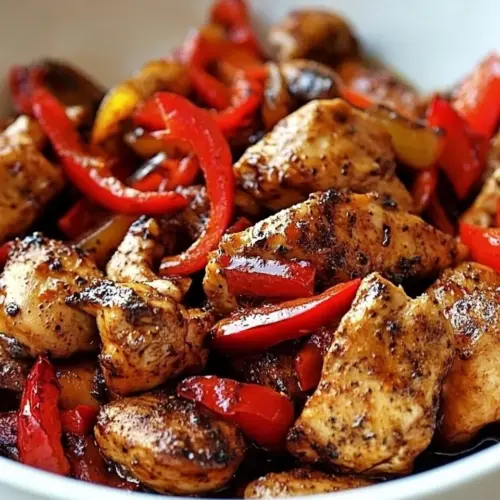
One Pot Black Pepper Chicken
One Pot Black Pepper Chicken is a punchy, easy weeknight dinner featuring tender chicken cubes in a glossy black pepper sauce, brightened with ginger and balanced with a touch of sweetness. Perfect for quick family meals or meal prep, this recipe delivers bold aroma, crispy seared edges, and simple cleanup. Make it when you want fast flavor and a comforting plate that comes together with pantry staples.
Equipment
- Skillet
- Mixing Bowl
- Spoon
Ingredients
- 1 1/2 pounds boneless and skinless chicken breasts cut into cubes Provide protein and bulk to the dish, offering tender, lean meat when cubed and cooked evenly; absorbs flavors from the sauce and spices for a hearty main component.
- 1 red bell pepper seeded and cut into strips Add bright color and crisp texture when sautéed briefly; supply mild sweetness and fresh aroma that balance savory and peppery elements in the recipe.
- 1 1/2 teaspoons black pepper freshly ground Infuse a sharp, pungent heat that defines the dish's flavor profile; freshly grinding preserves volatile oils for maximum fragrance and assertive seasoning.
- 1 inch ginger root fresh, peeled and finely chopped Contribute warm, zesty heat and aromatic depth when finely chopped; helps brighten the sauce and pairs well with garlic and soy for an Asian-inspired backbone.
- 2 garlic cloves peeled and finely minced Deliver savory pungency and a subtle sweetness when minced; meld into the cooking oil to release flavor and enhance the overall savory profile of the sauce.
- 3 tablespoons lite soy sauce divided, optional coconut aminos, tamari or Bragg Liquid Aminos Impart umami and salty depth to the sauce, helping to build a savory base; dividing allows for layering of flavor during cooking and finishing.
- 3 tablespoons white vinegar divided Provide bright acidity and tang to balance richness and saltiness, cutting through oil and protein; dividing helps adjust acidity during cooking and at serving.
- 1 tablespoon coconut palm sugar or honey Add a touch of sweetness and caramelized flavor that softens the vinegar's edge and complements soy and pepper; helps create a balanced glaze-like sauce.
- 2 tablespoons olive oil Serve as the cooking medium to sauté aromatics and chicken, promoting even browning; contributes subtle fruitiness and helps carry flavors throughout the dish.
Instructions
- Whisk together in a medium-sized bowl, half of the soy sauce, half of the vinegar, and the sweetener. Add the chicken and toss to coat. Place in the fridge to marinate for 30 minutes.: Warm notes of sweet and tangy will begin to perfume the bowl as the soy sauce and vinegar mingle with the sweetener, creating a glossy marinade that clings to the cubes of chicken . You should notice a shiny, slightly syrupy coating on the meat, which helps carry flavor inward and gives the exterior something to caramelize against the hot pan. This resting period allows the acid and salt to gently tenderize the fibers in the chicken , setting the stage for juicy results. One reason this step matters is it creates a concentrated flavor base so you do not need extra sauce later. If you skip or shorten this step, the interior of the meat can taste bland compared to the seared edges. Avoid a common mistake, do not marinate much longer than recommended in strong acid, as it can firm the meat's proteins excessively, changing texture.
- Add oil to a skillet and heat to medium-low. Add the garlic and ginger and cook for 30 seconds, just until garlic is golden and fragrant, but not burnt.: The moment you add the olive oil to warm pan you should see it shimmer softly, signaling it is ready. As the minced garlic and chopped ginger hit the oil, they release an immediate aromatic burst that will fill the kitchen, a heady combination of sweet and spicy notes. You want a gentle sizzle and a change in color to light gold, which signals flavor development without bitterness. This technique matters because quickly blooming aromatics unlock essential oils that become the backbone of the sauce, intensifying the final dish. A typical error is leaving the heat too high; burnt garlic tastes acrid and can ruin the base of the entire dish, so keep the flame modest and watch carefully.
- Add the marinated chicken with any juices in the bowl and cook for 3 minutes. Add the bell pepper strips, remaining soy sauce and vinegar, and black pepper and stir. Cook for about 10 minutes until peppers have softened and chicken is cooked through.: When the marinated chicken hits the skillet, you should hear a steady sizzle, indicating the surface is searing and beginning to brown. That first contact creates savory Maillard notes which provide depth to each bite. The juices from the marinade will steam and mingle with the aromatics, producing a slightly sticky glaze. This short initial sear seals flavor and starts the caramelization process, which is crucial for texture and color contrast. Overcrowding the pan at this stage is a frequent slip; too many pieces keep the surface wet and prevent proper browning, so cook in batches if needed for an evenly seared finish.
- Spoon chicken over or alongside brown rice or quinoa.: As you fold in the red bell pepper , it should hiss gently and begin to soften while retaining a bright color. Adding the reserved soy sauce and vinegar now layers fresh seasoning and acidity into the pan, and the freshly ground black pepper will release sharp aromatic flecks that perfume the steam. This step draws the cooked-on bits off the bottom of the skillet, incorporating those caramelized flavors into the sauce and coating the chicken and peppers. The why here is simple, combining heat and acid at this point balances richness and brightens the dish. Be careful not to drown the skillet in liquid, as that will turn the sear into a steam and dilute the concentrated flavors you developed earlier.
- Cook for about 10 minutes until peppers have softened and chicken is cooked through.: Over the next ten minutes the pan will fill with complex aromas, the sauce reducing slightly and darkening as sugars concentrate. Watch for visual cues, the edges of the chicken turning opaque and the center registering firm to the touch, which are signs of doneness. The red bell pepper should give but still show a little snap, offering textural contrast. This slow finish allows flavors to meld and the sauce to cling. A common pitfall is rushing this phase; cutting the time short risks undercooked chicken, while overheating can dry the meat. Test a piece to ensure it is cooked all the way through and remove from heat promptly.
- Spoon chicken over or alongside brown rice or quinoa.: Serve the saucy chicken over a bed of warm grains so each forkful can scoop up sauce and aromatics. The contrasting textures of soft grain and seared meat are satisfying, and the presentation is simple yet inviting. Spoon the glossy pan juices across the dish to add sheen and flavor. If plating for company, garnish with a final grind of black pepper to heighten fragrance. Watch for a plating mistake, do not let the cooked food sit too long before serving, as the sauce can thicken and become less glossy. Serve immediately for best texture.
Notes
- Marinating tip: Marinate the chicken for the full thirty minutes to allow the vinegar and soy sauce to start tenderizing and flavoring the meat, producing juicier results when seared.
- Heat control: Keep the skillet at medium low for the aromatics, then raise slightly when searing the chicken to promote caramelization, but avoid burning the garlic.
- Pepper adjustment: Use less than the recipe suggests for kids, and grind more at the table for adults who want an extra kick, preserving the layered flavor without overwhelming younger palates.
- Sauce consistency: If the sauce is too thin, simmer it briefly off heat or add a tiny slurry of cornstarch and water, then return to the pan to thicken slightly before serving.
- Oil choice: Use a light olive oil or neutral oil to avoid overpowering the delicate aromatics, ensuring the ginger and garlic remain the star scents.