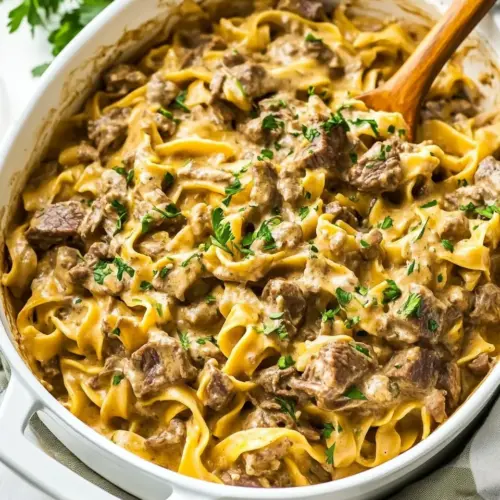
One Pot Beef Stroganoff
One Pot Beef Stroganoff is a creamy, savory, easy weeknight dinner that combines browned beef, mushrooms, and wide egg noodles in a luscious, tangy sauce. This comforting one pot meal delivers rich umami from beef stock and tender noodles that soak up every bit of flavor. Make it for a family dinner when you want big taste with minimal cleanup, and you will be rewarded with a reliably satisfying bowl.
Equipment
- Egg Noodles
- Better Than Bouillon Beef Base
- 3.5 quart Enameled Cast Iron Signature Braiser
Ingredients
- 4 tablespoons unsalted butter Melted to provide a rich cooking fat and glossy finish, unsalted butter helps brown aromatics and enrich the sauce without adding extra salt; it creates a silky mouthfeel and carries flavors throughout the dish.
- 8 ounces sliced white mushrooms Sautéed to release earthy, umami flavors, sliced white mushrooms add meaty texture and absorb savory juices; they deepen the sauce profile and complement the beef's richness.
- 1 small yellow onion, diced Sweated until translucent to build a sweet, aromatic base, diced yellow onion balances savory elements and contributes natural sugars that enhance caramelization and overall depth.
- 1 pound lean ground beef, 90/10 Cooked and broken apart to supply the primary protein, lean ground beef offers savory flavor and texture while rendering minimal fat for a leaner stroganoff that still binds well with the sauce.
- 1/2 teaspoon Kosher salt Measured sparingly to season and enhance all flavors, Kosher salt helps extract moisture from vegetables and proteins and elevates the overall taste without overwhelming the dish.
- 1/2 teaspoon Black pepper Ground to provide mild heat and aromatic contrast, black pepper adds warmth and complexity; it punctuates the creamy sauce and complements the savory beef and mushrooms.
- 3 cloves garlic, minced Minced and sautéed briefly to release pungent, aromatic oils, garlic injects bright, savory notes that lift the dish and integrate with butter and onions for a flavorful base.
- 2 tablespoons all-purpose flour Sprinkled and cooked to thicken the pan juices, all-purpose flour creates a roux-like binder that gives the sauce body and helps it cling to noodles and beef for a cohesive texture.
- 32 ounces beef stock Added as the liquid backbone to form the sauce, beef stock supplies deep, savory flavor and enough cooking liquid to hydrate the noodles while marrying the other components.
- 1 (12 ounce) bag wide egg noodles Boiled in the sauce to absorb flavors and provide the carbohydrate base, wide egg noodles deliver tender, chewy bites that capture the creamy stroganoff sauce and make the meal hearty.
- 1 cup sour cream Folded in off the heat to enrich and add tang, sour cream lends creaminess and slight acidity that balances the richness while preventing curdling when tempered correctly.
- 1/4 cup minced parsley Sprinkled at the end to add fresh, herbaceous brightness, minced parsley provides color contrast and a clean finish that lifts the heavy, creamy elements of the stroganoff.
Instructions
- In a large high-sided pan add butter and set over medium heat.: The moment the butter melts you should hear a gentle sizzle and smell a warm, nutty aroma, signaling the fat is ready to carry flavor. A glossy sheen on the pan tells you the temperature is correct, while little foam suggests water content evaporating. This stage matters because the butter forms the flavor base, helping the mushrooms and onion brown instead of sticking. A common mistake is heating the pan too high which burns the butter, creating bitterness. If you see rapid browning, lower the heat and wipe the pan briefly to reset the surface.
- Once the butter is melted add the mushrooms and onions and cook until the vegetables soften, about 10 minutes.: As the mushrooms and onion cook you will notice moisture releasing, then gradually evaporating, followed by a fragrant sweetening as sugars caramelize and the veggies take on a golden edge. The sound shifts from active sizzling to a calmer bubble, and the texture moves from crisp to tender. This slow development builds depth, so patience pays off for a richer sauce later. Overcrowding the pan leads to steaming rather than browning, so give them space; if they steam, remove some liquid and raise the heat briefly to encourage color.
- Add the ground beef, kosher salt, and black pepper and continue cooking until the beef is browned and the mushrooms and onions are soft, about 10 minutes.: When you add the beef the pan should resume lively searing noises, and the meat will release juices that mingle with the vegetables. Browning creates Maillard reactions, which produce savory, complex aromas and deepen the overall taste. Break the meat into even pieces with a spoon so it cooks uniformly, and watch for little browned bits clinging to the pan these contribute big flavor. A typical pitfall is stirring too frequently, which prevents proper browning; let the meat sit a moment to form color before turning.
- Add in the garlic and saute for another 30 seconds.: The garlic should perfume the pan almost immediately, lending a sweet, savory lift. Because garlic browns quickly, keep the time short so it softens but does not develop a bitter char. This brief hit of aromatics sharpens the flavor profile and balances the rich meat. If the pan seems too hot, pull it slightly off the heat to control the garlic browning, as burnt garlic will ruin the sauce’s nuance.
- Sprinkle in the flour and stir to combine.: As you stir in the all purpose flour , you will notice the mixture thicken and take on a slightly pasty texture, which is exactly what you want before adding stock. Cooking the flour briefly removes raw starch taste and allows it to absorb fat evenly, which is essential for a smooth sauce. Work quickly to distribute it so there are no lumps, and watch for a faint toasty scent indicating the flour is cooked. If lumps form, whisk briskly and gently to break them up rather than adding more liquid immediately.
- Pour in the beef stock and bring the mixture to a slight boil.: When the beef stock hits the pan it will deglaze, lifting savory fond from the bottom and creating a fragrant steam. As it comes to a gentle boil you will see the sauce loosen and start to thicken as the starch from the flour activates. This simmering step allows flavors to marry and for any raw flour taste to dissipate. Avoid a rolling boil which can reduce too quickly and toughen meat; aim for a lively simmer where bubbles gently break the surface.
- Add in the noodles and simmer covered on medium-low heat for about 10-15 minutes or just until the noodles are soft.: As the egg noodles simmer they will swell and absorb the savory liquid, changing from pale to plump and tender. You should hear a consistent soft bubbling and see the sauce cling to the pasta as it cooks. Stir once or twice to keep noodles from sticking and check for doneness a little early to avoid overcooking. A common error is leaving the lid off, which can dry the sauce; covering ensures even cooking and prevents the liquid from evaporating too fast.
- Shut off the heat and stir in the sour cream and parsley.: Turning off the heat before adding the sour cream prevents curdling and preserves a silky texture, while the parsley refreshes the flavor and adds color. Stir gently until the cream is fully incorporated and the sauce looks glossy. If the sauce seems too thin, let it sit off heat for a few minutes to thicken; if too thick, a splash of warm stock can loosen it. Avoid returning the pan to high heat after adding sour cream, which can separate the dairy.
- Taste and season with kosher salt and black pepper.: This final seasoning is where everything comes together, and you should taste to find balance between savory and tangy. Adjust in small increments, stirring and tasting as you go, because the beef stock and sour cream already contribute salt and tang. A frequent mistake is over salting; remember you can always add, but you cannot remove excess quickly, so proceed cautiously.
Notes
- Brown in Batches When browning the beef, avoid crowding the pan. If the meat is piled up it will steam instead of sear, losing the deep flavors that make the dish so savory. Brown in portions if needed to get that rich color.
- Control Mushroom Moisture Let the mushrooms cook until their liquid evaporates and they begin to caramelize. This concentrates their umami and prevents the sauce from becoming watery. If they release too much liquid, increase heat slightly to reduce it.
- Whisk the Flour After adding the all purpose flour, stir well to incorporate into the fat and veggies. This prevents lumps when the beef stock is added and ensures a smooth, silky sauce.
- Gentle Simmer Maintain a gentle simmer after adding the egg noodles to avoid reducing the sauce too quickly and to keep the pasta tender. A vigorous boil can make textures uneven and chew the pasta.
- Add Sour Cream Off Heat Stir the sour cream in after you shut off the heat to avoid separation. The residual warmth is enough to meld it into the sauce without curdling, yielding a creamy finish.