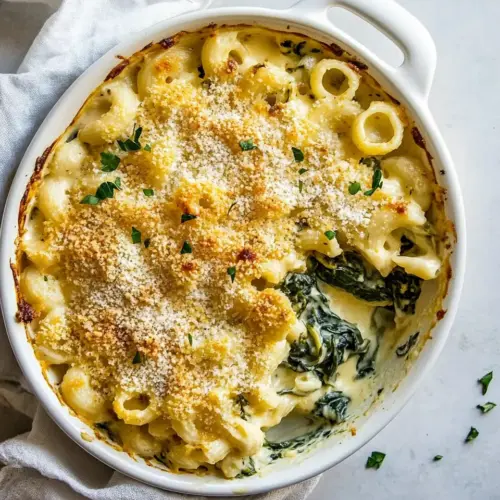
One Pot Baked Spinach and Artichoke Mac and Cheese
One Pot Baked Spinach and Artichoke Mac and Cheese is a creamy, savory comfort meal with tangy artichokes, bright spinach, and a crispy buttery cracker topping. Perfect for an easy weeknight dinner or a winter gathering, this one pot casserole blends silky cheeses and short pasta for indulgent texture and flavor. Make it for a crowd and enjoy reliable, comforting results every time.
Equipment
- Baking Dish
- Large saucepan
- Measuring Cup
- Mixing Bowl
Ingredients
- 6 tablespoons salted butter, at room temperature, plus more for greasing Soften and enrich the dish by contributing a creamy, buttery base that helps create a smooth sauce and prevents sticking; melt the butter in the pot before adding liquids to build flavor and texture. Reserve a bit for greasing the baking dish so the mac and cheese releases easily and gains a golden edge while baking.
- 1 (1-pound) box short-cut pasta, such as macaroni Provide the pasta structure and starch necessary for sauce absorption and thickening; choose a short-cut shape like macaroni to trap cheesy sauce in each bite and ensure even cooking in a one-pot method. Measure by weight for consistent cooking time and to maintain the recipe’s balance of pasta to sauce.
- 2 cups whole milk (see Note) Add liquid and creaminess while helping to create a smooth, saucy consistency when heated with butter and cheeses; whole milk contributes richness and prevents the sauce from becoming grainy. Warm slightly before adding to promote even melting of cream cheese and cheddar for a cohesive sauce.
- 1 (8-ounce) package cream cheese, cubed Contribute tangy richness and a silky, thickening quality when cubed and stirred into warm milk and butter; cream cheese creates a luxuriously creamy mouthfeel and helps stabilize the sauce. Cut into small pieces so it melts quickly and integrates evenly throughout the pasta.
- 3 cups shredded sharp cheddar cheese Provide the primary sharp cheesiness, depth of flavor, and meltability that define the dish; shredded sharp cheddar contributes both taste and the stretchy, cheesy texture expected in mac and cheese. Stir in gradually off the heat if necessary to prevent separation and maintain a smooth sauce.
- Kosher salt and freshly ground pepper Enhance overall flavor balance by seasoning the sauce and pasta to taste; kosher salt seasons the dish effectively while freshly ground pepper adds bright, aromatic spice. Add incrementally and taste as you go to avoid oversalting, especially because cheeses and crackers contain sodium.
- Ground cayenne pepper Introduce a touch of warm heat and complexity to cut through the richness without overwhelming the dish; ground cayenne pepper brightens flavors when used sparingly. Sprinkle into the sauce cautiously and adjust to personal spice preference to keep the balance with creamy components.
- 2 cups packed fresh baby spinach, chopped Provide fresh plant-based color, mild vegetal flavor, and a tender contrast to the creamy cheese; chopped baby spinach wilts quickly into the sauce and adds nutrients and moisture. Fold in near the end of cooking so it retains some texture and vibrant green color without becoming overcooked.
- 1 (8-ounce) jar marinated artichokes, drained and roughly chopped Add tangy, savory flavor and an appealing briny note that complements the creamy cheese and spinach; roughly chopped marinated artichokes contribute texture and Mediterranean flavor accents. Drain well to avoid excess liquid that could thin the sauce, and stir in so the pieces distribute evenly.
- 1 1/2 cups crushed Ritz crackers (about 1 sleeve) Create a crunchy, buttery topping that contrasts the creamy interior and adds a toasted finish when baked; crushed Ritz crackers provide a familiar, slightly salty crunch to the mac and cheese. Mix with a bit of melted butter and sprinkle evenly over the surface before baking for a golden crust.
- 3/4 teaspoon garlic powder Deliver a concentrated garlic flavor that seasons the dish consistently and enhances savory depth without fresh garlic’s moisture; garlic powder blends easily into dry toppings or the sauce. Use measured amounts to avoid overpowering delicate flavors and incorporate into the cracker topping or sauce as directed.
Instructions
- Preheat the oven to 375 degrees F. Grease a 9×13 inch baking dish. In a large saucepan, bring 4 cups of salted water to a boil over high heat. Add the pasta and cook, stirring occasionally, for 8 minutes. Stir in the milk and cream cheese and cook until the cream cheese has melted and the pasta is al dente, about 5 minutes more. Remove the pan from the heat and stir in 2 cups of the cheddar and 3 tablespoons of the butter. Season with salt, pepper, and cayenne. Stir in the spinach and artichokes. If the sauce feels too thick, add 1/4 cup of milk or water to thin it. Transfer the mixture to the prepared baking dish. Top with the remaining 1 cup of cheddar. In a medium bowl, stir together the crackers, the remaining 3 tablespoons of butter, and the garlic powder. Sprinkle the crumbs evenly over the mac and cheese. Bake until the sauce is bubbling and the crumbs are golden, about 20 minutes. Let cool for 5 minutes and serve. Store any leftovers refrigerated in an airtight container for up to 3 days.: You will smell the faint warmth of the oven as it reaches temperature and the kitchen takes on a low, dry heat that helps the cracker topping brown properly. Preheating ensures the bake begins at the correct heat so the surface crisps while the interior stays creamy. A common mistake is skipping the preheat, which leads to uneven browning and longer bake times, so always give the oven those minutes to stabilize.
- Grease a 9×13 inch baking dish: Rubbing the dish with a little butter makes a glossy scent and prevents sticking along the edges, so your serving pieces lift cleanly. The grease also helps conduct heat across the bottom. If you skimp here, the edges can adhere and the cracker topping might not release evenly, so coat the pan thoroughly.
- Bring 4 cups of salted water to a boil: As the water climbs to a rolling boil you will hear a lively rumble and see fast-moving bubbles; adding salt seasons the pasta from within. The water should be at a vigorous boil before adding the pasta , otherwise it will soak up excess water and cook unevenly. A common slip is under-salting the water, which yields a bland base.
- Add the pasta and cook, stirring occasionally, for 8 minutes: You will notice the noodles soften and the pot smell like warm wheat. Stirring prevents sticking and promotes even cooking. The pasta should be nearing al dente at eight minutes; overcooking here will lead to a mushy final texture after baking, so check early and often to retain structure.
- Stir in the milk and cream cheese and cook until the cream cheese has melted and the pasta is al dente: As you add the milk the pot will steam and the aroma becomes richer, and the cubed cream cheese will soften visually before melting into a glossy, thick sauce. This step binds starch and dairy into a cohesive coating for the pasta, which is crucial for a silky mouthfeel. If the heat is too high the dairy can break, so keep the flame moderate and whisk gently to smooth any stubborn lumps.
- Remove the pan from the heat and stir in 2 cups of the cheddar and 3 tablespoons of the butter: Once off the heat the residual warmth will melt the cheddar into a silkier emulsion while the butter adds sheen and mouthcoating fat. The texture becomes visibly creamier and the scent deepens into a classic cheese aroma. A frequent error is waiting too long to add the cheese, which prevents it from achieving that velvety integration, so stir promptly.
- Season with salt, pepper, and cayenne: The seasoning stage lets you calibrate the flavor profile; a pinch of cayenne should be faint but present, adding warmth that lifts the dish. Taste a small spoonful to guide how much salt and pepper to add. Over-seasoning can be hard to correct after baking, so adjust conservatively and recheck before transferring to the dish.
- Stir in the spinach and artichokes: As the spinach hits the warm sauce it will wilt quickly and release a fresh green aroma, while the artichokes bring tangy notes and a pleasing chew. Incorporating them now ensures even distribution and prevents cold pockets. Avoid adding them too early though, since prolonged heat can make the spinach lose its bright color and become limp.
- If the sauce feels too thick, add 1/4 cup of milk or water to thin it: When you assess the sauce’s viscosity, imagine how it will set in the oven; a sauce that is slightly looser now will finish creamy. Adding a small splash of milk or water loosens the sauce without diluting flavor. The main pitfall is over thinning, which leads to a soupy bake, so add liquid sparingly and check consistency between additions.
- Transfer the mixture to the prepared baking dish: Moving the mixture into the greased dish releases a warm, cheesy steam that signals it is ready for the oven. Spreading it evenly helps ensure uniform baking and an even crumb topping. If the mixture is uneven, one area may dry out, so smooth the surface with a spatula for consistent results.
- Top with the remaining 1 cup of cheddar: The uncovered cheddar on top will melt and blend visually into the surface before the crumbs brown, giving layered flavor. It creates a more cohesive bake and nice color contrast with the crackers. Skipping this step can reduce the cheesy punch in the top layer, so include this final sprinkle for best results.
- In a medium bowl, stir together the crackers, the remaining 3 tablespoons of butter, and the garlic powder: Crushed Ritz crackers mixed with softened butter and garlic powder will smell of warm butter and savory garlic; this mixture should hold together lightly when pinched. It forms the golden, crunchy crown of the dish. If the butter is too cold the crumbs will remain dry, so ensure it is softened for even coating.
- Sprinkle the crumbs evenly over the mac and cheese: Even coverage ensures every serving gets that crunchy contrast, and the crumbs will deepen to a golden brown in the oven. Pressing them gently helps them adhere to the cheese surface. Uneven sprinkling can cause some areas to burn while others remain pale, so distribute carefully.
- Bake until the sauce is bubbling and the crumbs are golden, about 20 minutes: During baking you will hear a gentle bubbling and see steam escape as the interior heats through, while the topping turns a warm golden brown and releases a toasty aroma. This bake sets the sauce and crisps the crumbs to create texture contrast. Opening the oven repeatedly can drop the temperature and lengthen the bake, so trust the timer and visual cues.
- Let cool for 5 minutes and serve: A short rest lets the sauce relax and thicken slightly, making it easier to portion and improving mouthfeel. The steam will subside and the top will firm a touch. Serving immediately without resting can lead to runny portions, so give it this moment to settle.
- Store any leftovers refrigerated in an airtight container for up to 3 days: Cooling and refrigerating preserves flavor and texture, and reheating gently in the oven or microwave restores creaminess. Avoid leaving it at room temperature for prolonged periods to keep it safe to eat. A common mistake is reheating too fast at high heat, which can dry the pasta, so reheat gently with a splash of milk if needed.
Notes
- Softened butter for the crumb topping Make sure the 3 tablespoons of reserved butter are softened to room temperature so they incorporate evenly into the crushed Ritz crackers. Cold butter will leave dry patches and prevent a cohesive golden crust. If your butter is too soft, chill the mixture briefly before topping to avoid melting during handling.
- Reserve extra milk Keep an extra 1/4 cup of milk nearby so you can adjust sauce consistency at the finishing stage. Adding small amounts gradually prevents over thinning. If you accidentally add too much, cook gently to reduce excess liquid rather than adding more cheese which can throw off salt balance.
- Evenly chop the artichokes Roughly chopping the jarred artichokes into consistent pieces helps distribute their tang without large, dominating bites. Uniform pieces integrate into the sauce more predictably. If the jarred marinate is intense, rinse lightly to tone down acidity.
- Do not overcook the pasta initially Stop the pasta short of fully done when boiling since it will finish cooking in the sauce; this step prevents the bake from turning mushy. Test a noodle for a tender bite with slight resistance to ensure proper final texture.
- Shred cheese from a block For best melting use freshly shredded cheddar and avoid pre shredded commercial cheese that may contain additives. Fresh shred melts into a creamier texture and helps the sauce stay glossy rather than grainy.
- Taste before baking Always sample the sauced pasta for seasoning before transferring to the dish. The cracker topping and butter contribute salt, so adjust carefully to avoid oversalting. A final taste gives you confidence the flavors are balanced and ready for the oven.