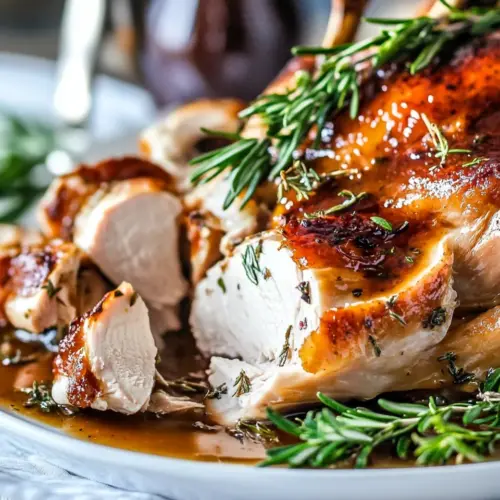
One Pan Herb Roasted Turkey
One Pan Herb Roasted Turkey is a savory, herb infused roast with crisp golden skin and tender, juicy meat. This easy weeknight dinner or holiday centerpiece combines roasted potatoes and sweet potatoes that soak up rich pan juices, finished with a glossy gravy. Make it for a fuss free crowd pleaser that tastes like a labor of love, perfect whenever you want impressive results without stress.
Equipment
- Roasting Pan
- Parchment Paper
- Aluminium foil
- Medium sized pan
- Whisk
Ingredients
- 6 pound whole turkey breast skin on and bone in Roast to provide the main protein and hearty centerpiece for the dish, with skin-on and bone-in for added flavor and moisture during cooking. Use a 6 pound whole turkey breast to ensure even roasting time and tender slices when carved. Position on a single pan to collect flavorful drippings that will form the basis of the pan juices and gravy.
- 4 tablespoons olive oil Coat to help brown the skin and carry herbs and spices across the turkey surface, contributing to crispness and flavor development. Use 4 tablespoons of olive oil to rub over the skin and vegetables before roasting, promoting even heat transfer and preventing drying.
- 2 tablespoon minced garlic or 6 minced cloves Infuse to add a pungent, aromatic foundation that complements roasted poultry and vegetables, providing depth and savory complexity. Use 2 tablespoons minced garlic (or 6 minced cloves) mixed into the oil and herb rub so the garlic roasts and mellows while flavoring the pan juices.
- 4 tablespoon fresh chopped parsley leaves Brighten by contributing fresh herb character and a pop of green color that lifts the overall flavor profile of the roast. Use 4 tablespoons fresh chopped parsley leaves mixed into the oil and rub to add herbaceous freshness to the turkey and vegetables.
- 1 tablespoon thyme leaves Season to add woody, floral aromatic notes that pair exceptionally well with poultry and roasted potatoes. Use 1 tablespoon thyme leaves incorporated into the rub and scattered over vegetables for a balanced savory finish.
- 1 teaspoon mild paprika Color to impart a mild smoky-sweet hue and subtle warmth that enhances roasted flavor without overpowering the herbs. Use 1 teaspoon mild paprika in the seasoning mix to create an appealing crust and gentle depth to the dish.
- 2 teaspoons kosher salt Season to bring forward savory balance and enhance the natural flavors of the turkey and vegetables, while assisting in moisture retention of the meat. Use 2 teaspoons kosher salt distributed evenly over the skin and vegetables before roasting.
- 1/2 teaspoon freshly ground black pepper Season to add a sharp, slightly floral bite that helps balance richness and accentuate savory notes. Use 1/2 teaspoon freshly ground black pepper freshly cracked into the rub for brightness and mild heat.
- 2 tablespoons olive oil extra Moisten to help bind herbs and spices into a cohesive rub and add extra fat for browning vegetables and skin. Use 2 tablespoons extra olive oil to toss with potatoes and sweet potatoes, ensuring even caramelization.
- 6 small sweet potatoes Provide sweetness and a creamy texture when roasted, contributing a contrasting flavor and color to the savory turkey and potatoes. Use 6 small sweet potatoes cut into even pieces so they roast evenly and absorb pan flavors.
- 6 potatoes Starch to contribute a classic roasted potato texture, offering neutral, comforting flavor and a crispy exterior when properly roasted. Use 6 potatoes peeled or scrubbed and cut to similar size as sweet potatoes for uniform cooking.
- 1 cup pan juices Deglaze to capture concentrated flavors from the roasting pan, forming the base for a rich pan sauce or gravy. Use 1 cup pan juices collected after roasting as a flavorful liquid to mix with broth and thickeners.
- 1 cup chicken broth or stock Add-simmer to extend the pan juices and adjust consistency for a sauce, contributing poultry-savory depth to the gravy. Use 1 cup chicken broth or stock combined with pan juices to create enough liquid for a well-balanced sauce.
- 1 tablespoon cornstarch mixed with 2 tablespoons water Thicken by creating a slurry that will bind the pan juices and broth into a glossy gravy, ensuring a smooth, clinging texture. Use 1 tablespoon cornstarch mixed with 2 tablespoons water whisked into simmering liquids until visibly thickened.
- 1 pinch salt extra, to season if desired Finish to adjust seasoning and ensure the final dish meets personal taste preferences, providing a light extra seasoning option. Use 1 pinch salt extra to taste after the gravy is prepared and the turkey is plated, seasoning carefully.
Instructions
- Preheat the oven to 200°C | 390°F. Place the turkey breast in a large roasting pan lined with parchment paper, skin side up. Pierce through the skin and flesh with a fork, all over the breast. Set aside.: The kitchen fills with a faint warm scent as the oven reaches temperature, and that initial heat is what jumpstarts the browning process. Piercing the skin helps the rub penetrate, allowing oil and seasonings to mingle with the meat so flavors infuse more deeply as it roasts. A common mistake is skipping the skin piercing, which can prevent the seasoning from reaching the meat and produce a less flavored center.
- In a small bowl, combine 4 tablespoons olive oil, garlic, parsley, thyme, paprika, salt, and pepper. Rub HALF of the mixture evenly all over the skin of the turkey breast. Loosen the skin and rub the seasoning underneath the skin and onto the meat. Pour the extra 2 tablespoons oil underneath the turkey breast onto the parchment paper. Turn the breast over, skin-side down.: As you mix the herbs and oil, their aroma becomes vivid, releasing herbal, garlicky notes that promise depth. Rubbing half on the surface and slipping seasoning under the skin ensures both a crisp, seasoned exterior and moist, flavored meat beneath. Pouring oil beneath the breast helps the underside brown and creates flavorful drippings. Avoid piling the seasoning only on top, since that concentrates flavor only at the surface.
- Arrange the sweet potatoes and potatoes around the turkey, and rub them with remaining seasoning. Season with extra salt, if desired.: When the potatoes meet the hot pan, their outer edges will begin to desiccate slightly, which leads to the satisfying caramelization you want. Coating them with the remaining rub ties their flavor to the turkey, so every bite echoes the same herb notes. Make sure pieces are similar size so they cook evenly, otherwise some may become overdone while others remain firm.
- Cover pan completely with aluminium foil. Roast for 2 hours.: Sealing the pan locks in steam and concentrates juices, producing tender meat and helping the potatoes soften uniformly. During this phase the turkey steams gently, and you may hear a soft hiss as moisture circulates under the foil. A common pitfall is leaving the foil loose, which lets heat escape and dries the meat, so create a tight seal for best results.
- Remove from oven, carefully uncover the turkey, and turn in the pan to be skin-side up. Change oven setting to grill or broil, and continue to roast the turkey for a further 30 minutes – 45 minutes, or until the skin is crispy and the turkey is completely cooked through.: Taking the foil off reveals a steamed, pale surface that will transform under high heat into crisp, browned skin. The broiler intensifies surface caramelization, producing audible crackles and an irresistible toasted scent. Keep a close eye to avoid burning, and check internal temperature so the turkey reaches a safe doneness without overcooking.
- When the turkey is done, remove from the oven, cover the pan with the same foil, and allow to rest at room temperature for 15 minutes. Slice and serve warm with the gravy.: Resting lets juices redistribute, resulting in slices that are moist rather than weepy. You will notice the aroma mellow and the meat firm slightly, which makes carving easier. A frequent mistake is slicing immediately, which causes precious juices to run out and leaves the meat drier on the plate.
- Pour out all the pan juices into a medium-sized pan and bring to a simmer. Mix in the broth and continue to simmer over low heat.: Simmering concentrates flavors and allows fat to separate, giving you control over the gravy’s body. As it simmers you will smell the roasted potatoes and herbs becoming more pronounced, an encouraging sign that the sauce is building depth. Don’t rush the simmer or the flavors will not meld fully.
- Pour in the corn starch mixture while whisking continuously, until a nice and thick gravy begins to form.: Adding the slurry while whisking prevents lumps and creates a glossy finish that clings to the turkey slices. You should see the sauce transform from thin and slightly oily to a velvety coating that screens spoonfuls across the plate. If it thickens too much, thin with a splash of broth, and be careful not to boil vigorously after adding starch, which can break down the thickener.
Notes
- Pierce the skin first: Piercing helps the seasoning penetrate and promotes even flavor throughout the meat, which prevents bland pockets under the skin.
- Use fresh herbs when possible: Fresh parsley and thyme bring brighter aromatics that survive the roasting process and lift the overall flavor.
- Tight foil seal for the initial roast: Sealing the pan traps steam, which keeps the breast moist while allowing connective tissues to break down gently.
- Finish under high heat: A final broil creates crisp, golden skin and that satisfying texture contrast with tender meat beneath.
- Make gravy from pan juices: The drippings are concentrated flavor; combine them with stock and a cornstarch slurry for an easy, glossy sauce.