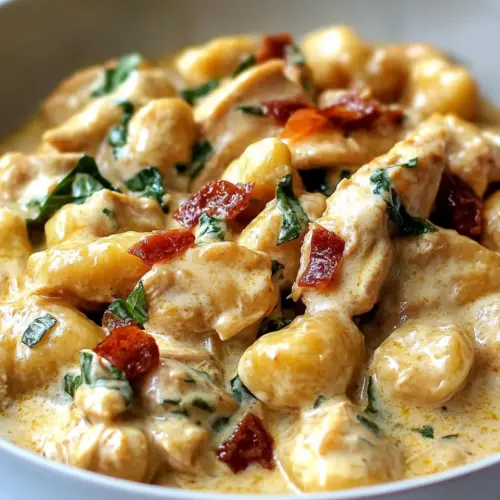
One Pan Creamy Tuscan Chicken Gnocchi
One Pan Creamy Tuscan Chicken Gnocchi is a creamy, comforting skillet meal that blends tender chicken, pillowy gnocchi, and tangy sun dried tomatoes for an easy weeknight dinner. The rich sauce and bright basil finish make it feel indulgent yet approachable, perfect for busy evenings when you want big flavor without lots of fuss. Make it when you need a quick, satisfying meal.
Equipment
- Large skillet with lid
- Spatula or wooden spoon
Ingredients
- 2 tablespoons extra-virgin olive oil Provide a fruity, peppery base of fat for sautéing that helps brown chicken and bloom aromatics; extra-virgin olive oil adds richness and carries flavors throughout the pan while providing a silky mouthfeel to the finished sauce.
- 1 pound boneless skinless chicken breasts, cubed into bite-sized pieces Add tender protein and body to the dish with bite-sized pieces that sear quickly; cubed boneless skinless chicken breasts absorb the creamy sauce and deliver satisfying texture and lean protein to each serving.
- 2 cloves garlic, minced Impart pungent, aromatic depth when lightly cooked and released into the oil; minced garlic brightens the sauce, enhances savory notes, and complements the tomatoes and herbs without overpowering the other flavors.
- 1 lb shelf stable potato gnocchi Introduce pillowy, potato-forward starch that soaks up the creamy sauce and thickens the pan; shelf-stable potato gnocchi provides comforting texture and turns the dish into a hearty, one-pan meal.
- 1 cup heavy cream Create the lush, velvety base for the sauce with rich, dairy fat that coats the gnocchi and chicken; heavy cream contributes creaminess, balances acidity from tomatoes, and carries herbs and spices.
- 1 cup low-sodium chicken broth Supply savory, salty liquid to thin and season the sauce while adding subtle chicken flavor; low-sodium chicken broth helps control overall saltiness and allows the cream to meld with other components.
- 1/4 cup sun-dried tomatoes, drained and chopped Deliver concentrated sweet-tart tomato flavor and chewy texture that contrasts with creaminess; drained and chopped sun-dried tomatoes add umami, acidity, and vibrant color to the dish.
- 1/2 teaspoon Italian seasonings Contribute a balanced blend of Mediterranean herbs for aromatic complexity; Italian seasonings enhance herbal notes, tie together tomato and garlic flavors, and provide an earthy backdrop to the cream.
- 1/4 teaspoon crushed red pepper Bring gentle heat and a touch of spice to wake the palate without overwhelming; crushed red pepper adds warmth and a subtle kick that lifts the richness of the cream and complements the tomatoes.
- 1 cup baby spinach, coarsely chopped Add bright, tender greens that wilt into the sauce and add freshness and color; coarsely chopped baby spinach provides vitamins, texture contrast, and a leafy note that lightens the overall dish.
- fresh basil for garnish Provide a fresh, aromatic finishing touch with bright herbal lift; fresh basil for garnish adds fragrance, a peppery-sweet note, and visual appeal to the creamy Tuscan chicken gnocchi.
Instructions
- In a large skillet (with a lid), heat the olive oil over medium-high heat. Salt and pepper the chicken and add to the skillet. Cook for 3-4 minutes per side or until golden brown. Chicken will cook longer in the sauce later. Add the garlic and cook for 30 seconds.: You will hear a light shimmer as the oil warms and see subtle ripples across its surface, signaling it is ready. The olive oil should glisten but not smoke, so keep the heat controlled, this allows the chicken to form a golden crust rather than steaming. The aroma will shift from raw oil to a warm, fruity scent, which helps indicate readiness. If the oil begins to smoke, lower the heat immediately to avoid a bitter flavor. Make sure the skillet is large enough to hold all the ingredients comfortably to prevent crowding, which would release moisture and prevent proper browning.
- Add the gnocchi, cream, chicken broth, sun-dried tomatoes, Italian seasonings, and crushed red pepper. Stir and bring to boil then reduce to a simmer. Cover with the lid and cook for 5-7 minutes, stirring intermittently, until the gnocchi is tender.: When the chicken hits the hot oil you should hear a confident sizzle, that initial sound is key for Maillard browning which builds flavor. Arrange the pieces so they are not touching much, and resist moving them too soon, this helps create a deep golden exterior. If the pieces release from the pan easily they are ready to turn, so use that tactile cue instead of a timer. Adding too much salt too early can draw moisture out, so season moderately and adjust later.
- Stir in the spinach for the last minute of cooking. Add salt and pepper to taste. Garnish with basil and serve.: As you sear each side watch for an even golden brown color, this caramelization enhances savory notes and texture contrast. When flipped, the underside should reveal a rich color. The sound will quiet slightly as moisture reduces; that change indicates progress. Keep the heat steady so the interior cooks without burning the exterior. Avoid overcooking here, because the chicken will finish cooking later in the sauce and can dry out if left too long.
- Chicken will cook longer in the sauce later: This step reminds you that the sear is only the start, the simmer will gently finish the chicken while allowing flavors to meld. The stove top steam and bubbling sauce will tenderize the meat, so aim for a golden exterior rather than fully cooked interior. If you sear it to complete doneness now it risks becoming tough after further simmering. A common mistake is relying solely on time instead of checking the internal texture during the final simmer.
- Add the garlic and cook for 30 seconds: When the minced garlic hits the hot pan the aroma will bloom immediately, releasing sweet garlicky notes that infuse the oil. You want a brief, fragrant sizzle rather than browning. Browning or burning garlic creates a bitter taste that can dominate the dish, so watch closely and stir constantly during this short window. The brief cooking also helps mellow raw sharpness while preserving vibrant flavor.
- Add the gnocchi cream chicken broth sun dried tomatoes Italian seasonings and crushed red pepper: At this stage the pan becomes a fragrant mosaic, with creamy white from the cream and deep ruby flecks from the sun dried tomatoes. When you stir, you should see the cream begin to loosen into the broth, and aromas of herbs and pepper will lift. Combining these elements now allows the gnocchi to absorb flavored liquid while the chicken finishes cooking in the sauce. If the mixture looks too thin, a gentle simmer will reduce it; if too thick, add a splash more broth. A common oversight is adding everything cold to an overheated pan, which can cause uneven cooking.
- Stir and bring to boil then reduce to a simmer: Watch the surface for the first active bubbles and the steam rising, that brief boil helps integrate ingredients and jump starts the cooking of the gnocchi . Once boiling, reduce to a gentle simmer so the sauce thickens slowly and the dairy remains stable. A rolling boil can make the cream split and can agitate the gnocchi into breaking apart, so keep the heat low once combined. The smell will become richer and more unified as the liquids meld.
- Cover with the lid and cook for 5 to 7 minutes stirring intermittently until the gnocchi is tender: The lid traps steam that softens the gnocchi and finishes the chicken , you will notice the sauce become creamier and the gnocchi plump up. Stirring intermittently prevents sticking and ensures even cooking, listen for gentle bubbling rather than vigorous roaring. Test a piece of gnocchi for tenderness; it should be pillowy and yield easily without collapsing. Overcooking leads to mushy texture, while undercooking leaves them dense, so rely on the tender bite as your cue.
- Stir in the spinach for the last minute of cooking: Adding the spinach at the final minute preserves its bright color and fresh flavor while allowing it to wilt just enough to blend into the sauce. You should see it shrink and darken quickly, and the aroma will take on a fresh, green note that lightens the creamy base. If added too early the leaves will over wilt and lose vibrancy, so this timing maintains texture and visual appeal.
- Add salt and pepper to taste: After the primary cooking you can fine tune seasoning, tasting for balance between savory, creamy, and bright tomato notes. Season gradually and taste between additions because the broth and sun dried tomatoes already contribute sodium. A common mistake is over salting at the start, which is hard to correct once reduced. The right seasoning makes all flavors sing without overpowering the delicate cream.
- Garnish with basil and serve: Finish by tearing fresh basil over the top, releasing aromatic oils that lift each spoonful with a peppery, herbal brightness. The final garnish adds contrast in both color and fragrance, making the dish look and smell inviting. Serve straight from the skillet so the sauce stays warm and luscious. If you let it sit too long uncovered it will thicken and lose that just made silkiness.
Notes
- Swap the heat level by adjusting the crushed red pepper to suit your family, adding just a pinch for mild warmth or a touch more for a noticeable kick. Increase cautiously, tasting as you go to prevent overpowering the creamy balance.
- Boost herb intensity by stirring in extra fresh basil just before serving, the immediate addition preserves volatile oils and enhances aroma without cooking out delicate flavors.
- Make it heartier by increasing the chicken amount slightly, ensuring you give pieces room to brown for the best texture contrast between seared meat and creamy sauce.
- Manage sauce thickness by reserving a bit of broth to thin the sauce at the end if it reduces too much, adding small amounts until you reach your preferred consistency.
- Use better pantry gnocchi when you can, some brands hold together and absorb sauce more pleasantly, so try a different brand if yours tends to break down.
- Finish with a squeeze of citrus for brightness if you want to cut through richness, a light squeeze of lemon over the plated portions can make the flavors pop without altering the recipe.