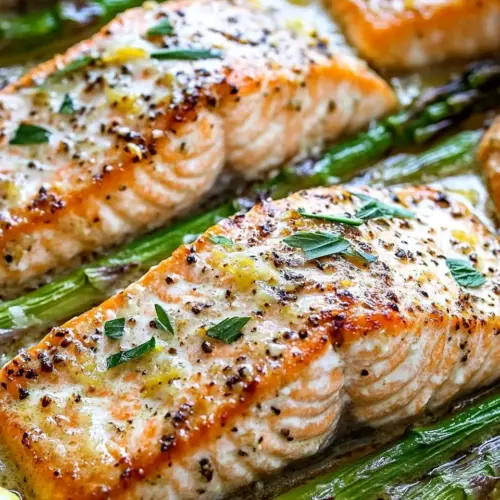
One Pan Baked Lemon Garlic Salmon and Asparagus
One Pan Baked Lemon Garlic Salmon and Asparagus is a bright, easy weeknight dinner with tender, juicy salmon and crisp asparagus finished with fresh lemon and garlic. The recipe is fast, oven broiled to give a golden top while keeping the inside moist, and perfect for spring produce. Make it for a stress free family meal or a simple, elegant dinner that tastes like you spent hours cooking.
Equipment
- Baking Sheet
- Aluminium foil
- Oven Broiler
Ingredients
- 4 – 6 salmon fillets skin removed Provide rich, flaky protein and a tender texture when baked; season well and cook until just opaque to retain moisture and flavor.
- 2 tablespoons garlic minced Add pungent aromatics and savory depth; mince finely and distribute evenly to infuse the dish with a bright garlic essence during baking.
- 2 tablespoons fresh parsley chopped Contribute fresh herbal brightness and color; chop finely and sprinkle over the finished dish to enhance aroma and a subtle grassy note.
- 1/3 cup lemon juice freshly squeezed Deliver bright acidity and balance richness; squeeze fresh for a clean citrus tang that brightens the salmon and cuts through fat.
- 1 spray Olive oil cooking spray Prevent sticking and promote even browning with a light coating; apply as a fine mist to the pan or asparagus before roasting.
- 1 teaspoon Kosher salt or sea salt flakes Introduce saline seasoning to enhance overall flavor; measure carefully to avoid over-salting and adjust to taste after cooking.
- 1/2 teaspoon cracked black pepper Provide mild heat and peppery warmth; crack fresh for a more aromatic finish and add to taste to complement the lemony profile.
- 4 bunches asparagus 24 spears, woody ends removed Offer tender-crisp vegetal texture and a vibrant counterpoint; trim woody ends and arrange alongside salmon for uniform roasting.
- 1 lemon sliced to garnish Add visual appeal and an extra burst of citrus aroma; slice thinly and use as a finishing garnish to enhance presentation and flavor.
- 1/3 cup beans peas or any other greens Supply an optional fresh green element and subtle sweetness; stir in or serve alongside for added color and textural contrast.
Instructions
- Preheat oven broiler (or grill) to high heat. Line a baking sheet with aluminium foil. Arrange oven shelf to the second top shelf (about 8-inches from the heat element).: You will smell a faint metallic warmth as the broiler comes up to temperature, and the air near the oven will feel noticeably hotter. This close positioning ensures the top of the salmon and the tips of the asparagus get quick, direct heat so they caramelize and brown. The foil helps with cleanup and reflects heat back to the food. A common mistake is placing the tray too far away, which leads to pale topping and a lack of that desirable sear. Also avoid putting the tray too close, because the sugars in the juices can char rapidly; watch the first minute to judge distance.
- Place the salmon on a large baking tray. Rub each fillet evenly with the garlic and parsley to evenly coat; pour over the lemon juice. Spray with a light coating of olive oil spray and season with salt and pepper. Arrange the asparagus and greens around the salmon in a single layer, and place the lemon slices over the top.: At this moment you should detect the bright, citrusy vapor rising as the lemon hits the fish, mingling with the herb and garlic scent. Rubbing creates direct contact so the surface flavors adhere and form a savory crust when broiled. Pouring the lemon juice helps the herbs and garlic distribute and slightly acidulates the surface for a more tender bite. A typical error is coating only one side, which gives uneven flavor; take a moment to press the mixture into each fillet so every bite is balanced.
- Broil (or grill) for 8-10 minutes, or until salmon is cooked through to your liking (we find 8 minutes is perfect if the oven is hot).: The first sensory cue here is a soft sheen on the salmon and the faint scent of oil. The light Olive oil spray encourages browning without excess oil pooling on the tray. Proper seasoning with the salt and cracked black pepper will lift the flavors during cooking, and you will notice the aroma deepen as the heat hits. Over seasoning is common, so use the suggested amounts and adjust minimally next time based on taste.
- Serve with the asparagus and beans/peas and these Crisp Smashed Potatoes!: When the asparagus and greens are arranged in a single layer they crisp evenly, and you will hear a light sizzle as the panel heats. The visual cue to watch for is the tips of the asparagus beginning to darken and the lemon slices beginning to blister slightly at the edges. Layering is important because overlapping pieces steam rather than roast, which gives a limp texture. Avoid crowding to keep those crisp edges.
- Broil or grill for 8 to 10 minutes, or until salmon is cooked through to your liking: Under the broiler you'll hear a soft crackle and smell intensified citrus and roasted herb notes. The top should take on a light golden color and the edges will tighten a bit, while the interior should remain moist and slightly translucent at the center if you prefer medium. Use a fork to check for flakiness; it should give easily. A common pitfall is overcooking, which dries the salmon and makes the texture mealy. If your oven runs hot, start checking at the earlier side of the timing window.
- Serve with the asparagus and beans peas and these Crisp Smashed Potatoes: As you plate, the warm steam will carry the herb citrus aroma to the table, and the contrast between the tender salmon and crisp asparagus should be immediately noticeable. The juices pooled on the tray are perfect to spoon over the fish and vegetables, boosting flavor. Avoid leaving the cooked fish on the hot tray too long; carry it to a warm plate so it rests briefly without continuing to cook and drying out.
Notes
- Bring salmon to room temperature before cooking to promote even heat transfer and prevent the outside from overcooking while the center warms. Ten minutes is usually enough.
- Slice lemons thinly so they warm through and release fragrant oils without taking long to heat, which keeps the citrus bright rather than bitter.
- Use a light oil spray to encourage browning without saturating the tray, which keeps the asparagus crisp rather than soggy.
- Arrange in a single layer to ensure each piece gets direct heat and develops caramelized edges for texture contrast with the tender salmon.
- Watch the broiler closely the first time you make this, because a hot oven can finish the fish faster than expected and you want to hit the perfect doneness.