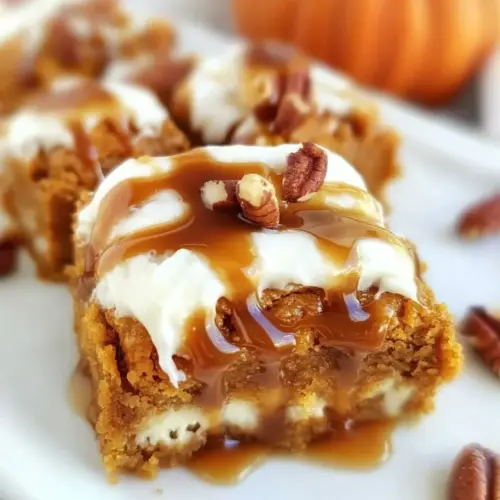
One Bowl Caramel Pumpkin Blondies
One Bowl Caramel Pumpkin Blondies are soft, chewy bars bursting with warm cinnamon spice, rich brown sugar sweetness, and pockets of gooey caramel bits. This easy one bowl recipe makes a crowd pleasing tray of bars ideal for fall gatherings and holiday dessert tables, delivering comforting texture and bold seasonal flavor you will want to make again and again.
Equipment
- 9 X 13 baking dish
- Large Bowl
- Whisk
- Spatula
- Microwave-safe container
Ingredients
- 1 egg room temperature Whisk gently to incorporate air and bind the batter; room temperature egg helps create a smooth, cohesive texture and aids in even baking for tender blondies.
- 1 cup brown sugar Sweeten and add moisture with molasses-rich brown sugar; it contributes depth of flavor and helps create a chewy, caramel-like crumb.
- 1/2 cup unsalted butter melted, slightly cooled Melt and cool unsalted butter to provide fat and richness; melted butter blends easily with sugar for a dense, fudgy blondie texture while allowing flavor control without added salt.
- 1 cup pumpkin puree Add pumpkin puree to introduce moisture, subtle sweetness, and a silky, slightly spiced flavor; it keeps the blondies soft and contributes to a tender crumb.
- 1 tsp vanilla extract Enhance overall flavor with vanilla extract; it rounds and brightens the sweet and pumpkin notes, making the dessert taste more complex.
- 1 cup all-purpose flour Provide structure and bulk using all-purpose flour; it develops just enough gluten to hold the blondies together while maintaining a tender bite.
- 1/4 tsp baking soda Leaven gently with a small amount of baking soda; it reacts with acidic components to help slight rise and contribute to a light, airy texture without over-rising.
- 1 tsp baking powder Use baking powder to provide additional lift and leavening; it ensures even rise and a balanced crumb when combined with the other leavening agent.
- 1 tsp ground cinnamon Season with ground cinnamon to add warm, aromatic spice; it complements pumpkin and caramel flavors, enhancing the blondies' overall profile.
- 1/8 tsp salt Season lightly with salt to balance sweetness and intensify other flavors; a small pinch promotes depth and highlights the caramel and pumpkin notes.
- 3/4 cup caramel bits Fold in caramel bits to introduce pockets of sweet, soft caramel throughout; they melt slightly during baking to create gooey, chewy bursts.
- 3/4 cup chopped walnuts Add chopped walnuts for crunch and a toasty, nutty contrast; they provide textural variation and complement the sweet, pumpkin flavors.
- 1/2 tsp cinnamon for topping Sprinkle cinnamon for topping to add a fragrant, decorative finish; the extra spice on top enhances aroma and signals the flavor inside.
- 1/2 cup caramel bits Top with additional caramel bits to create melted, glossy caramel pockets on the surface; they provide extra sweetness and a visually appealing finish.
- 1 tsp water Combine water sparingly to adjust consistency or help dissolve caramel for drizzling; a small amount aids in creating a smoother topping or glaze.
Instructions
- Preheat oven to 350 degrees. Lightly grease a 9 x 13 baking dish. Set aside.: As the oven warms, you should notice a gentle warmth build in the kitchen and a faint hum from the appliance, which signals that air circulation is active. This preheating ensures the pan starts baking immediately for even rise and color, and it prevents the edges from overbaking while the center catches up. A common mistake is placing the pan in a not fully heated oven, which can cause underbaked centers. Check that the rack is positioned in the middle, and lightly grease a 9 x 13 baking dish right away so it is ready when the batter is mixed.
- In a large bowl, whisk together egg, brown sugar, and melted butter until the brown sugar has dissolved, several minutes.: You will feel the mixture thicken slightly and see the grainy texture of the brown sugar soften as it incorporates with the warm butter. Whisking until the sugar dissolves creates a silky base that helps the blondies hold moisture and develop a tender crumb. If the butter is too hot, it can cook the egg leading to a curdled look, so allow the butter to cool until it's warm but not steaming. Scrape the sides as you whisk to ensure even emulsification and avoid pockets of dry sugar.
- Whisk in pumpkin puree and vanilla extract until well combined.: As you stir, the batter will deepen in color and become smoother, with the pumpkin lending a velvet like texture. The aroma becomes rounder and more autumnal when the vanilla extract integrates. Stir just until homogeneous to avoid overworking the batter; over mixing can create a tougher finished texture. If the pumpkin seems very dense, fold it gently to maintain air and prevent a gummy mouthfeel.
- Add flour, baking soda, baking powder, cinnamon and salt and stir just until combined.: Once the dry ingredients hit the bowl, the batter will thicken and take on a matte appearance, with tiny flecks of cinnamon visible. Combining the leaveners in correct amounts ensures the bars lift slightly and set with a tender crumb. Over stirring at this stage develops gluten and can make the blondies dense, so stop when streaks of flour vanish. A quick scrape of the bowl will reveal if pockets of flour remain.
- Fold in caramel bits and walnuts.: Folding in the caramel bits and walnuts creates pockets of sweet melt and crunchy texture throughout the batter. You will notice contrast in color and texture as the batter becomes dotted with golden caramel and toasted nut pieces. Folding rather than vigorously stirring preserves the tender texture. Be mindful not to overfold, which can compact the batter and reduce lift. If you see large clumps, gently break them apart so distribution is even.
- Spread batter into the prepared baking dish and sprinkle with cinnamon.: As you transfer the batter, it should feel thick but spreadable, like a dense cake batter. Use a spatula to smooth the top so it bakes evenly and the surface browns uniformly. The light dusting of cinnamon will perfume the top and create a subtle crust. If the batter is pushed unevenly, edges may brown faster, so check for levelness. Tap the pan gently on the counter to release any trapped air bubbles.
- Bake for 18-23 minutes. Let blondies cool before cutting into squares.: During baking you should see the edges pull away slightly from the pan while the center sets; the top will go from glossy to a satin finish. The smell of warm spice and caramel will intensify. Use a toothpick in the center to test for doneness, expecting a few moist crumbs but not wet batter. A common mistake is overbaking, which yields dry bars, so start checking at 18 minutes. Rotate the pan once halfway through if your oven has hot spots.
- Combine 1/2 cup caramel bits and teaspoon of water in a microwave-safe container. Microwave on high heat for 30 seconds, stir. Microwave for another 10-15 seconds and stir until the mixture is homogeneous.: As the pan cools, the structure firms and the interior finishes setting, which helps achieve neat slices. Cooling also prevents the caramel inside from running when cut. If you cut too soon, the centers can smear and the texture will be gummy. Allow at least 20 to 30 minutes at room temperature, and you can cool longer if you prefer cleaner edges.
- Drizzle caramel over blondies. Let sit for several minutes so the caramel can set up.: As the caramel melts, it will first soften and then transform into a glossy, pourable sauce. The small amount of water helps the bits melt smoothly without seizing. Heat in short bursts and stir between intervals to encourage even melting. Overheating can scorch the caramel, producing a burnt flavor, so monitor closely and stir to keep the temperature even.
- Microwave on high heat for 30 seconds, stir: After the first burst, you will see the caramel soften into glossy lumps that become more fluid as stirred. The stirring distributes heat and prevents superheated pockets. If the mixture looks grainy, another short burst and stir will usually smooth it out. Avoid long continuous microwaving which can cause uneven heating and scorching.
- Microwave for another 10 to 15 seconds and stir until the mixture is homogeneous: The final short heating will transform the caramel into a silky sauce. Stirring until homogeneous ensures a smooth drizzle without clumps. If the caramel is too thick, a tiny additional splash of water can help, but add sparingly to keep it glossy. Be cautious, as overheating in this step can make the caramel too thin once cooled.
- Drizzle caramel over blondies: The warm caramel should cascade in glossy ribbons over the cooled surface, creating an attractive finish and adding a burst of extra sweetness per bite. Let the bars sit for several minutes so the caramel firms slightly and adheres to the top. If you drizzle when the caramel is too hot, it may run off the edges and pool, so allow it to cool a touch for better presentation. Once set, slice into squares with a clean, sharp knife for tidy pieces.
Notes
- Use real unsalted butter for the most rounded flavor. Margarine or substitutes change the mouthfeel and can introduce excess water, which affects texture and caramel behavior.
- Bring the egg to room temperature by leaving it out for about 30 minutes before mixing. This helps the batter emulsify smoothly, giving a uniform crumb and preventing streaky mixtures.
- Don’t overmix the batter after adding the flour. Stir just until the streaks disappear; overworking creates gluten and yields denser bars instead of tender ones.
- Distribute add ins evenly by folding the caramel bits and walnuts in gently. Uneven distribution can lead to pockets of dry batter or clumps of caramel that ooze over the edges.
- Watch baking time closely starting at the lower end. Ovens vary, and the blondies are best with a few moist crumbs rather than a fully dry interior. Check at 18 minutes, and test with a toothpick.
- Microwave the caramel in short bursts and stir between each heating. This prevents scorching and gives you control over the consistency for a perfect drizzle.
- Cool completely before drizzling if you want neat slices. For a more rustic look, drizzle while slightly warm, but expect some run off.