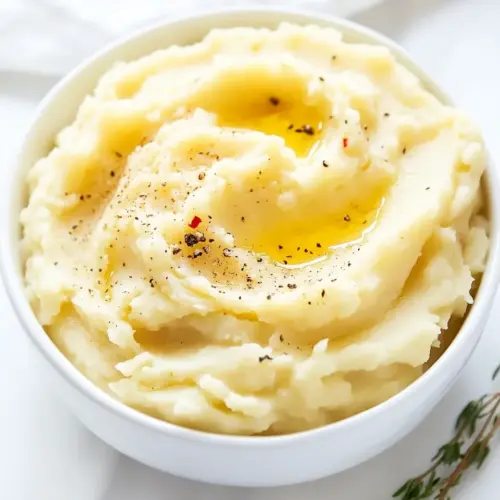
Olive Oil Mashed Potatoes
Olive Oil Mashed Potatoes are a creamy, silky twist on a classic, using fruity extra virgin olive oil and Yukon golds for a light yet indulgent texture. This easy weeknight side is ready in about 30 minutes, perfect for simple dinners or holiday spreads. Make it for a comforting, modern take on mashed potatoes that keeps everyone coming back for seconds.
Equipment
- Large Pot
- Potato Masher
- Colander
- Serving bowl
Ingredients
- 3 pound s/1 1/3 kg Yukon gold potatoes, peeled and chopped Boiled and mashed to provide the creamy, starchy base of the dish; Yukon Golds offer a naturally buttery texture that yields smooth, lump-free mashed potatoes when peeled and chopped appropriately. Maintain uniform chopping to ensure even cooking and drain thoroughly to avoid watery results. Use immediately while hot for best absorption of oil and milk.
- 1/2 cup 120 g extra virgin olive oil, plus more for drizzling Added to emulsify and enrich the mash, extra virgin olive oil contributes a silky mouthfeel and fruity, peppery notes that replace butter for a lighter-profile mash. Pour gradually while mashing to create a cohesive, glossy texture and finish with a light drizzle for visual appeal. Choose a high-quality oil for the most pronounced flavor.
- 1/2 cup 120 g whole milk, plus more as needed Poured in to loosen and smooth the potatoes, whole milk softens the texture and adds mild dairy creaminess without overwhelming the olive oil flavor. Warm slightly before adding to help maintain the mash temperature and integrate more easily. Adjust amount as needed to reach desired consistency.
- 1 1/2 teaspoons kosher salt Sprinkled for foundational seasoning, kosher salt enhances the potatoes' natural flavor and balances the richness of oil and milk; its coarser grains make it easy to control salting. Add during mashing and taste-adjust at the end for perfect seasoning. Use measured amounts to avoid over-salting.
- 1/2 teaspoon freshly ground black pepper Ground and added to provide a subtle spicy warmth and depth of flavor that complements the oiliness of the mash without overpowering it. Add during mashing or as a final seasoning and taste to adjust intensity. Freshly ground pepper offers brighter aromatics than pre-ground varieties.
- smoked paprika, for garnish (optional) Sprinkled as an optional finishing touch to impart smoky, slightly sweet flavor and a vibrant visual contrast on top of the pale mash. Use sparingly to avoid dominating the olive oil and potato flavors, and toast lightly if a deeper smoke note is desired. Serve as a garnish for color and aroma.
Instructions
- Chop potatoes to evenly sized chunks. Bring to a boil in a large pot of salted water; cook for 10 to 15 minutes (depending on the size of the chunks) until potatoes easily split apart when poked with a fork.: As the pot comes to a lively simmer, you will notice the starch scent that hints the potatoes are about to start breaking down. Evenly sized chunks ensure uniform cooking so you don’t end up with some pieces mashed into silk while others are stubbornly firm. When chopping, aim for pieces about one to one and a half inches, which helps them reach tenderness around the same time. A typical error here is cutting irregularly, which leads to overcooked shards and undercooked cores in the same pot. Keep a steady rhythm with your knife, and rinse any stray starch off if pieces stick together.
- Drain potatoes, then return to pot and set over low heat. Mash potatoes with a potato masher on the heat for 1 to 2 minutes (doing so will allow the excess moisture to evaporate). Remove from heat and continue mashing until mostly smooth.: You'll hear the water roll and see lively bubbles rise, and the steam will carry a warm, earthy aroma from the potatoes . Salting the water seasons the inside of the potato as it cooks, so don’t skip this step. Use a fork to test tenderness; it should slide through with little resistance and a small piece should easily break apart. Overcooking will make the potatoes waterlogged and mealy, while undercooking yields lumps. Aim for the moment just after they give easily, then drain promptly to preserve texture.
- Add olive oil and mash to incorporate, then add milk, salt, and pepper and mash until smooth and creamy. Optionally add 2-4 additional tablespoons of milk to achieve desired consistency.: After draining, returning the potatoes to the warm pot helps excess surface moisture evaporate, which is critical for a fluffy mash that still stays creamy. You may hear tiny sizzling as residual water releases; that sound signals evaporation. Leaving them on the heat for a minute or two while stirring gently allows the steam to escape. Be careful not to leave them too long on high heat, which can dry them out. A common misstep is skipping this drying step and ending up with a watery mash.
- Transfer to a serving bowl. Drizzle with olive oil and sprinkle with smoked paprika, if desired. Serve warm.: The rhythm of the masher produces a comforting thud and the mash will begin to come together visually, shedding lumps into silk. Mashing on the heat encourages extra moisture to cook off and helps the texture become more cohesive. Use the masher to press firmly but not aggressively; pushing too hard can make the potatoes gluey as starches release. If lumps remain after 1 to 2 minutes, let them rest briefly and continue mashing gently to avoid overworking.
- Remove from heat and continue mashing until mostly smooth: Off the heat, you can evaluate texture without risk of drying. The mash should look mostly smooth with a few small pebbles of soft potato . The airier it is, the lighter it will feel on the tongue, so stop mashing when you reach that gently billowy consistency. Overmashing at this stage can create a gummy mouthfeel, so err on the side of slightly coarse rather than overly processed.
- Add olive oil and mash to incorporate: As you add the olive oil , the mash will sheen and the aroma of the oil will lift, making the bowl smell bright and inviting. Mash just enough to incorporate the oil evenly, letting it coat the starch molecules for a silky texture. Adding the oil slowly prevents pockets of oily slickness and helps a uniform, glossy finish. A mistake here is dumping the oil in all at once, which can leave pools and an uneven mouthfeel.
- Then add milk, salt, and pepper and mash until smooth and creamy: Warm milk brought in gradually will loosen the mash to your preferred creaminess while enhancing richness. Taste as you go and adjust with the kosher salt and freshly ground black pepper to brighten the flavors. The mixture should feel smooth and cohesive, not runny. Commonly, people add cold milk which cools the mash and can make it seem dense, so warm the milk slightly for best results.
- Optionally add 2 to 4 additional tablespoons of milk to achieve desired consistency: If you want a silkier, more spoonable texture, a couple of tablespoons of warmed milk can transform firmness into velvet. Add small amounts, mash gently, and reassess the texture so you don’t overshoot to a soupy consistency. Adding too much liquid at once is the usual oversight, so proceed in small increments and stop when you reach the mouthfeel you love.
- Transfer to a serving bowl: Moving the mash to a warm serving bowl keeps it cozy and helps it present well, with a slight mound that catches finishes. The visual contrast between the pale mash and a drizzle of oil makes it feel polished. Avoid leaving the mash in a cold bowl, which can sap warmth quickly and cause it to firm up.
- Drizzle with olive oil and sprinkle with smoked paprika, if desired: The final drizzle of olive oil creates a glossy top layer and amplifies aroma as you bring the bowl to the table. A light dusting of smoked paprika adds color and a whisper of smokiness that complements the oil. Use paprika sparingly, because too much will dominate the delicate balance you built.
- Serve warm: Serving while warm ensures the texture is at its peak and the oil keeps that lovely sheen. The potatoes should feel pillowy and inviting when scooped. Reheating gently if needed is fine, but avoid high heat which can dry them out. A common serving mistake is waiting too long, which cools and firms the mash, muting its best qualities.
Notes
- Finish with flavored oil: Try infusing the olive oil with garlic or herbs over low heat, then strain and use as the finishing drizzle to add a fragrant layer of flavor.
- Adjust creaminess: For a looser texture, add additional warmed milk a tablespoon at a time until you reach the desired spoonability.
- Add textural contrast: Sprinkle a few toasted seeds or crispy shallots on top just before serving for crunch against the silky potatoes.
- Smoky garnish: Use smoked paprika sparingly for color and a hint of smoke that complements the fruity olive oil.
- Make it dairy light: Reduce the milk slightly and increase the olive oil for a lighter yet still rich texture and a more Mediterranean profile.