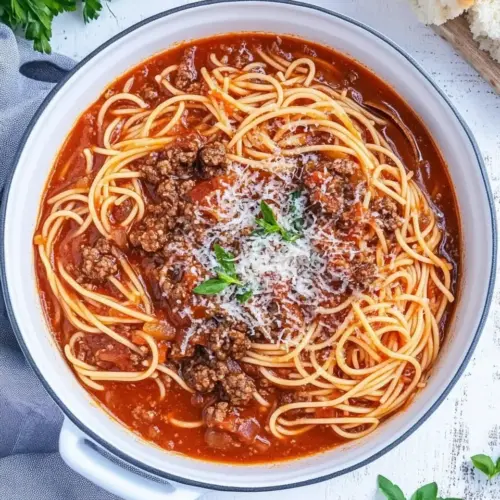
Old Spaghetti Soup
Old Spaghetti Soup is a comforting, savory bowl of broken spaghetti noodles, tender meatballs, and a tomato rich broth with subtle creaminess. This easy weeknight dinner balances bright tomatoes, aromatic vegetables, and a hint of balsamic for depth, making it both cozy and craveable. It’s a family friendly soup that reheats well and convinces everyone to come back for seconds.
Equipment
- Large Dutch oven or stock pot
- Large Bowl
- Spoon or spatula
- Tray for meatballs
Ingredients
- 8 oz . spaghetti noodles broken into quarters Break into quarters to create bite-sized pasta pieces that soften evenly and mimic soup-style noodles; provides bulk and comforting texture when cooked directly in the broth.
- 1 tablespoon olive oil Drizzle to coat the pan and gently sauté aromatics; contributes a fruity, slightly peppery flavor and helps prevent sticking during the initial vegetable cook.
- 1 tablespoon butter Melt to enrich the sautéed vegetables with a rich, creamy mouthfeel; adds depth and a hint of buttery sweetness to the soup base.
- 1 yellow onion, diced Dice finely to release savory, slightly sweet aromatics that form the flavor foundation; softens down and melds with other vegetables for complexity.
- 2 medium carrots, peeled and thinly sliced Peel and slice thinly to add subtle sweetness and tender bite; contributes earthy carrot flavor and color while releasing natural sugars when simmered.
- 2 stalks celery, chopped Chop to contribute a crisp aromatic backbone that balances sweetness from carrots and onions; softens during cooking while enhancing overall savory depth.
- 1 red bell pepper, chopped Chop to add bright, sweet, and slightly floral pepper notes; provides color contrast and a fresh vegetal crunch that softens into a mellow flavor.
- 4 -6 garlic cloves, minced Mince to infuse intense aromatic pungency and savory heat throughout the broth; cooks quickly and elevates the overall savory profile of the soup.
- 1/4 -1/2 teaspoon red pepper flakes Measure to introduce controlled spiciness and a warming finish; sprinkle gradually to adjust heat level without overpowering other flavors.
- 1 14 oz. can crushed tomatoes Open and pour crushed tomatoes to deliver bright tomato body, acidity, and texture; forms part of the tomato-forward base alongside marinara for richness.
- 1 24 oz. jar prepared marinara Spoon in prepared marinara to supply seasoned tomato sauce, herbs, and umami; streamlines flavor development and deepens the soup’s tomato profile.
- 7 cups low sodium chicken broth Pour to expand the liquid volume, provide a savory base, and control sodium when using low-sodium stock; carries flavors and cooks the pasta in the pot.
- 2 tablespoons tomato paste Stir in to intensify tomato flavor and thicken the broth slightly; adds concentrated umami and a subtle sweetness to balance acidity.
- 2 teaspoons balsamic vinegar Splash in to brighten and round out flavors by adding a subtle sweetness and tang; balances tomatoes and deepens savory notes.
- 1 1/2 teaspoons granulated sugar Sprinkle to tame acidity and smooth the tomato flavors; gently sweetens the broth without making it overtly sugary.
- 1 tablespoon dried basil Add dried to contribute concentrated herb aroma with low moisture; releases flavor over simmering and complements Italian-style seasonings.
- 1 tsp EACH dried parsley, dried oregano, salt Combine to provide bright herbal notes, earthiness, and foundational seasoning; these dried herbs and salt create balanced savory layers in the soup.
- 1/2 teaspoon pepper Add to season with warm, slightly sharp heat and to balance savory-salty elements; freshly cracked pepper lifts flavors throughout the pot.
- 1 whole bay leaf Tuck in whole to impart subtle, aromatic bay notes during simmering; remove before serving to avoid an overpowering herbaceous bite.
- 2 teaspoons cornstarch Mix to thicken the broth slightly when dissolved and heated; offers a quick slurry option to control final soup consistency.
- 1/2 cup freshly grated Parmesan cheese Grate fresh to add salty, nutty umami and finishing richness; stir into soup or sprinkle on bowls for savory depth and creaminess.
- 1 cup milk or half and half Pour to add creaminess and body to the finished soup; softens tomato acidity and makes the broth silkier without overpowering flavors.
- 1 egg Whisk to bind and enrich meatballs or to add silkiness when tempered into the soup; provides structure and subtle richness.
- 2 slices white sandwich bread TOASTED, crust removed, diced Toast and dice to create a soft binder that absorbs liquid and adds subtle texture; toasted bread contributes mellow flavor while helping bind meat mixtures.
- 2 tablespoons milk Add to moisten the bread or mixture and enhance tenderness; combines with other binders to ensure proper texture and moisture.
- 2 teaspoons Worcestershire sauce Stir in to introduce deep savory complexity and a hint of tangy sweetness; amplifies umami in meat mixtures and soup alike.
- 1/3 cup finely freshly grated Parmesan cheese Grate finely to lend concentrated salty, nutty Parmesan flavor; boosts savory umami in both meat components and finished bowls.
- 1 pound lean ground beef Brown to create savory, caramelized meatiness that forms the protein base; adds richness and hearty texture to the soup when crumbled.
- 3 tablespoons dry minced onion Sprinkle to add savory onion flavor without fresh produce; rehydrates during cooking and supports overall savory profile.
- 1 teaspoon dried parsley Measure to bring gentle herbaceous freshness and tying notes to meat or soup; complements other dried seasonings.
- 1/2 tsp EACH garlic pwdr, oregano, salt Combine to season with a balanced mix of aromatic garlic, oregano, and salt; imparts straightforward savory seasoning to meat or mixture.
Instructions
- Melt 1 tablespoon butter in 1 tablespoon olive oil in a large Dutch oven/stock pot. Add diced onions and saute for 3 minutes. Add carrots, celery and bell peppers and sauté for 2 minutes. Add garlic and red pepper flakes and sauté for 30 seconds.: The moment the butter finishes melting and the oil shimmers you will smell a warm, almost nutty aroma. This combination raises the smoke point compared to butter alone, letting you sauté without scorching. As the fat heats, tilt the pan so you can see the sheen across the bottom, which tells you it is ready for the onion . A common mistake here is overheating so the butter browns too quickly, which can impart a bitter note, so keep the heat medium. The sizzle when the onion hits the pan should be lively but not violent, and you want the surface of the diced pieces to look glossy as they begin to soften. Stir occasionally to ensure even heat distribution and to prevent sticking. From a texture perspective, properly melted and warmed fat will coat the vegetables, helping them release their natural sugars, which deepens the base flavor. If your pot is not large enough, the vegetables will steam instead of sauté, losing those caramelized edges that provide complexity.
- Stir in all remaining ingredients under 'Spaghetti Soup,' EXCEPT for the Parmesan and milk/half and half. Bring to boil, cover, then reduce to a low simmer for 15 minutes while you prepare the meatballs.: You will notice the sharp onion smell soften and turn sweet within this brief sauté window, and the pieces will become translucent at the edges. The visual cue to stop is when the onion looks glossy and mostly clear, not browned. This step builds the aromatic foundation of the soup, and rushing it leaves a raw bite. A frequent misstep is adding salt too early which can leach moisture and prevent proper browning; hold off or use sparingly. Keep stirring to avoid hot spots, and trust the gentle hiss rather than a dark sear for the right outcome. When done correctly the pan will smell mellow and inviting rather than pungent.
- In a large bowl, add egg and gently whisk. Add all remaining Meatball Ingredients and mix until well combined. Roll mixture into 1 tablespoon size meatballs. Add meatballs to simmering soup and simmer for 8 minutes. Add spaghetti noodles and simmer over medium high heat for 10-12 minutes or until noodles are al dente.: You want these vegetables to soften slightly while still holding shape, releasing a faint sweetness and vegetal perfume. The carrots and celery will begin to lose their raw edge, and the red bell pepper will release a bright aroma. Watch for a gentle browning on the edges of the carrot slices, which signals developing flavor, but avoid long cooking which would dissolve the vegetables into the broth. A common error is overcrowding the pot, which causes steaming instead of sautéing, so maintain space and stir to promote even contact with the pan. Texture matters here because tender yet distinct pieces contribute pleasing mouthfeel to the finished soup.
- Remove from heat, discard bay leaf and stir in Parmesan cheese until melted followed by milk/half and half. If you would like a less 'chunky' soup, simply stir in additional chicken broth or water.: When the garlic hits the pan you will smell an immediate fragrant pop, and within seconds its scent floods the kitchen. Keep this brief so the garlic softens without browning, which would turn the flavor bitter. The tiny crunchy whisper of red pepper flakes will begin to bloom in the fat, releasing subtle heat. Stir continuously and look for a slightly glossy sheen on the garlic but no darkening; this is a short window and one of the easiest places to overcook. If you sense any bitterness, reduce heat and add a splash of broth to cool the pan.
- Garnish individual servings with freshly grated Parmesan and season with additional salt/pepper/red pepper to taste.: At this point the pot fills with tomato and herb fragrance as you add the crushed tomatoes , marinara , chicken broth , tomato paste , balsamic vinegar , sugar , dried herbs, bay leaf , and seasonings. The liquid should arrive with a steady stream, and as it hits the hot pan you will hear a soft bubbling start. Stir to dissolve the paste into the broth so there are no concentrated pockets of intense tomato, which ensures even flavor. Bringing the pot to a full boil allows steam to rise quickly and signals that you can cover and reduce to a low simmer. A mistake here is adding all seasonings at once without tasting later, so plan to adjust salt and pepper after the flavors have had time to marry. The simmer lets the herbs unfold and the broth concentrate, which deepens the overall profile.
- Bring to boil, cover, then reduce to a low simmer for 15 minutes while you prepare the meatballs: As the liquid boils briefly you will see active, rolling bubbles. Covering and then lowering heat to a gentle simmer produces small, regular bubbles that indicate even heat distribution. This period allows the tomatoes and broth to integrate, creating a unified base. Use this time to smell for balance, and if the tomato edge seems too sharp add a pinch more sugar. A frequent error is simmering at too high a heat, which will reduce volume too quickly and can make the flavors intense in the wrong way. Aim for a quiet, lively simmer that releases gentle steam and builds complexity.
- In a large bowl, add egg and gently whisk: Start the meatball assembly by whisking the egg until glossy, then combining it with the toasted diced white sandwich bread soaked with 2 tablespoons of milk , the Worcestershire sauce , Parmesan cheese , lean ground beef , dry minced onion , dried parsley, and the powdered seasonings. The mix should bind easily, with the bread softened but not soggy. Whisking the egg first creates a uniform binder so the meatballs stay tender. Overworking the mixture compacts the proteins and yields dense meatballs, so mix until just combined. The aroma at this stage is savory and slightly cheesy, promising tender meatballs that will release flavor into the broth.
- Add all remaining Meatball Ingredients and mix until well combined: As you fold the components together you should notice the texture shifting to a cohesive, slightly tacky mixture that holds shape when pinched. The toasted bread gives structure, while the Worcestershire sauce adds depth. If the mixture feels too loose, chill it briefly to firm up for easier shaping. A common mistake is adding too much liquid which prevents the meatballs from setting properly in the soup; balance is key. The combined aroma will be rich and layered, hinting at the savory little bites to come.
- Roll mixture into 1 tablespoon size meatballs: Forming small, uniform meatballs ensures they cook quickly and consistently in the simmering broth. As you roll them, the meat should feel slightly springy; if it crumbles, the mixture needs a touch more binder. The visual cue is small, round balls no larger than a marble. An error here is making them too large, which extends cooking time and risks an undercooked center. Place them on a tray so they are ready to slide into the pot without crowding, and keep your hands slightly damp to prevent sticking.
- Add meatballs to simmering soup and simmer for 8 minutes: When the tiny meatballs meet the simmering broth they will bob gently, releasing savory juices into the liquid. After about eight minutes they will be cooked through and tender, with the broth taking on a deeper, meat enhanced character. The sound is a steady quiet simmer and the smell becomes markedly meat forward. A common mistake is stirring aggressively after adding them, which can break the meatballs apart; instead, gently nudge the pot if needed. Check one meatball by cutting it open; it should be opaque and tender in the center.
- Add spaghetti noodles and simmer over medium high heat for 10-12 minutes or until noodles are al dente: As you add the broken spaghetti noodles , you will see them soften and swell, absorbing the flavorful broth. The pot will become busier with rolling bubbles as you raise the heat to medium high; maintain a steady simmer that cooks the noodles through without turning them to mush. The ideal bite is al dente, with a slight resistance, because the noodles will continue to soften slightly off heat. Overcooking is the most frequent error here, producing bloated, gluey strands. Stir occasionally to prevent clumping and to ensure even cooking throughout the pot.
- Remove from heat, discard bay leaf and stir in Parmesan cheese until melted followed by milk/half and half: After removing the pot from the heat, you will stir in the Parmesan cheese which melts into the broth creating a silky sheen. Follow with the milk or half and half to round and soften acidity, stirring until the surface looks velvety. The aroma at this moment will be rich and fragrant, with a creamy note that calms the tomato tang. Adding dairy on high heat can cause it to break, so always temper off the flame. Tasting now allows you to fine tune salt and pepper, because dairy can mute saltiness.
- If you would like a less 'chunky' soup, simply stir in additional chicken broth or water: For a smoother, more brothy bowl, adding extra chicken broth dilutes chunks and creates a soupier texture. The sound of the pot will shift to a gentler simmer and the mouthfeel will thin accordingly. A mistake is adding too much liquid without rebalancing seasoning, which leaves the soup bland. After adding more liquid, taste and adjust with a pinch of salt or a squeeze of acid if needed. This flexibility makes the recipe adaptable to personal preference for texture and heartiness.
- Garnish individual servings with freshly grated Parmesan and season with additional salt/pepper/red pepper to taste: The final flourish of freshly grated Parmesan melts slightly into individual bowls, creating an aromatic, savory crown. Taste each serving and adjust seasoning with extra salt , pepper , or red pepper flakes for heat. This last step personalizes the bowl and allows diners to dial the intensity. Avoid over-salting at the table if the broth is already well seasoned, and offer pepper or flakes first for safer adjustments. The steam rising from the bowl will carry the cheese aroma to the nose, completing the sensory experience.
Notes
- Control salt early: Since the recipe includes prepared marinara and broth, start with low sodium products and wait until the end to finish seasoning so you don't over-salt the soup.
- Watch the garlic: Add the minced garlic briefly and keep the heat moderate to avoid a bitter, burnt note that can overpower the broth.
- Shape meatballs uniformly: Rolling meatballs to a consistent one tablespoon size ensures even cooking and a pleasing presentation when they bob in the soup.
- Temper dairy: Stir the Parmesan cheese and milk in after removing the soup from heat to preserve a smooth, creamy finish without separation.
- Adjust heat for noodles: Bring the pot to medium high when adding the broken spaghetti noodles to maintain a steady simmer, then watch closely to keep them al dente rather than soft.
- Use toasted bread in meatballs: Toasting the white sandwich bread before dicing prevents sogginess and helps create a tender, cohesive interior in the meatballs.
- Let flavors rest: If possible, let the soup sit for a short period before serving; the flavors will meld and often taste even better after a little rest.