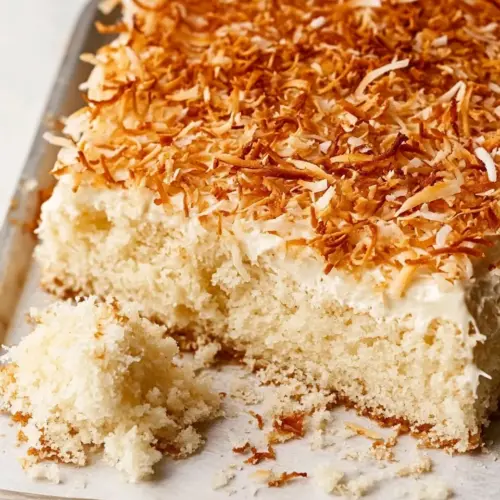
Old Fashioned Coconut Cake
Old Fashioned Coconut Cake is a tender, nostalgic dessert with a light crumb and layered coconut flavor. Creamy frosting and toasted flakes add a pleasing contrast of textures, making it an ideal easy celebration cake or weekend treat. Its familiar profile and simple methods make it perfect for family gatherings and anyone seeking a reliably delicious coconut dessert to share.
Equipment
- Stand mixer
- 9x13-inch Baking Dish
- Wire Rack
- Hand Mixer
- Mixing Bowls
Ingredients
- 3 cups (384 g) cake flour Provide structure and a tender crumb to the cake; use cake flour specifically for a finer, softer texture. Measure by spooning into the cup and leveling or weigh 384 g for accuracy. Sift if clumpy to ensure even incorporation and aeration.
- 1 teaspoon baking powder Leaven gently to give lift and lightness while working with baking soda for balanced rise. Use a level teaspoon and mix briefly with dry ingredients to distribute evenly. Avoid overmixing once combined to prevent uneven texture.
- 1 teaspoon baking soda Provide additional rise and help neutralize acidic components for proper crumb and height. Measure precisely and combine with the dry ingredients so it activates uniformly during baking. Keep fresh for best leavening power.
- 1/2 teaspoon kosher salt Enhance overall flavor and balance sweetness while strengthening gluten slightly for structure. Use kosher salt measured by volume for consistent seasoning across the batter. Dissolve into dry ingredients to ensure even distribution.
- 1 cup (227 g) unsalted butter, room temperature Contribute richness, moisture, and flavor while creating tender layers through creaming with sugar. Use room-temperature butter to trap air when creamed, improving rise and texture. Beat until light and fluffy for optimal incorporation.
- 1 1/2 cups (297 g) granulated sugar Sweeten and aid in creaming to incorporate air, improving cake volume and tenderness. Use granulated sugar measured by weight for consistent sweetness and structure. Cream with butter until pale and aerated to build proper texture.
- 4 eggs, separated Add moisture and protein for structure while separated eggs allow for richer batter and lighter crumb from whipped whites. Use yolks in the batter for fat and emulsification; whip whites separately to fold in for lift. Bring eggs to room temperature to incorporate more easily.
- 1 teaspoon vanilla extract Provide warm, familiar flavor and aromatic depth while enhancing other extracts in the batter. Use pure vanilla extract measured accurately to complement coconut notes without overpowering. Add during mixing with wet ingredients for even distribution.
- 1 teaspoon coconut extract Reinforce coconut flavor and aroma distinctly, working with vanilla for layered taste profiles. Use a teaspoon of coconut extract to intensify tropical notes without adding liquid. Stir into the wet mixture so the flavor is consistent.
- 1 1/4 cups (301 g) unsweetened coconut milk Add moisture and subtle coconut flavor while contributing to batter tenderness due to added fat content. Use unsweetened coconut milk measured by weight for predictable hydration levels. Whisk with the wet ingredients to prevent separation.
- 1 cup (227 g) unsalted butter, room temperature Provide richness, fat, and stability for the frosting when creamed with sugar; identical ingredient used again for frosting preparation. Use room-temperature butter to achieve smooth, spreadable consistency and to trap air for a light buttercream. Beat until pale and fluffy for ideal texture.
- 4 to 5 cups (454 to 568 g) powdered sugar Sweeten and structure the frosting while allowing control over frosting consistency through quantity adjustments. Start with the lower amount and add more powdered sugar until desired thickness is reached. Sift if necessary to avoid lumps and achieve silky smoothness.
- 4 tablespoons (60 g) coconut milk Adjust frosting consistency and add subtle coconut flavor while slightly loosening the buttercream for spreading. Use measured tablespoons to fine-tune texture without thinning excessively. Warm slightly if separated before whisking into frosting.
- 1 teaspoon coconut extract Intensify coconut aroma and complement vanilla for a pronounced tropical finish in the frosting. Use a full teaspoon to ensure the coconut note carries through the sweet buttercream without tasting artificial. Mix thoroughly to disperse evenly.
- 1 cup (60 g) large flake coconut, toasted Provide toasted texture and concentrated coconut flavor as a garnish that contrasts the soft cake and creamy frosting. Toast large flakes until golden and cool before sprinkling to maintain crispness. Scatter on top just before serving to preserve crunch.
Instructions
- Make the Cake: Preheat oven to 350°F. Grease a 9×13-inch baking dish.: Preheat oven to 350°F. Grease a 9×13-inch baking dish. : The oven warmth fills the kitchen with an anticipatory heat and a faint hint of impending caramelization, which primes you for baking. Preheating to 350°F ensures the cake begins to rise immediately when it hits the oven, creating an even crumb rather than a dense center. Greasing the 9×13-inch baking dish prevents sticking and helps the edges brown slightly, offering a pleasant contrast in texture. A common mistake is placing the pan in before the oven is fully heated, which can cause uneven rise, so always wait until the temperature is stable. You may also line the pan with parchment in high humidity to be extra safe, and remember to tap out any lumps in the batter once it is in the pan to smooth the top for even baking.
- In a medium bowl, whisk together flour, baking soda, baking powder, and salt.: You will notice the dry mixture look uniform and slightly aerated after whisking, which helps distribute the leaveners so the cake rises evenly and avoids pockets of metallic baking soda taste. The visual cue is a homogeneous pale mixture with no visible streaks of salt or leavener. Overmixing here is unnecessary, so whisk just until combined, because activating gluten in the flour will toughen the finished cake. A frequent error is skipping the sift or whisk, which can leave clumps; taking an extra minute to combine the dry ingredients pays off in a fine crumb.
- In a stand mixer (or large bowl with hand mixer), beat butter and sugar at medium speed until fluffy, 3 to 4 minutes. Add egg yolks, one at a time, beating well after each addition. Add extracts, beating to combine. Gradually add flour mixture to butter mixture alternately with coconut milk, beginning and ending with flour mixture, beating just until combined after each addition.: At this stage the sensory experience is tactile and visual, as creaming the butter and granulated sugar creates a pale, airy mixture with a light sheen, signaling incorporated air that leads to a tender texture. Adding egg yolks one by one ensures proper emulsification, giving a glossy, cohesive batter. Alternating the dry mix with coconut milk prevents lumps and overworking the gluten; you will see the batter come together into a smooth, slightly thick pourable consistency. Use low speed when adding the flour to avoid flour clouds and to keep the crumb delicate. A common problem is overbeating after adding flour, which tightens the crumb, so stop mixing as soon as there are no dry streaks.
- In a separate bowl, beat the egg whites at high speed until stiff peaks form. Gently fold the egg whites into the batter. Pour the batter into the prepared pan, smoothing top if necessary. Bake until a toothpick inserted in center comes out clean, about 30 minutes. Let cool completely on a wire rack before frosting.: Whipping the egg whites introduces lightness, and you will hear a higher pitched sound from the mixer as the whites aerate, while the peaks will stand tall and glossy. Folding them in should be done with a gentle hand, using a wide spatula and sweeping motions, preserving those air bubbles so the cake remains airy. Pouring the batter into the prepared pan, smooth the top with a spatula so it bakes evenly, and then note the oven aroma as sugars start to caramelize. The toothpick check should reveal a clean center, and the cake edges should pull slightly from the pan and show a golden hue. Avoid opening the oven during the first part of baking, as sudden temperature changes can cause sinking. Cooling on a wire rack prevents condensation and sogginess under the cake before frosting.
- Make the Frosting: With a handheld mixer or stand mixer with paddle attachment, beat the butter on medium-high speed until smooth and light, about 3 minutes. Add 4 1/2 cups of the powdered sugar, the coconut milk, and the coconut extract. Mix on low until all of the powdered sugar has been incorporated, then increase the speed to medium-high and beat for 2 minutes, scraping the sides of the bowl as needed. If the frosting is too thin for your liking, beat in more powdered sugar 1 tablespoon at a time. Conversely, if you find the frosting too thick, you can beat in an additional 1 tablespoon of coconut milk to reach your desired consistency.: With a handheld mixer or stand mixer with paddle attachment, beat the butter on medium-high speed until smooth and light, about 3 minutes. Add 4 1/2 cups of the powdered sugar, the coconut milk, and the coconut extract. Mix on low until all of the powdered sugar has been incorporated, then increase the speed to medium-high and beat for 2 minutes, scraping the sides of the bowl as needed. If the frosting is too thin for your liking, beat in more powdered sugar 1 tablespoon at a time. Conversely, if you find the frosting too thick, you can beat in an additional 1 tablespoon of coconut milk to reach your desired consistency. : The frosting process yields a silky, pillowy texture when done right, and you will notice the color go from pale yellow to creamy white as air is incorporated. Adding powdered sugar on low prevents a floury cloud and ensures the sugar dissolves smoothly into the butter . The coconut milk softens the frosting and lends a subtle coconut tang, while the coconut extract amplifies that signature flavor. If the frosting appears greasy or separated, it usually means the butter was too warm or the sugar was added too quickly, so chill briefly and rebeat at medium speed. Over thick frosting may be eased with tiny increments of coconut milk, but add slowly to avoid an overly loose consistency.
- Spread the frosting over the cake, then top with the toasted coconut flakes.: When you frost, the cake should be completely cool so the frosting stays smooth and glossy rather than melting into the crumb. The act of spreading should feel effortless, producing gentle ridges that catch the light and indicate a perfectly spread surface. Sprinkle the toasted large flake coconut evenly so each slice gets some crunch and toasty aroma. A common mistake is applying frosting while the cake is warm, which results in a soggy finish, so be patient and cool the cake thoroughly on the wire rack . For an even distribution of toasted flakes, cool them fully before topping so they do not steam and soften on contact.
Notes
- Bring dairy and eggs to room temperature before starting so they incorporate evenly, which helps with emulsion and smooth batter texture.
- Measure flour correctly by spooning into the cup and leveling off or by weighing, because packing flour leads to a dense cake and inconsistent results.
- Alternate wet and dry additions when mixing the batter, starting and ending with the dry ingredients, to minimize gluten formation and keep the crumb tender.
- Stabilize whipped egg whites by ensuring your mixing bowl is grease free and using a pinch of salt or a tiny bit of sugar during whipping if needed for steadier peaks.
- Toast coconut in small batches over medium-low heat and transfer to a plate to cool immediately, preventing carryover browning and preserving crispness.
- Adjust frosting texture gradually by adding powdered sugar or coconut milk a tablespoon at a time so you maintain control over spreadability and firmness.