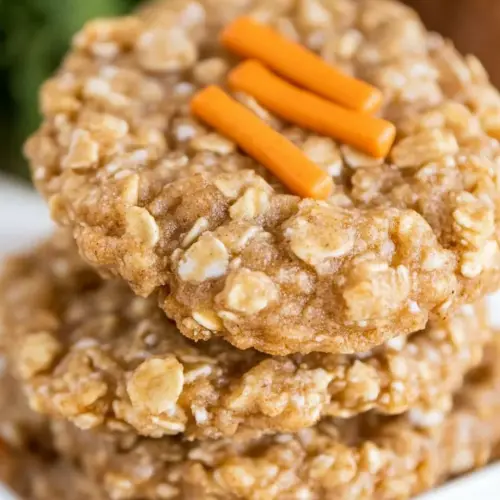
Oatmeal Scotchies
Oatmeal Scotchies are chewy, sweet cookies studded with buttery butterscotch chips and hearty quick oats. With a tender center and slightly crisp edge, these easy cookies deliver comforting texture and caramel like pockets in every bite, making them perfect for an easy weeknight baking session or a crowd pleasing dessert. You will love how pantry staples transform into an irresistible treat.
Equipment
- Electric Mixer
- Paddle attachment
- Mixing Bowls
- Baking Sheets
- Parchment Paper
- Ice Cream Scoop
Ingredients
- 1 cup (226 g) unsalted butter, softened Cream softly and incorporate air to create a tender, rich base for cookies; softened butter helps distribute fat evenly and contributes to moist, flavorful texture when creamed with sugars.
- 1 cup (200 g) packed brown sugar Sweeten and add deep, molasses-rich flavor while contributing moisture; packed brown sugar helps produce a soft chew and brown color through its molasses content.
- 1/2 cup (100 g) granulated sugar Provide sweetness and additional structure while helping cookies spread; granulated sugar assists in creating a slightly crisp edge and balancing overall sweetness.
- 2 large eggs Bind ingredients together, add moisture, and help with leavening through steam; eggs contribute richness, structure, and a tender crumb to the cookie dough.
- 1 teaspoon vanilla extract Enhance and round out flavor with aromatic complexity; vanilla extract lifts other flavors and gives the cookies a warm, familiar sweetness.
- 1 1/2 cup (186 g) all-purpose flour Build structure and bulk by supplying gluten and starch; all-purpose flour gives the dough its framework while keeping cookies tender when measured properly.
- 1 teaspoon baking soda React with acidic components and eggs to produce carbon dioxide for lift; baking soda helps cookies spread and develop a light texture and slight browning.
- 1 teaspoon cinnamon Add warm, fragrant spice and subtle depth to the flavor profile; cinnamon complements the oats and butterscotch with mellow, aromatic notes.
- 1/2 teaspoons salt Regulate and enhance overall flavor by balancing sweetness and boosting other tastes; salt strengthens flavor perception and controls the dough's chemistry.
- 3 cup (240 g) quick-cook oats(see note) Provide wholesome texture and hearty chew while contributing oat flavor; quick-cook oats absorb moisture quickly for a tender, uniform crumb in the cookies.
- 2 cup (311 g) butterscotch chips Introduce concentrated sweet, caramel-like pockets and buttery flavor throughout the cookies; butterscotch chips melt into gooey bursts and complement the oats.
Instructions
- Preheat oven to 350°. Line your baking sheets with parchment paper or silpat liners.: As the oven warms you will notice a faint dry warmth filling the kitchen, signaling that the metal sheets will soon help set the cookie edges while the centers remain tender. Getting the oven to a steady 350° ensures even baking; a cooler oven yields pale, underbaked cookies and a hotter oven will brown them too rapidly. A common mistake is opening the door frequently which lets heat escape and alters baking time, so use the oven light to peek instead.
- Mix flour, baking soda, cinnamon, and salt in a medium bowl. Set aside.: Lining sheets creates a nonstick surface that promotes even browning and easy removal, and you will appreciate how clean the pans stay. The sound of scoops landing on the sheet is pleasing and the paper helps prevent bottoms from getting too dark. Avoid placing dough on unlined pans in case of sticking and uneven bottoms.
- In the bowl of an electric mixer fitted with the paddle attachment, beat the butter and sugars until creamy. Add the eggs and vanilla and beat well. Add the dry ingredients and mix until combined. Stir in the oats and butterscotch chips.: Whisking these dry ingredients distributes the baking soda and cinnamon evenly so every cookie tastes consistent; it also prevents pockets of leavener that could cause odd bumps. The aroma of cinnamon rises gently, giving a hint of the cookie's profile. Not sifting or mixing can result in uneven texture, so be thorough but not obsessive.
- Drop by tablespoonfuls onto your prepared baking sheets. I like to use a 2 tablespoon sized ice cream scoop for this so the cookies will all be the same size.: Letting the dry mix rest while you prepare the wet ingredients keeps your workflow moving, and it ensures the flour blend is ready to fold in without overhandling. This small pause helps avoid rushed mixing, which can lead to a denser cookie. Don’t forget to return to the bowl or you’ll interrupt your rhythm mid recipe.
- Bake 12-16 minutes. Cool five minutes and then remove from pan to cool completely.: The creaming step creates tiny air pockets that lead to a light interior; as you beat, the mixture will become paler and fluffier, and you may hear the motor change tone as it smooths the butter. Properly creamed butter and sugars should feel airy and ribbon when beaten. A common pitfall is undercreaming, which yields a denser texture, or overbeating, which can make the mixture too soft.
- Add the eggs and vanilla and beat well: Adding the eggs one at a time allows them to incorporate without separating, and the mix will look glossy and cohesive as the vanilla perfumes the bowl. You may notice the batter becoming silkier, a good sign that ingredients are harmonizing. If the mixture splits or looks curdled, a brief low speed beat will usually bring it back together; avoid adding cold eggs straight from the fridge to prevent this.
- Add the dry ingredients and mix until combined: Once you fold in the flour blend, you will feel resistance as the structure sets; stop mixing as soon as you see no streaks of flour to prevent gluten overdevelopment. The dough will thicken and turn from glossy to more satin like. Overmixing here is the classic error that tightens the crumb, so fold with care.
- Stir in the oats and butterscotch chips: Folding in the quick-cook oats and butterscotch chips brings texture and those gooey pockets of sweetness. The sound of chips hitting the bowl and the flecks of oat throughout the dough are reassuring signs. Be gentle to avoid smashing the chips and to keep oats dispersed; if you overwork the dough, the cookies may become dense or the chips may blend into the dough too much.
- Drop by tablespoonfuls onto your prepared baking sheets: When you portion the dough, you will see the cookies take a rounded shape that spreads predictably. Using a 2 tablespoon scoop produces uniform cookies so baking times are consistent. Crowding the sheet is a frequent mistake, which causes cookies to run into each other; leave adequate space for spreading.
- I like to use a 2 tablespoon sized ice cream scoop for this so the cookies will all be the same size: Uniform scoops ensure each cookie bakes at the same rate and the visual appeal of a tray of matching cookies is satisfying. You will also notice less second guessing on timing with consistent sizes. If you eyeball shapes, expect a little variance in bake time and texture.
- Bake 12 to 16 minutes: During baking, the edges will go from pale to golden and you may see the butterscotch chips soften into glossy nubs, while the centers remain slightly soft to the touch. The aroma will shift from sugary to toasty, and listening for a quiet stilling of the dough indicates doneness. Removing them too soon risks collapse, while baking too long robs them of chewiness, so aim for that sweet spot where edges are set and centers look slightly underdone.
- Cool five minutes and then remove from pan to cool completely: The cookies continue to set as they cool on the sheet, and this short wait allows them to firm enough to transfer without breaking. You will see their texture finish in that time, going from glossy to settled. A common error is moving them immediately, which can cause them to fall apart, so be patient and let carryover heat finish the job.
Notes
- Control chewiness by baking for the shorter time in the range for a soft center, and cool on the sheet for five minutes to finish setting.
- Swap oat texture by pulsing rolled oats in a food processor if you do not have quick oats, aiming for a similar size to mimic the quick cook oats mouthfeel.
- Freeze dough by scooping onto a tray and flash freezing before transferring to a container, then bake from frozen with an extra minute or two added to time.
- Even cookie size by using a two tablespoon scoop so all cookies bake evenly and the batch finishes at the same moment.
- Freshness storage store cooled cookies in an airtight container for up to four days, or freeze baked cookies for up to two months.
- Boost flavor ensure your baking soda and spices are fresh to keep the lift consistent and the aroma bright.