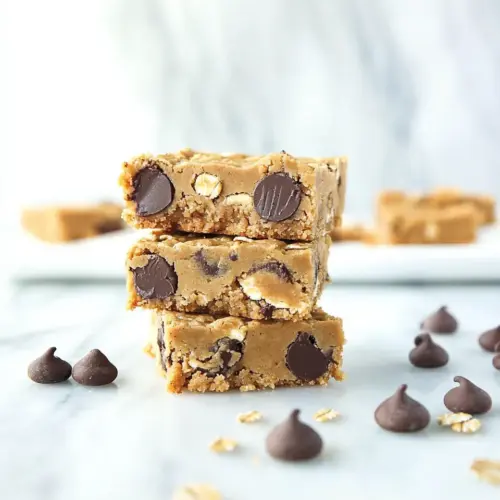
Oatmeal Peanut Butter Cookie Bars
Oatmeal Peanut Butter Cookie Bars are chewy, nutty, and studded with chocolate for irresistible texture and flavor. These easy bars blend creamy peanut butter, old fashioned oats, and melty chips for a crowd pleasing treat, perfect for bake sales or a cozy afternoon snack. Make them for any occasion and you will understand why they disappear fast.
Equipment
- Mixing Bowls
- Whisk
- Spatula
- 13 by 9 inch baking pan
- Parchment Paper
Ingredients
- 2 1/4 cups all-purpose flour Provide structure and bulk to the bars while creating a tender crumb; sifts or measures accurately to ensure consistent texture and proper gluten development when mixed with wet ingredients.
- 1 1/2 cups old fashioned oats Add hearty chew and rustic texture while contributing whole-grain flavor; stir into the dough to complement oats' softness and help absorb moisture for proper bar density.
- 3/4 teaspoon baking powder Lightly leaven the bars to give a modest lift and prevent heaviness; blends with baking soda to balance rise and maintain a tender yet slightly airy crumb.
- 1/4 teaspoon baking soda React with acidic components to help leaven and tenderize; used in small amount to control spread and to contribute subtle lift for a pleasant bar height.
- 1/2 teaspoon fine sea salt Enhance overall flavor by balancing sweetness and highlighting other ingredients; helps strengthen dough and improves taste perception while moderating yeast and chemical reactions.
- 3/4 cup (1 1/2 sticks) unsalted butter, melted Provide fat for richness, moisture, and a tender mouthfeel; melted form makes the dough easier to combine, promotes chewiness, and helps create a slightly crisp exterior.
- 2 cups packed light brown sugar Sweeten and add deep caramel notes while contributing moisture and chew; packed brown sugar helps bind ingredients and intensifies color and flavor in baked bars.
- 3/4 cup creamy peanut butter, room temperature Deliver nutty flavor and creamy fat that enhances texture and peanut profile; room temperature state ensures smooth incorporation and even distribution throughout the dough.
- 2 large eggs Bind ingredients together and add lift, moisture, and richness; eggs contribute to structure, emulsification, and a soft, cohesive bar when properly mixed.
- 2 teaspoons vanilla extract Introduce aromatic sweetness and enhance other flavors; vanilla extract rounds out the profile and elevates perceived sweetness without adding extra sugar.
- 1 cup semisweet chocolate chips Provide pockets of melty chocolate richness and contrast to the peanut butter; melting during baking creates gooey bites and balances saltiness with sweet.
- 1 cup peanut butter chips Contribute concentrated peanut flavor and additional creamy pockets; peanut butter chips hold shape while softening slightly to deliver bursts of peanut throughout the bars.
- 2/3 cup mini peanut butter cups (or peanut butter M&Ms) Add small bursts of peanut-candy flavor and textural interest; mini peanut butter cups or M&Ms offer a mix of chocolate, peanut butter, and occasional crunch for variety.
- 1/2 teaspoon flake sea salt (such as Maldon), for sprinkling Offer a final bright, briny contrast to sweetness to heighten flavors; sprinkling flake sea salt on top accentuates chocolate and peanut notes and adds visual finish.
Instructions
- Preheat oven to 350 degrees F. Line a 13-by-9-inch baking pan with parchment paper.: You will notice the oven gradually warming and a faint dry heat filling the kitchen, which sets the stage for even baking. Preheating ensures the edges start to color right away, preventing a gummy center. Lining the pan with parchment creates a clean release and keeps the bottom from overbrowning. A common mistake is skipping the parchment, which can make bars stick and tear when you try to lift them. If your oven runs hot, use an oven thermometer to confirm the set temperature so the bars bake evenly.
- In a bowl, whisk together flour, oats, baking powder, baking soda, and salt; set aside.: The dry mix smells faintly of toasted grain and anticipates the final texture. Whisking aerates the mixture, helping the leaveners distribute evenly so every bite rises uniformly. This step prevents pockets of baking soda or powder that could create uneven flavor. Avoid overworking the oats and flour together, which can crush the oats and reduce chew. If you detect lumps, give the mixture one more gentle whisk to ensure a smooth, combined dry base.
- In a large bowl, combine melted butter, brown sugar and peanut butter and stir until smooth. Whisk in eggs and vanilla. Fold in dry ingredients until just incorporated, then stir in chocolate and peanut butter chips and peanut butter cups, reserving a few tablespoons of each for the top (optional, but makes for extra pretty bars).: At first the bowl releases a warm, nutty steam as the melted butter and creamy peanut butter meld with the brown sugar . The mixture should feel glossy and slightly thick. Whisking in the eggs and vanilla produces a silky emulsion. Folding the dry ingredients gently preserves tenderness, so stop as soon as streaks of flour disappear. Stirring in the chips and mini cups distributes pockets of sweetness throughout. A typical error is overmixing here which can lead to dense bars, so use a spatula and fold just until combined. If the batter seems too stiff, a teaspoon of milk can loosen it, though usually the balance is fine as written.
- Press dough into prepared pan. Scatter remaining chips and peanut butter cups on top, then sprinkle with sea salt.: As you press the dough, you will feel the texture change from loose to compact, and the surface will smooth under gentle pressure. Firm, even pressure prevents air pockets and helps the bars bake uniformly. The scattered chips on top will toast slightly and give attractive pockets of melted chocolate, while the flake sea salt provides a bright finish. Avoid pressing too hard which can compact the bars excessively and reduce chew. If the dough sticks to your fingers, moisten them slightly or use a piece of parchment to press it down evenly.
- Bake for 25 to 28 minutes or until edges are lightly browned and center is just set. Do not overbake. Remove from oven and let cool to room temperature before lifting out of the pan and slicing into squares, rectangles, or triangles. Bars will keep, stored in an airtight container, for up to 5 days.: While baking you will hear the gentle quiet of the oven and the kitchen will fill with toasty, caramel notes. The edges will turn a gentle golden brown while the center should look slightly glossy and stable to the touch, not wet. Pulling the bars too early will cause them to crumble, and overbaking will yield dry edges, so aim for the moment the center has just set. Cooling in the pan allows the bars to firm up, making clean slicing possible; lifting them while too warm invites tearing. A common issue is uneven baking from a warped pan, so use a sturdy rimmed pan and rotate it halfway if your oven has hot spots. Store cooled bars in an airtight container and they will stay tender for several days, though they are best within the first two days for peak texture.
Notes
- Swap mix ins thoughtfully Keep the core batter the same but swap a portion of the chocolate chips for dark chocolate to deepen the flavor, or reduce the candy if you prefer less sweetness. This maintains texture while customizing taste.
- Adjust chew with oats If you prefer a softer chew, pulse the old fashioned oats briefly in a food processor. That slight milling will soften the bite but still leave characteristic oat body.
- Control sweetness Reduce the mini peanut butter cups by one third for a less candy forward bar, letting the peanut butter and chocolate chips shine without becoming cloying.
- Make ahead and freeze Slice bars and freeze between layers of parchment in an airtight container, then thaw at room temperature for a quick treat that retains texture.
- Top presentation Press a few extra semisweet chocolate chips and peanut butter chips on top before baking for a glossy, photo ready finish after melting into the surface.