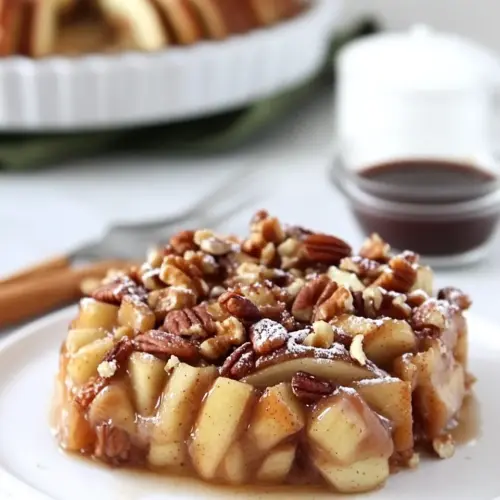
Nutty Cinnamon Roll Apple Cake
Nutty Cinnamon Roll Apple Cake is an easy, comforting dessert that combines tender cinnamon rolls, juicy apples, and crunchy pecans. The warm, caramelized topping and quick assembly make it ideal for casual gatherings or weeknight treats. With a gooey icing finish and cozy fall flavors, it is a simple recipe worth making for its aroma and crowd pleasing texture.
Equipment
- Glass 9-inch pie plate
- Medium sized bowl
- Small Bowl
- Microwave
Ingredients
- 1 -1/2 cups small diced apples, peeled (divided) Add small diced apples to provide natural sweetness and tender fruit texture; sauté or fold them into batter to distribute moisture evenly and prevent sinking. Use peeled apples to maintain a smooth mouthfeel and avoid chewy peel pieces, and divide them as directed to reserve some for topping or filling layers for brightness and visual appeal.
- 1 (12.5 ounce) can cinnamon rolls with icing Incorporate canned cinnamon rolls with icing to contribute ready-made sweet dough and swirled cinnamon flavor, cutting preparation time significantly compared to making dough from scratch. Unroll or slice as instructed to create ribboned layers of cinnamon throughout the cake and use the included icing to glaze the finished bake for sticky, sugary finish.
- 3/4 cup chopped pecans Sprinkle chopped pecans to add crunchy texture and rich, nutty flavor that complements the cinnamon and apple notes; toast briefly if desired to intensify aroma. Use the chopped form to ensure even distribution without overpowering each bite, and fold or layer them to create contrast between soft cake and crisp nuts.
- 2 tablespoons unsalted butter Melt unsalted butter to moisten the cake and carry flavors, providing a tender crumb and glossy finish when brushed or mixed into batters and toppings. Choose unsalted to better control overall salt level, allowing adjustments later and preventing an overly salty taste that would clash with sweet components.
- 1/3 cup packed dark brown sugar Dissolve packed dark brown sugar to supply deep molasses sweetness and a hint of caramel complexity that enhances both the apple and cinnamon elements. Use the packed measurement to ensure consistent sweetness and moisture contribution, helping create a slightly chewy, caramelized crumb when baked.
- 2 tablespoons light corn syrup Heat light corn syrup to bind the filling or topping components and add shine, lending a smooth, slightly viscous sweetness that helps prevent crystallization of sugars. Use in small amounts to stabilize icings or glazes and to keep chopped nuts and fruit adhering to the cake surface for neat slices.
Instructions
- Preheat oven to 350 degrees.: When the oven warms, you will smell a faint warmth in the kitchen, a dry heat that promises browning. Preheating ensures the cinnamon rolls start baking immediately, promoting even rise and preventing sogginess from prolonged standing. If you skip this, the rolls may not puff correctly and the texture can be dense; always allow the oven to reach temperature before inserting the pan. A common mistake is setting the pan in while the oven is still cooling, which leads to uneven baking.
- Spray a glass 9-inch pie plate with non-stick spray. Put 1 cup diced apples into the bottom of pan, set aside.: You will notice a faint tang from the apples as you layer them, and they should sit snug in the pan to form a steady base. Glass holds heat differently than metal, creating gentle browning along the edges. Ensuring even coverage of the spray prevents sticking when you flip the cake later. Avoid piling the apples too high or they may steam rather than caramelize, leaving a watery bottom.
- Open cinnamon rolls and set icing aside. Cut each cinnamon roll into quarters and add to a medium sized bowl. Add in remaining 1 cup diced apples and 3/4 cup chopped pecans.: The cinnamon rolls will feel soft and slightly tacky as you cut them, which is perfect because they will absorb the syrup and meld with the fruit. Mixing in apples and pecans creates a heterogeneous texture, with bits of fruit and nut throughout. If the rolls seem overly sticky, work quickly so they do not disintegrate. A common error is overmixing here, which can flatten the pieces and reduce structure; gently fold instead of stirring aggressively.
- In a small bowl add melted butter, dark brown sugar and light corn syrup. Stir until combined and add to bowl with cinnamon rolls, apples and pecans. Mix gently to combine all ingredients. The nuts will stick together a bit but try your best to keep everything evenly mixed.: As you whisk these together, the aroma of molasses from the dark brown sugar will rise and the syrup will turn glossy. This mixture is crucial because it forms the caramel layer that soaks into the cinnamon rolls . Warmting the butter slightly helps the sugar dissolve fully for a smooth sauce. If the sugar feels grainy, keep stirring and briefly warm the bowl over a water bath; failing to dissolve the sugar can leave gritty spots in the baked top.
- Top apples in the pie plate with the cinnamon roll mixture. Try to make the top as even as possible.: Once poured over, the syrup will glisten as it coats the pieces, and you will hear the soft, sticky thud as you fold it in. The syrup tames the dry edges and encourages a cohesive bake where flavors meld. Combining gently ensures pockets of syrup remain, creating caramelized spots after baking. Avoid drenching the pieces unevenly, which can lead to some sections being overly sweet while others stay dry.
- Bake for about 35 minutes until the top is golden brown and the cinnamon rolls are cooked through.: As you mix, listen for the slight rustle of pecans and feel the sticky, tacky consistency of the dough and syrup melding. Even distribution matters for balanced bites, so take your time to coax pieces apart with a spatula. The binding of the nuts is normal, and breaking them up slightly helps with even texture. Do not overwork the mixture, or it will become paste like and lose its distinct layers.
- Let cake rest in the pan for 5 minutes and flip over onto a plate or cake stand. Take metal lid off the icing and microwave for about 20 seconds until the icing is melted and pourable. Drizzle over the cake and devour!: Arranging the mixture gives you control over the final appearance, and a smooth surface yields uniform browning. As the cake bakes, the top will puff and spread slightly, so aim for an even initial layer to avoid lopsided results. A shallow, even layer ensures consistent bake and browning. Packing it too tightly can prevent heat circulation, leaving the center undercooked, so maintain gentle evenness rather than compacting.
- Bake for about 35 minutes until the top is golden brown and the cinnamon rolls are cooked through.: During baking you will witness a shift from pale dough to golden brown ridges, and the kitchen will fill with warm, sweet spice aromas. The cinnamon rolls should feel set and slightly springy when touched with an offset spatula. Baking until golden ensures the sugars caramelize and the interior cooks without drying. A frequent mistake is removing it too early, resulting in doughy centers, so always check for a uniformly golden top and set interior.
- Let cake rest in the pan for 5 minutes and flip over onto a plate or cake stand.: Resting allows the syrup to settle and the structure to firm so the cake unmolds cleanly. The residual heat will continue cooking gently, and you will notice a subtle loosening around the edges as the syrup softens. Flipping while still warm helps the top become the showcase surface. If you wait too long, the syrup may solidify and make flipping messy, so time this carefully.
- Take metal lid off the icing and microwave for about 20 seconds until the icing is melted and pourable.: Warming the icing transforms it from a thick blob into a glossy glaze that drizzles beautifully, creating shiny ribbons across the cake. The scent of sweet vanilla from the icing will lift the whole dessert, and pouring it while warm ensures it spreads into crevices. Be cautious when microwaving, a few extra seconds can cause bubbling and splatter. If overheated, the icing may separate or become too thin, so check often.
- Drizzle over the cake and devour!: The final drizzle creates a sticky, sweet finish that contrasts with the nutty crunch and tender apples . As you spoon it, watch it pool in the nooks, offering glossy sweetness in every bite. Serving warm enhances textures and makes the aroma more pronounced. One mistake to avoid is adding the icing too early; if the cake is too hot it may cause the glaze to melt away and lose visual appeal, so allow a brief cool down before finishing.
Notes
- Prep your apples evenly. Cutting the apples into consistent small dice ensures even cooking and prevents some pieces from turning to mush while others remain too firm.
- Handle the cinnamon rolls gently. When you quarter the canned cinnamon rolls, do it with a light touch to keep the pieces intact so they create distinct pockets rather than a uniform paste.
- Warm the syrup mixture. Slightly warming the butter, dark brown sugar, and light corn syrup helps everything combine smoothly, creating a glossy binder that caramelizes well in the oven.
- Use a glass pan as directed. A glass 9 inch pie plate bakes gently and shows you the caramelized edges as they develop, giving you better visual cues for doneness.
- Microwave icing sparingly. Heat the canned icing in short bursts so it becomes pourable without separating, and test the consistency before drizzling.