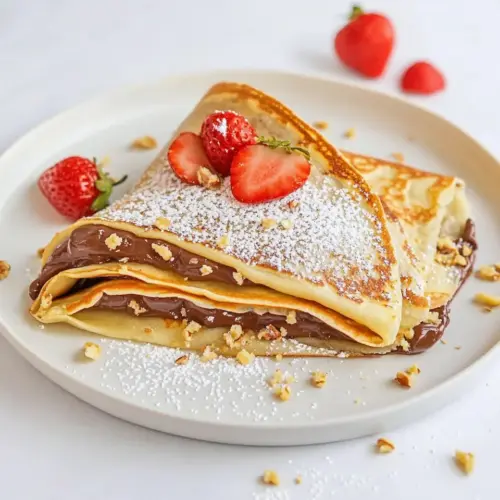
Nutella Crepes
Nutella Crepes deliver thin, lacy pancakes filled with silky Nutella, balanced by fresh fruit for brightness. This recipe is creamy, quick to assemble, and perfect for easy weeknight brunch or a crowd pleasing dessert. The batter chills to create tender crepes that fold without tearing, making them a reliable favorite to make again and again.
Equipment
- Blender
- nonstick skillet
- Spatula
- Measuring Cups
- Parchment Paper
Ingredients
- 2 1/2 cups milk Provide rich liquid that creates a smooth batter; helps hydrate flour and dissolve sugar while contributing tenderness and a slight milky flavor to the crepes.
- 2 cups all-purpose flour Form the structural base of the batter; when combined with liquid and eggs it creates gluten that gives crepes their delicate yet cohesive texture.
- 1/4 cup granulated sugar Add subtle sweetness to the batter; helps balance flavors and promotes light browning on the crepe surface during cooking.
- 1/4 teaspoon fine sea salt Enhance overall flavor by adding a mild savory contrast; helps balance sweetness and can slightly strengthen gluten development when mixed into the batter.
- 4 tablespoons unsalted butter, melted Introduce fat that contributes to tenderness and richness; melted butter improves mouthfeel and prevents sticking during cooking.
- 2 teaspoons vanilla extract Contribute aromatic flavor and depth; vanilla rounds out sweetness and adds a warm, familiar note to the finished crepes.
- 4 large eggs Provide structure, emulsification, and lift to the batter; eggs bind ingredients, add protein for stability, and yield a tender, pliable crepe.
- Nutella for spreading Supply a creamy, chocolaty filling or spread; used post-cooking to add rich flavor, sweetness, and a smooth texture for spreading on crepes.
- Fresh bananas, sliced (optional) Offer fresh, fruity sweetness and a soft texture when sliced; used as an optional topping to add brightness and complement the chocolate spread.
- Fresh strawberries, sliced (optional) Provide juicy, tart-sweet contrast when sliced; used optionally to add color, acidity, and a fresh flavor that pairs well with chocolate.
Instructions
- Blend milk, flour, sugar, salt, butter, vanilla, and eggs in a blender until smooth. Chill the batter for 1 hour.: The moment the blender begins to whirl you will hear a steady, even hum, and the batter should appear glossy and free of lumps, almost like heavy cream. This smooth texture is crucial because it ensures the batter will spread thinly and cook evenly without tearing. One common mistake here is overblending at high speed for too long, which can create excess foam that leads to uneven cooking; pulse until smooth and then stop. Smell the faint warmth of vanilla and butter lift from the pitcher, and scrape down the sides once so all the flour is incorporated. If you detect small bits of flour, a quick additional pulse will fix it. The right consistency is pourable yet slightly viscous, not watery, so it coats a spoon when lifted.
- Prepare parchment paper squares to separate cooked crêpes. Heat a nonstick skillet over medium heat.: Cooling the batter calms any bubbles created in blending and allows the flour to hydrate fully, resulting in more tender crepes with fewer tears. The surface will look slightly thicker after chilling, and the scent will mellow while flavors meld. A typical error is skipping this rest, which can cause fragile, springy crepes that shrink when cooking. I place the bowl in the coldest part of the refrigerator, and I sometimes cover it with plastic wrap to keep it from picking up other aromas. If you are short on time, a 30 minute rest helps, but an hour gives the best texture and easier handling at the skillet.
- Lightly butter the skillet, pour 1/4 cup of batter, and swirl to coat. Cook until golden, flip, and cook the other side. Stack crêpes with parchment paper in between.: Laying out parchment squares prevents sticking as you stack each warm crepe, and it preserves the delicate surface when you handle the stack. The crepes will steam slightly as they cool, so the parchment helps avoid sogginess and makes it simple to reheat single portions. One pitfall is using wax paper instead of parchment, which can stick or transfer wax; always use parchment or lightly dusted plates. Arrange your work station with a stack plate and the parchment ready, so each crepe moves off the pan smoothly without crowding.
- Spread Nutella on each crêpe, add fresh fruit if desired, fold into triangles, and serve with optional powdered sugar and whipped cream.: A medium setting yields a steady sizzle that delivers golden color without burning; you want consistent, even heat across the surface. You will hear a soft, consistent hiss as the batter hits the pan, and small bubbles will form before the edges begin to lift, signaling readiness to flip. If the pan is too hot, the crepe will brown immediately and may crisp too fast, so lower the heat if you see dark spots appearing quickly. I test with a teaspoon of batter first to confirm the temperature, then adjust as needed. The ideal pan warmth produces a gentle fragrance of caramelizing batter and even bronzing across the surface.
- Lightly butter the skillet, pour 1/4 cup of batter, and swirl to coat: As you pour, you will see the batter spread in a thin, circular sheet, and the surface will move from shiny to matte as it cooks. Use the swirl to pull the batter into a nearly translucent layer; the edges will thin and crisp slightly, creating delicate lacy rims. Avoid adding too much butter, which can fry rather than gently brown the crepe; a light brush or a folded paper towel with butter does the job. Watch for small holes and tiny bubbles across the surface, they indicate the center is cooking. If the batter pools or is too thick in places, lift and swirl more quickly next time to achieve an even coat.
- Cook until golden, flip, and cook the other side: Listen for a subtle change from a soft sizzle to a slightly firmer sound as the bottom sets. Visually, the first side should be pale gold with lacy edges before you flip; use a thin spatula to loosen and flip confidently in one swift motion to keep the crepe intact. The second side needs far less time, often just a few seconds to set and finish with a light tan. A common error is flipping too soon, which can cause tearing; wait until the edges lift away from the pan. After flipping, the aroma will become richer and you may notice a mild caramel scent as the sugars brown.
- Stack crêpes with parchment paper in between: As you transfer each cooked crepe to the prepared plate, place a parchment square between layers to prevent sticking and to make serving individual crepes effortless. The stack will retain warmth, and the parchment keeps surfaces pristine for filling. Avoid stacking too many without parchment, which can cause tearing when you separate them. If you plan to reheat, the parchment also helps you lift single crepes for gentle warming in a skillet or microwave.
- Spread Nutella on each crêpe: Apply Nutella while the crepe is still warm so the spread softens and glides across the surface, creating a glossy ribbon that melds with the crepe. The warm contrast enhances the nutty, chocolate flavor. Use just enough to coat thinly; too much filling overwhelms the structure and makes folding messy. If your Nutella is firm, warm it briefly in a bowl over hot water so it becomes easy to spread without becoming runny. You will feel the texture become silky under the knife or offset spatula as it warms slightly from the crepe.
- Add fresh fruit if desired: Scatter slices of Fresh bananas, sliced (optional) or Fresh strawberries, sliced (optional) across the spread to introduce bright acidity and natural sweetness. The fruit provides contrasting textures, with juicy strawberry bursts or creamy banana slices pairing beautifully with the rich spread. Slice just before assembling to keep fruit from weeping onto the crepe and making it soggy. If you add too much fruit, the crepe can become hard to fold neatly, so aim for a modest layer for balance.
- Fold into triangles, and serve with optional powdered sugar and whipped cream: Folding reveals the ribbon of Nutella and makes the crepe easy to eat. The final presentation is about contrast, so a dusting of powdered sugar or a dollop of whipped cream lends a bright finish both visually and on the palate. If serving later, keep the folded crepes warm in a low oven on a tray with parchment. One mistake is overdecorating, which can hide the crepe's delicate texture; keep garnishes simple to let the flavors sing.
Notes
- Lighten the batter by using a touch less flour and a bit more milk for a more tender, lace like crepe that feels delicate on the tongue.
- Richer crepes happen when you use whole milk and the full measure of unsalted butter, melted, which deepens browning and mouthfeel.
- Make ahead by preparing the batter and chilling it overnight; this deepens flavor and makes morning assembly effortless.
- Fruit variations let you change the flavor profile: add more Fresh strawberries, sliced (optional) for brightness or extra Fresh bananas, sliced (optional) for a creamier bite.
- Temperature control is key; if crepes are browning too fast, lower the heat slightly and test with a small batter drop until the pan responds evenly.