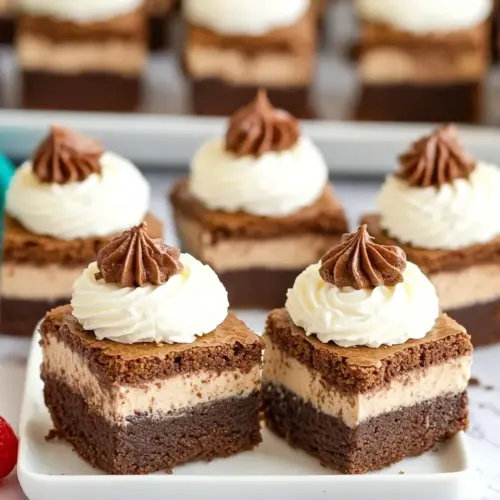
Nutella Cheesecake Brownie Bites
Nutella Cheesecake Brownie Bites combine a creamy, hazelnut studded cheesecake layer over a fudgy, chocolatey brownie base. These bite sized bars are rich, indulgent, and surprisingly easy to make, perfect for parties or an easy weeknight treat. The contrast of textures and deep chocolate flavor make them irresistible, so try them for your next gathering for guaranteed compliments.
Equipment
- 9 x 13 metal baking pan
- Heavy foil or parchment
- Large heavy saucepan
- Stand mixer
- Long non serrated knife
Ingredients
- 1/2 c. unsalted butter diced Melted and diced to blend smoothly into the batter, adds richness and a tender crumb while carrying flavors of butter throughout the brownie base.
- 3 oz . unsweetened chocolate chopped Chopped and melted to provide deep chocolate intensity, contributes a glossy texture and helps set the fudgy structure of the brownies when combined with butter.
- 1 -1/2 c. sugar Granulated sugar used to sweeten and contribute to the chewy texture; helps with browning and structure by interacting with eggs during mixing and baking.
- 3 large eggs Beaten into the batter to provide structure, lift, and moisture; eggs also emulsify fats and sugars for a cohesive, tender brownie crumb.
- 2 tsp . pure vanilla extract Added for a delicate aromatic note, enhances the overall flavor profile and balances the chocolate with warm, sweet vanilla undertones.
- 1/4 tsp . kosher salt Sprinkled sparingly to heighten overall flavor balance and temper sweetness; helps accentuate the chocolate and enhance other flavors.
- 3/4 c. all-purpose flour Sifted into the batter to provide body and structure; moderates density so the brownies remain tender rather than overly heavy.
- 1/2 tsp . espresso powder Dissolved into the batter to intensify chocolate flavor and add subtle coffee notes, which deepen and enhance the chocolate complexity without making it taste like coffee.
- 24 oz . cream cheese softened to room temperature Softened to room temperature to create a smooth, creamy cheesecake layer; provides tanginess, moisture, and body that contrasts the dense brownie below.
- 1 -1/2 c. Nutella Swirled or layered into the cheesecake component for a nutty, chocolate-hazelnut sweetness; contributes richness, flavor complexity, and a smooth spreadable texture.
- 3 large eggs Beaten into the cheesecake mixture to help set and provide structure, contributing moisture and a silky mouthfeel once baked and cooled.
- 3/4 c. sugar Dissolved sugar added to sweeten the cheesecake layer while aiding in texture and slight browning; balances the tang of the cream cheese and Nutella.
- 1/3 c. sour cream Folded into the cheesecake for tangy creaminess and moisture; helps loosen the filling for a smoother, more luscious consistency.
- 1 tsp . pure vanilla extract Added for a final layer of aromatic sweetness; enhances the dessert’s overall flavor harmony by reinforcing the vanilla notes in both layers.
Instructions
- for the brownie base: Preheat oven to 325° F. To achieve ultra clean cuts, prepare a pan with a foil or parchment paper liner. Fold a long piece of heavy foil into a 13" wide strip and place inside a 9” x 13” metal baking pan, leaving overhang on 2 long sides. Spray foil lightly with nonstick spray. If you’re not looking for perfect brownie cuts, simply spray pan with nonstick spray and eliminate the foil lining. Set pan aside.: Preheat oven to 325° F. To achieve ultra clean cuts, prepare a pan with a foil or parchment paper liner. Fold a long piece of heavy foil into a 13" wide strip and place inside a 9” x 13” metal baking pan, leaving overhang on 2 long sides. Spray foil lightly with nonstick spray. If you’re not looking for perfect brownie cuts, simply spray pan with nonstick spray and eliminate the foil lining. Set pan aside. : You will feel a small ritual unfolding as you prepare your pan, the metallic whisper of foil and the reassuring hiss of nonstick spray. Proper pan preparation matters because it makes unmolding painless, and those long foil edges become handles that let you lift the entire slab cleanly. If you skip lining, expect a bit more stubborn sticking along the edges when slicing. One common mistake is not smoothing the foil or parchment, which causes uneven baking where batter pools; press the liner flat so the batter spreads uniformly.
- In large heavy saucepan over low heat, stir together butter and chocolate until they are melted. Remove saucepan from heat and whisk in sugar, then eggs, one at a time. Whisk in vanilla and salt, and then sprinkle flour and espresso powder over the top. Stir to blend well.: The aroma of melted butter and unsweetened chocolate will hit you first, a deep cocoa perfume that signals you re on the right track. Stirring over low heat ensures a glossy emulsion rather than scorched lumps, and removing the pan from heat before adding sugar and eggs prevents the eggs from scrambling. Adding eggs one at a time helps the batter become silky, and when you dust the flour and espresso powder on top it is easier to fold them in without overmixing. A typical slip up here is overheating the chocolate, which can seize; if you see small dry bits, take the saucepan off heat and whisk briskly until coordinated gloss returns.
- Transfer batter to prepared pan. Bake brownies for 20 minutes and then remove from oven and let rest for 5 minutes.: As you transfer the batter, notice its thick, shiny body as it settles into the pan. The oven s moderate heat helps the edges set while the center stays fudgy, and that five minute rest after baking lets residual heat finish the job without overcooking. You re aiming for a set but slightly soft center, because the cheesecake layer will bake on top. A common error is baking too long, which yields a dry brownie base; use a gentle touch when checking and take it out at the indicated time, relying on the brief rest to smooth the internal texture.
- for the Nutella cream cheese layer: While brownie base is baking, prepare the Nutella cream cheese layer. In the bowl of a stand mixer, cream together cream cheese and Nutella on medium-high speed until completely smooth and creamy, about 1 to 2 minutes. Add eggs, sugar, and sour cream, and beat on medium speed until just combined. Add vanilla and beat to combine.: While brownie base is baking, prepare the Nutella cream cheese layer. In the bowl of a stand mixer, cream together cream cheese and Nutella on medium-high speed until completely smooth and creamy, about 1 to 2 minutes. Add eggs, sugar, and sour cream, and beat on medium speed until just combined. Add vanilla and beat to combine. : The feel of softened cream cheese transforming into a velvety mass with Nutella is immensely satisfying, and the mixture should look glossy and homogeneous. Beating on medium speed incorporates air gently without causing separation, and adding the eggs , sugar , and sour cream in stages keeps the texture smooth. You want a spreadable custard, not a frothy foam, because too much air can cause cracks as it bakes. One misstep is using cold cream cheese , which will produce lumps; allow adequate time for it to reach room temperature.
- Spread mixture evenly over warm brownie layer and tap the pan gently on the counter to settle it in. Return pan to the oven and bake for another 45 to 50 minutes, or until center no longer wobbles and edges are just a bit golden. Remove from oven and let cool completely before refrigerating. Chill for at least two hours before serving.: When you spread the filling, working while the base is still warm helps the layers meld without melting the topping. A gentle tap on the counter removes air pockets so the surface bakes flat and smooth. The baking window is long because the filling sets slowly; look for a slight jiggle at the center rather than full liquid, and golden edges as an indicator the perimeter is done. Cooling completely at room temperature prevents condensation from forming when you refrigerate, which would make the cut edges soggy. A frequent mistake is slicing too soon; insufficient chilling causes the cheesecake to crumble rather than slice cleanly.
- If you lined the pan with foil for clean cuts, use a knife to cut around the edges of the pan and loosen any areas that might have gotten stuck. Grab the 2 long foil edges and gently lift cheesecake from pan. Place on a large cutting board and cut into 2" squares. To achieve clean cuts, dip a long non-serrated knife into a tall glass of warm water after each cut, and then clean off the knife blade before cutting again. Top with sweetened whipped cream and chocolate shavings right before serving.: Lifting the slab by its foil edges feels almost ceremonial, and it s the step that rewards your careful prep. When you place it on a cutting board, the density of the layers becomes obvious, and the recommended warm water dip trick helps you slice through without dragging crumbs. Clean the blade between cuts for neat edges, and wait until the end to add any garnish so it stays fresh. One common slip is pressing too hard with the knife, which squashes the layers; use a steady, confident motion for the best squares.
Notes
- Nutella swirl: Gently fold a few tablespoons of extra Nutella into the brownie batter before baking to increase hazelnut pockets throughout the bite.
- Espresso boost: Increase the espresso powder slightly if you want a pronounced mocha note that amplifies the chocolate depth.
- Smoother cheesecake: For the silkiest topping, beat the cream cheese and Nutella until completely lump free, scraping the bowl frequently to ensure uniform texture.
- Serving flair: Top each square with a small dollop of sweetened whipped cream and a few chocolate shavings just before serving for a bakery style finish.
- Cutting technique: Use a long, non serrated knife warmed in hot water and wiped clean between cuts to produce professional looking edges.
- Make ahead: These keep well refrigerated for several days, so bake a day ahead for party ready convenience while maintaining texture.