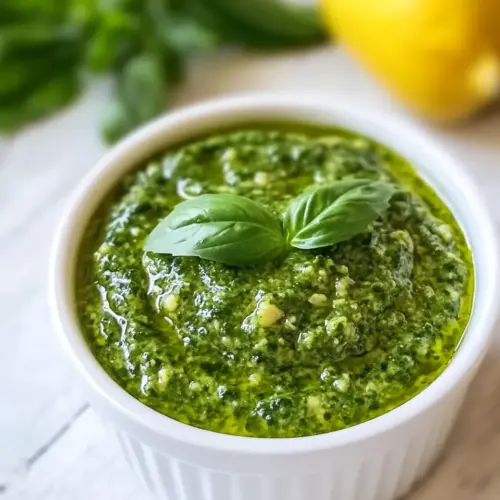
Nut Free Homemade Pesto
Nut Free Homemade Pesto is a creamy, vibrant sauce made from fresh basil, garlic, olive oil, and Parmesan cheese. This easy summer staple is perfect for quick weeknight dinners and versatile enough for sandwiches, roasted vegetables, and pastas, offering bright herbal flavor without any nuts, so everyone can enjoy it.
Equipment
- Food Processor
- Rubber spatula
Ingredients
- 3 cups packed fresh basil Provide bright, aromatic flavor and serve as the primary herb base for the sauce; finely packed leaves release essential oils that define pesto’s fresh character. Bruising the basil gently helps integrate its aroma with oil and cheese, creating a vibrant green sauce that balances the other components.
- 1/2 cup olive oil Add smooth mouthfeel and carry fat-soluble flavors; drizzle or stream into the blender while processing to emulsify the pesto and create a silky texture. Choosing a good-quality olive oil enhances richness without overpowering the herbaceous basil.
- 2 ounces fresh grated Parmesan cheese Contribute savory, umami depth and a slightly salty, nutty finish that mimics traditional pine nut richness; grate fresh for best melting and integration into the sauce. Freshly grated Parmesan binds with the oil to thicken the pesto and boost overall flavor complexity.
- 1 -2 cloves garlic minced or pressed Impart sharp, pungent bite and aromatic lift when minced or pressed; adjust quantity for desired intensity to avoid overpowering the basil. Properly minced garlic distributes evenly, brightening the pesto and accentuating the cheese and lemon notes.
- 1 tablespoon fresh lemon juice Provide bright acidity and a citrus lift to balance the richness; use fresh-squeezed juice for a clean, tart counterpoint to the oil and cheese. Adding lemon juice also helps preserve the pesto’s vibrant green color by slowing oxidation.
- 1/4 teaspoon kosher salt or to taste Enhance overall seasoning and bring out intrinsic flavors when added sparingly; start with the stated amount and adjust to taste at the end. Using kosher salt dissolves easily and helps integrate the basil, cheese, and garlic into a cohesive sauce.
- pepper to taste Round out seasoning with mild heat and aromatic nuance; grind to taste and add gradually to avoid overwhelming the delicate basil. Freshly cracked black pepper brightens the pesto and provides a subtle contrast to the creamy Parmesan.
Instructions
- Add everything except the olive oil to a food processor.: The first moment releases those fresh aromas, with the scent of basil and garlic filling the kitchen. As the blades chop, you should hear a steady, soft whir and see the leaves reduce to a coarse green mass. This step matters because combining dry and semidry ingredients first lets the blades break down the herbs and cheese evenly, preventing the oil from pooling. A common mistake is tossing everything in at once, which can make the olive oil sit on top and not incorporate well. If your basil seems limp, a quick rinse and gentle pat dry will revive the texture before processing.
- While the processor is running, slowly pour the olive oil through the feed tube in a steady stream. Process until smooth.: As you add the olive oil , you should see a glossy ribbon form and the mixture transform from chunky to smooth. The sound will shift to a slightly smoother, more sustained motor pitch as the oil emulsifies. This technique creates a stable emulsion that gives the pesto its silky body, so patience matters here. If you pour too fast, the oil may separate and the texture will be greasy instead of cohesive. If separation happens, stop and pulse a few times to reemulsify, adding a teaspoon of lemon juice if needed to bring it back together.
- If needed, scrape down the sides with a rubber spatula and pulse a few times until everything is incorporated.: The visual cue is a uniform, vibrant green paste with small flecks of Parmesan cheese and herbs. The scent becomes richer and more integrated, with the bite of garlic mellowing slightly. This matters because overprocessing can heat the mixture and darken the color, while underprocessing may leave uneven chunks. A common error is running the processor too long without pausing, which can bruise the basil. To avoid this, pulse in short bursts and check texture frequently.
- Store in the refrigerator.: The action of scraping brings any unmixed bits back into the blades, ensuring even seasoning and texture. You will notice the mixture becoming homogenous and glossy after a few pulses. This step matters because processors can leave pockets of cheese or herb clinging to the bowl, causing inconsistent flavor. A typical mistake is skipping this and ending up with salty pockets of Parmesan cheese or unblended garlic. Be gentle when scraping to avoid bruising the mixture, and taste a small amount to check balance before storing.
- Store in the refrigerator: Proper storage keeps the pesto bright, and you will smell a clean, herbal aroma when you open the container later. Pouring a thin film of olive oil over the top can help slow oxidation and prevent browning. This matters because exposure to air will dull the color and flavor over time. A common storage mistake is leaving pesto at room temperature for too long; refrigerate promptly in a sealed container and use within a week, or freeze portions for longer keeping. If the top darkens slightly, scrape it off and the remaining pesto will still be vibrant beneath.
Notes
- Ingredient quality matters, use bright, fragrant basil and freshly grated Parmesan cheese for the best flavor impact.
- Pacing the oil is key, add the olive oil slowly so the mixture emulsifies and stays glossy rather than oily.
- Adjust garlic to taste, start with one clove if you prefer a milder garlic presence and increase on subsequent batches if you want more punch.
- Preserve color by pouring a thin layer of olive oil on top before refrigerating, this reduces oxidation.
- Freezing tip, spoon pesto into ice cube trays and freeze, then transfer cubes to a sealed bag for quick portions that thaw easily.