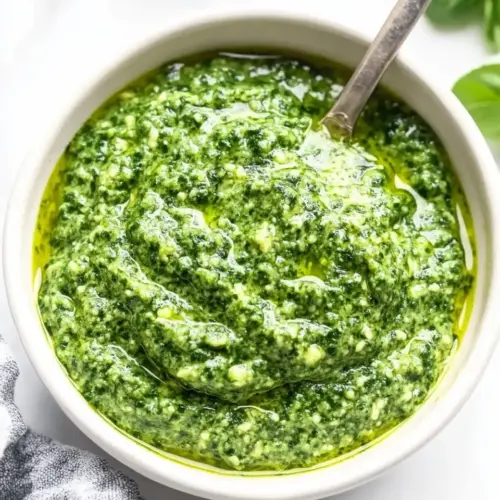
Nut Free Basil Pesto
Nut Free Basil Pesto is a creamy, vibrant herb sauce that is bright with lemon and garlicky depth, yet allergy friendly and easy to make. Packed with fresh basil and baby kale, and rounded by parmigiano reggiano and olive oil, it makes a quick weeknight dinner upgrade or a flavorful spread for sandwiches. Make it for its speed, fresh aroma, and reliable, versatile flavor.
Equipment
- Food Processor
- High Speed Blender
Ingredients
- 2 cups packed basil Provide bright, aromatic flavor and act as the primary herb base for the pesto; finely chiffonade to release oils and ensure even distribution throughout the sauce. Help create a fresh green color and pair well with the other leafy ingredient to build depth of flavor.
- 2 cups packed baby kale Contribute a slightly bitter, earthy backbone that complements the basil and increases the nutrient density of the pesto; chop or pack tightly to match the basil volume. Add texture and a pleasant savory contrast that balances the herbs and cheese.
- 1/3 cup parmigiano reggiano grated Add savory, umami richness and a salty, nutty character that helps bind the sauce; grate finely so it melts smoothly into the emulsion. Provide depth and a creamy mouthfeel that elevates the overall pesto flavor profile.
- 2 tablespoons lemon juice Offer bright acidity that lifts and balances the richness from the oil and cheese; squeeze fresh and taste as you go to maintain the desired brightness. Help preserve the green color slightly and contribute a clean, zesty finish.
- 1 garlic clove Introduce pungent, aromatic heat that builds complexity and enhances savory notes; mince or crush to distribute evenly without overpowering the sauce. Act as a subtle flavor intensifier that pairs naturally with herbs and cheese.
- Salt to taste Enhance and balance all flavors by adjusting seasoning to taste; add incrementally and taste between additions to avoid over-salting. Help bring out the natural sweetness of the herbs and the savory depth of the cheese.
- 1/4 cup olive oil Provide smooth, fatty body necessary to create a cohesive emulsion and carry flavors; pour slowly while blending to achieve desired consistency. Help give the pesto a glossy finish and improve spreadability.
- hot water as needed Control final consistency by loosening the pesto to the preferred texture; add sparingly and blend until the sauce reaches the desired pourable or spreadable thickness. Allow for easy adjustment without diluting flavor when serving.
Instructions
- Add all of the ingredients except the olive oil to a food processor or a high speed blender. Pulse until finely chopped. With the motor running, drizzle in the olive oil. If needed you can add in a tablespoon of hot water as needed to make a smooth pesto. Taste and adjust seasoning.: The first sensory cue you notice is the bright, herbaceous scent as the basil and baby kale begin to break down. Pulsing rather than running the machine nonstop preserves some texture and prevents the herbs from overheating, which can dull their color and flavor. I pulse in short bursts, stopping to scrape down the sides, so the mixture stays evenly chopped. If you run the processor too long at high speed immediately, the herbs can become pasty and warm, losing freshness. A common mistake here is overworking the herbs, which leads to a dull color and less vibrant taste. Watch for tiny flecks of green and a coarse, almost damp sand like texture before you proceed to the next step.
- Use immediately or store for up to 1 week in a tightly sealed container.: As you introduce the olive oil in a slow, steady stream, the mixture will turn glossy and begin to emulsify, creating a smooth cohesion between the herbs, cheese, and garlic. You should hear a gentle change in the processor sound as the mixture shifts from dry to lubricated, and see a sheen develop on the surface. This technique helps the oil bind rather than separate, which matters for a stable pesto. If you pour the oil too quickly, the sauce can split and become oily on top while the solids clump. If separation occurs, pulse a few times slowly and add a teaspoon of hot water to bring it back together.
- If needed you can add in a tablespoon of hot water as needed to make a smooth pesto: Adding hot water loosens the texture and helps the pesto become silky when you want it to coat pasta or dress vegetables. Start with one tablespoon, then assess the texture by stirring with a spoon. The scent will become more integrated, with citrus and herb notes melding. Hot water also slightly warms the sauce, releasing the aromatics. Avoid adding too much water at once, which will water down the flavor and require more seasoning to balance. A typical error here is adding cold water, which can cool the sauce and make it seem less vibrant.
- Taste and adjust seasoning: Now you will notice the full flavor profile, where the savory parmigiano reggiano , tart lemon juice , and sharp garlic meet the fresh herb base. Use your palate to add a pinch of salt or an extra squeeze of lemon juice to brighten it up. I always taste with a small spoon, noting if any component needs a nudge. The texture should be cohesive and neither too oily nor too dry. A common pitfall is under seasoning, which leaves the pesto flat. If it tastes a bit dull, a touch more acid or salt usually wakes it up effectively.
- Use immediately or store for up to 1 week in a tightly sealed container: Fresh pesto smells of green leaves and citrus, and when you first spoon it onto warm pasta the steam lifts the aromatics beautifully. For storage, press a thin film of olive oil over the surface to minimize oxidation and keep it in the fridge. Stored properly, the pesto keeps its color and flavor for several days, though it is most vibrant in the first 48 hours. Freezing in ice cube trays is another option for longer storage. A common mistake is leaving airspace above the pesto in the container, which will lead to browning. Always use a tight seal and a protective oil layer to preserve freshness.
Notes
- Herb Forward Swap: Increase the ratio of basil to baby kale for a brighter, more classic pesto aroma, which works especially well on cold pasta salads where the herb scent should stand out.
- Smoother Emulsion: For an ultra smooth pesto, briefly warm the olive oil so it incorporates more readily, then drizzle it in slowly while the processor runs, resulting in a silkier mouthfeel perfect for spreading.
- Lemon Brightness: Add an extra half teaspoon of lemon juice if you want the citrus to cut through richer dishes, but add it gradually and taste so it does not dominate the herb flavors.
- Mild Garlic: If raw garlic is too strong for your guests, rub the peeled clove on the bowl or let it rest peeled for a few minutes before using to mellow the bite.
- Freezing Portions: Spoon portions into an ice cube tray and freeze, then transfer cubes to a sealed bag. This gives you ready to thaw servings to toss into pasta or warm sauces without waste.