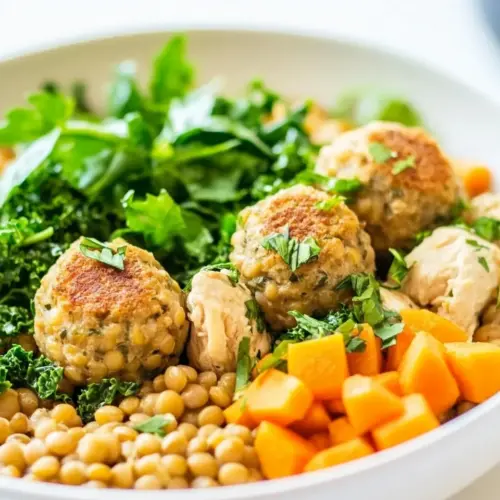
Nourishing Lentil Bowl with Kale and Chicken Meatballs
Nourishing Lentil Bowl with Kale and Chicken Meatballs is a cozy, protein packed bowl that blends tender chicken meatballs, hearty brown lentils, and vibrant baby kale in a fragrant chicken stock. This easy weeknight dinner delivers savory, bright, and comforting flavors with minimal fuss, perfect for busy evenings when you want a wholesome, satisfying meal.
Equipment
- Large pan with lid
- Mixing Bowl
- Slotted Spoon
- Grater
Ingredients
- 450 g chicken mince Provide lean protein and moisture to meatballs, creating a tender texture when combined with binders and seasonings. Help the meatballs hold together and brown nicely during cooking. Contribute mild flavor that pairs well with herbs and spices.
- 2 tablespoon grated parmesan Add a savory, umami-rich note that enhances the meatballs' overall flavor profile when mixed into the mince. Help balance saltiness and deepen taste without overpowering other seasonings. Contribute slight creaminess and promote better browning.
- 1/4 cup panko bread crumbs Bind the meatball mixture and introduce a subtle crispness to the exterior when cooked, while absorbing excess moisture. Provide a neutral background flavor that helps maintain shape and texture. Keep the mixture light and prevent toughness.
- 1 teaspoon salt Season the meatball and lentil components to bring out natural flavors and achieve balanced seasoning throughout the dish. Help control overall salt level so other ingredients' flavors remain perceptible. Support proper taste perception for the finished bowl.
- 1 tablespoon chopped parsley Introduce fresh herbal brightness that lifts the rich meat and lentil flavors when chopped and mixed into the meatballs. Add aromatic complexity and a subtle green note that complements lemon and parmesan. Provide a small amount of color and freshness.
- 1 large onion Form the aromatic base for the broth and sauce when diced and sautéed, contributing sweetness and depth as it softens. Help build savory complexity that supports both the meatballs and lentils. Caramelize slightly to add mild sweetness and richness.
- 1 carrot Supply natural sweetness, texture, and body to the broth when diced and simmered, enhancing the overall savory profile. Add a subtle earthiness that pairs well with lentils and kale. Provide extra nutrients and slight bite to the finished bowl.
- 1 tablespoon olive oil Serve as the cooking medium for sautéing aromatics and browning meatballs, imparting a smooth mouthfeel and slight fruity flavor. Help transfer heat evenly and prevent sticking while developing color. Contribute healthy fats and aid absorption of fat-soluble flavors.
- 1.25 l chicken stock Create a flavorful liquid base for simmering lentils and developing the soup-like elements of the bowl. Impart savory depth and help cook ingredients evenly while infusing them with seasoning. Provide a cohesive broth that ties meatballs, lentils, and vegetables together.
- 1/4 teaspoon lemon zest Contribute a bright citrusy aroma and subtle zing that balances richness in meatballs and broth when included sparingly. Lift flavors without adding acidity that alters cooking chemistry. Enhance overall freshness and complement herbs like parsley and basil.
- 1/4 teaspoon dried basil Introduce warm, slightly sweet herbal notes to harmonize with other seasonings when added to the broth or meatball mix. Add Mediterranean-inspired flavor that pairs well with basil, parsley, and parmesan. Support a cohesive aromatic profile across components.
- 1/4 teaspoon ground coriander Provide a warm, lemony-citrus spice note that complements other seasonings and adds subtle depth when used in small amounts. Bridge savory and bright elements to create balanced flavor layers in both meatballs and broth. Enhance aromatic complexity without overpowering.
- 2 cans brown lentils 425 g no added salt Offer hearty, earthy protein and fiber while contributing a tender texture after draining and warming in the broth. Absorb surrounding flavors and serve as the main starch-like component of the bowl. Provide convenience and sustained satiety with mild, nutty taste.
- 2 large handfuls of baby kale Add a nutritious leafy-green element that brings slight bitterness, vibrant color, and textural contrast when wilted or tossed fresh. Supply vitamins and a fresh counterpoint to rich meatballs and lentils. Enhance visual appeal and overall balance of the bowl.
Instructions
- Start by making the meatballs. Mix all the ingredients together until they are just combined.: The aroma here should be faintly savory and herby, with the scent of parmesan and parsley coming through, and you may notice the texture is tacky but not wet. I find using a large bowl on a stable surface helps keep things tidy. The reason we mix gently is to avoid compacting the chicken , which would make the meatballs dense instead of tender. A common error is overworking the mixture until it becomes sticky and heavy. If that happens, rest the mixture briefly in the fridge for ten minutes to relax the proteins before shaping.
- Use a teaspoon to scoop out small amounts and form the mixture into small bite sized meatballs.: You should hear a soft pat as you roll each ball, and they should feel cohesive without being firm. Smaller meatballs cook evenly and stay juicy, and their size gives you delicate bites that contrast with the lentils. Keep your hands slightly damp to prevent sticking, and avoid packing them tightly which can make the interior rubbery. If any fall apart during shaping, try chilling the remaining mix for a short time to firm it up.
- Set them aside.: Place the formed meatballs on a plate or tray so they can rest before cooking, and you might notice a slight sheen from the panko bread crumbs . Resting helps flavors meld and stabilizes the shape so they hold together in the broth. I often cover them loosely to keep them from drying out. A frequent mishap is leaving them too long at room temperature, which can affect texture; keep them chilled if you will wait more than fifteen minutes.
- Peel the onion and carrot and chop them both into small dice.: The sound of a knife chopping should be rhythmic, and the diced pieces should look even so they cook uniformly. Small dice ensures they soften quickly and release sweet aromatics into the broth. Uneven chopping means some pieces will undercook or overcook, creating textural inconsistency. If you struggle with even pieces, take a moment to cut the vegetables into slices first, then dice.
- Heat the olive oil in a large pan (one you have a lid for) and add the onion and carrot.: You will hear a gentle sizzle as the olive oil warms and the aromatics hit the pan, releasing a soft onion fragrance. Using a pan with a lid helps later when simmering the meatballs in the stock. The goal here is to coat the vegetables in oil without burning them. If the oil smokes or the edges brown quickly, reduce the heat immediately to prevent bitter flavors from developing.
- Cook over a medium heat until the onion is translucent but not coloured.: Visually, the onion should turn glossy and pale, and you will smell a mellow sweetness from the carrot softening. Cooking just until translucency keeps the broth clear and clean tasting, rather than caramelized and sweet. A common mistake is increasing heat to speed things up, which colors the vegetables and shifts the flavor; patience at medium heat yields the best base.
- Pour in the stock, bring to a simmer and then add the lemon zest, dried basil and ground coriander.: When the liquid hits the pan there is a soft bubbling and an immediate lift in the aroma as the spices bloom in the warm stock. The lemon zest releases bright citrus oils, while the dried basil and ground coriander add herbal and warm notes. Simmering the stock with spices allows the flavors to infuse the vegetables without becoming muddled. Adding spices early helps their character to integrate, but avoid prolonged high heat which can dissipate volatile aromatics.
- Simmer the veg for 5 minutes until the carrots are cooked.: You will see the broth form gentle bubbles and the carrots soften to tender but intact pieces, offering a little bite. This short simmer softens the vegetables enough to meld with the stock while preserving shape. If you simmer too long the carrots can become mushy and lose their texture. Test a piece with a fork to confirm tenderness.
- Reduce the heat to the lowest setting you can and then carefully place the meatballs into the stock.: The surface should show tiny, tranquil bubbles rather than a rolling boil, and placing the meatballs gently prevents them from breaking apart. The low simmer cooks them through gently for a tender interior. Placing them into boiling liquid would cause aggressive movement and can cause splitting, so always lower the heat first.
- Cover and cook for 9 minutes.: With the lid on you will notice a quieter kitchen, and the broth will stay warm and steamy, gently finishing the meatballs. This timing ensures the small meatballs cook through while staying moist, and the covered environment helps maintain even temperature. A common oversight is lifting the lid too often to check, which releases heat and increases cooking time, so trust the timing and peek only once if necessary.
- Add the cooked lentils to the broth to heat through for a minute.: The canned brown lentils will plump slightly as they warm and absorb the fragrant broth, and the smell becomes rounder and more cohesive. Heating them briefly prevents them from disintegrating while allowing them to carry the flavored liquid. Overheating canned lentils can make them collapse, so one minute is sufficient to integrate them without losing texture.
- Use a slotted spoon to divide the lentils between 4 deep bowls. Add some kale to each bowl and portion out the meatballs.: The visual should be warm-brown lentils at the base, vivid green kale on top, and the meatballs nestled in. Using a slotted spoon drains excess broth so the bowls are not soggy. Assemble quickly so the kale wilts slightly but retains color. A pitfall is adding the kale too early which results in limp, overcooked greens.
- Carefully spoon the broth over the kale so it wilts slightly.: As the hot broth meets the kale you will see it soften and darken in color, releasing a green scent that brightens the bowl. Spoon enough broth to wilt but not drown the greens, maintaining balance between liquid and solids. Pouring too much will make the bowl soupy and dilute flavors, so aim for a gentle ladleful at a time.
- Serve with an extra grating of parmesan.: Freshly grated parmesan over the top adds aromatic saltiness and a silky finish, melting slightly on contact with the warm broth. The final scent should be inviting and layered, and a small grate is often plenty to elevate the bowl. Adding too much cheese can overpower the delicate lemon and herb notes, so grate sparingly and taste.
Notes
- Keep the meatball mix light by mixing only until ingredients come together, this prevents a dense texture and yields tender meatballs that stay juicy when simmered in the broth.
- Chill briefly if needed if your mixture seems too loose, pop it in the fridge for ten to fifteen minutes; this firms the mix and makes forming small meatballs much easier and neater.
- Use medium heat for sweating when cooking onion and carrot, this extracts sweetness without coloring, producing a clean, savory base for the broth.
- Control the simmer for the meatballs by reducing heat to a very gentle bubble, which cooks them through evenly and prevents splitting or falling apart.
- Finish with fresh cheese such as grated parmesan at the end, it melts slightly into the broth and provides a savory lift that ties the bowl together.