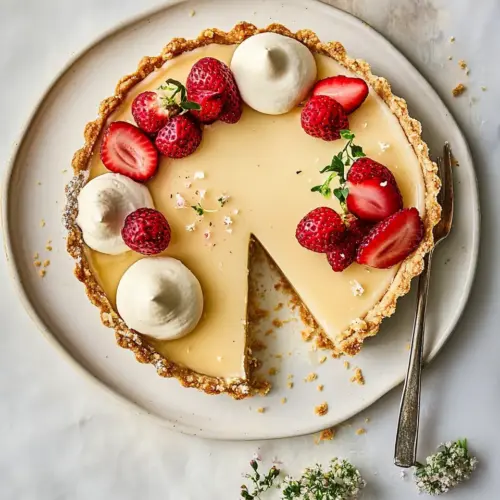
No Fuss Lemon Tart
No Fuss Lemon Tart is a creamy, bright dessert with a crunchy salted crust, silky lemon cream, and jewel toned berry topping. This easy yet elegant tart is perfect for spring gatherings or an easy weeknight dessert, delivering crisp texture and citrus perfume in every bite. Make it ahead for a stress free finish that still looks gorgeous on the table.
Equipment
- Food Processor
- 8 or 9 inch tart pan with removable bottom
- Large Pot
- Measuring Cup
Ingredients
- 8 full size graham cracker sheets (about 1 cup once crushed into crumbs) Crunch and bind to create the tart crust base; crush the graham cracker sheets finely to yield about 1 cup of crumbs and mix with melted butter and other crust components for a cohesive, slightly sweet foundation. Provide structure and a toasty, slightly caramelized flavor when baked or chilled, complementing the tart lemon filling. Help absorb moisture from the filling so slices hold together cleanly when served.
- 1 cup salted pretzel twists Add salty crunch and depth to the crust by crushing the pretzel twists and incorporating them with the graham crumbs; their saltiness balances the sweetness of the honey and crust. Contribute a firm texture contrast that complements the creamy lemon filling while enhancing overall flavor complexity. Help prevent the crust from becoming overly sweet and add a pleasant savory note in each bite.
- 6 tablespoons salted butter, melted Melt and bind dry crust ingredients while adding rich mouthfeel; stir the salted butter into the graham and pretzel crumbs to form a pressable mixture that sets in the pan. Impart buttery flavor and ensure the crust browns slightly if baked or firms up in the fridge if chilled. Provide richness that ties the crust components together and enhances overall texture.
- 2 tablespoons + 1/3 cup honey Sweeten and add subtle floral notes while aiding in crust cohesion when combined with the crumbs and butter; measure the 2 tablespoons plus 1/3 cup of honey to balance tart lemon flavors. Add moisture to help the crust and filling meld, and offer a nuanced sweetness that prevents the dessert from tasting flat. Enhance the glossy finish and mouthfeel of the tart when incorporated into fillings or drizzled on top.
- 3 1/2 cups heavy cream Create a luxuriously rich, creamy filling; whip the heavy cream until it thickens or fold into a custard base to provide body and silky texture. Contribute high-fat content that carries flavor, rounds acidity from the lemon, and ensures each slice is luscious and satisfying. Stabilize the filling structure so it sets well while remaining smooth and indulgent.
- 2 tablespoons lemon zest + 1/3 cup lemon juice Provide bright acidity and concentrated citrus aroma that defines the tart flavor; combine the lemon zest and lemon juice to deliver both fragrant oils and tangy juice for balance. Cut through the richness of the cream and butter, adding freshness that lifts the dessert and prevents it from being cloying. Enhance visual appeal and aromatic complexity with flecks of zest throughout the filling.
- 1 teaspoon vanilla extract Enhance the overall flavor profile with warm, aromatic background notes; add the vanilla extract to the filling or whipped cream to round out sharp citrus tones. Deepen perceived sweetness without adding sugar, creating a more complex and harmonious taste. Bind subtle flavors together so the lemon remains the star while tasting well-rounded and smooth.
- 2 cups mixed fresh berries Garnish and finish with freshness and color; scatter the mixed fresh berries over the assembled tart to add bright, juicy contrast and a range of sweet-tart flavors. Provide textural variation and visual appeal, making each slice more inviting and balanced. Offer seasonal nuance and a natural counterpoint to the creamy, citrusy filling.
Instructions
- Preheat the oven to 350 degrees F. To make the crust. In a food processor, pulse the graham crackers and pretzels into semi-fine crumbs. Add the butter and 2 tablespoons honey and pulse until the mixture holds together when pinched and starts to look like dough. Press the dough into an 8 or 9 inch tart pan with a removable bottom to form a flat, even crust. Transfer to the oven and bake until toasted, about 8 minutes. Meanwhile, combine the heavy cream, remaining 1/3 cup honey, and lemon zest in a large pot, bigger than you think you'll need. Set over high heat and bring to a boil. Once boiling, boil 5 minutes and then remove from the heat and whisk in the lemon juice, vanilla, and a pinch of salt. Let cool 10 minutes. Carefully pour the lemon cream into the baked crust. Cover and chill 1 hour or until set. Before serving, remove the tart from the pan and top with fresh berries.: The kitchen fills with a warm, toasty scent as the oven rises to temperature, which helps ensure the crust crisps evenly once it goes in. A fully preheated oven gives consistent browning on the edges, and you can tell it is ready when the preheat indicator clicks or when an oven thermometer reaches the set temperature. A common mistake is slipping the tart into an oven that is not hot enough, which yields a soggy base, so wait until it is fully up to heat.
- To make the crust: When you pulse the graham cracker sheets and salted pretzel twists in the food processor, listen for a steady, even grinding sound and watch for a semi fine crumb that still has a bit of texture. The aroma will shift from starchy to gently toasted, which is a good visual clue. If the crumbs look patchy, pulse a few more times rather than running the processor continuously to avoid overheating. A pitfall to avoid is creating crumbs that are too fine, which can pack too densely and lose the desired crispness.
- Add the butter and 2 tablespoons honey and pulse until it holds together: As you add the melted salted butter and the 2 tablespoons of honey , the mixture should begin to clump when pinched between your fingers, indicating proper binding. The smell becomes richer and slightly sweet. If the mixture seems dry, sprinkle a bit more melted butter, but add cautiously to avoid greasiness. If it becomes pasty, you have added too much butter.
- Press the dough into an 8 or 9 inch tart pan with a removable bottom to form a flat even crust: Use the heel of your hand or the bottom of a measuring cup to press the crumbs firmly and evenly into the pan, paying attention to the edges to create a uniform rim. You want a compact surface that will hold its shape after baking, and you will notice a faint gloss from the butter when it is well packed. A trouble spot is uneven thickness, which can cause the crust to brown unevenly, so take time to smooth it out.
- Transfer to the oven and bake until toasted about 8 minutes: While baking, the crust emits a warm, nutty fragrance and edges will develop a light golden hue, telling you it is ready. The short bake firms the crust so it can support the filling without becoming soggy. Remove carefully, as the pan will be hot to the touch. Avoid overbaking, which will dry the crust out and make it brittle rather than pleasantly crisp.
- Meanwhile combine the heavy cream remaining 1/3 cup honey and lemon zest in a large pot bigger than you think you'll need: As you pour the heavy cream , add the honey and the bright flecks of lemon zest , you will notice the mixture looks pale and glossy with tiny oil specks from the zest. Using a pot larger than necessary prevents boil overs, because cream can surge as it heats. A common issue is using a pot that is too small, which can lead to a messy spill and lost liquid.
- Set over high heat and bring to a boil: The cream will steam as it heats and small bubbles will collect at the edges before the surface breaks into a rolling boil. That boiling extracts oils from the zest and infuses the cream with citrus perfume, which is essential for a pronounced lemon flavor. Watch closely because cream can escalate quickly from simmer to boil, and if it scorches on the bottom it will impart an off taste.
- Once boiling boil 5 minutes then remove from the heat and whisk in the lemon juice vanilla and a pinch of salt: During the five minutes of boiling you will smell an intensified lemon aroma and the liquid will reduce slightly, becoming more concentrated. Off the heat, whisking in the lemon juice , vanilla extract , and a pinch of salt smooths the texture and balances acidity. Doing this off heat preserves the bright notes of the lemon and the delicate fragrance of the vanilla. A risk here is adding the juice too early, which can bitter the mixture if it cooks too long with the acid present.
- Let cool 10 minutes: As the lemon cream cools, steam will rise and the surface will calm, carrying the citrus aroma. Cooling slightly prevents the filling from being too hot when poured into the crust, which could make the crust soggy or cause the filling to separate. Stir gently while it cools to maintain a uniform texture. A mistake is rushing this step and pouring scalding cream into the crust, which affects texture and set.
- Carefully pour the lemon cream into the baked crust: Pouring slowly allows the cream to settle evenly without creating air pockets, and you will see the pale filling spread and level itself. The contrast between the warm crust and the warm filling is subtle, and this transfer sets the stage for a uniform set when chilled. If you notice bubbling or uneven distribution, use a spatula to nudge it gently into place.
- Cover and chill 1 hour or until set: As the tart chills the filling firms and the aroma becomes more refined, yielding a custard like texture. Chilling is crucial for slicing clean pieces and ensuring the filling holds its shape. Don’t rush the chill time, because an under chilled tart will be runny and messy. If you need it firmer, extend chilling time rather than attempting to freeze it quickly.
- Before serving remove the tart from the pan and top with fresh berries: When you unmold the tart the crust should retain its crisp edge and the filling should be smooth and pale. Arrange the mixed fresh berries on top, and they will glisten and add juicy contrast to each slice. Serve chilled or at cool room temperature. A common error is piling on overly ripe berries that lose structure and make the tart weepy.
Notes
- Swap crust ratios — Try increasing the proportion of salted pretzel twists for a more pronounced savory crunch that offsets the sweetness of the filling.
- Amplify lemon aroma — Add extra lemon zest to the cream for a brighter, more perfumed filling; zest more finely to release oils without adding bitterness.
- Textural crunch — Fold a small handful of finely chopped pretzels into the crumb mixture before pressing for pockets of added crunch within the crust.
- Honey adjustment — Use a milder or bolder honey depending on how floral you want the sweetness to be; adjust the 1/3 cup in the cream to taste.
- Berry arrangement — Mix different berry sizes and colors to create a striking topping, placing the largest berries first to form an even carpet.
- Make ahead strategy — Bake and chill the crust separately, then prepare the cream and pour on the day of serving for a fresher finish.