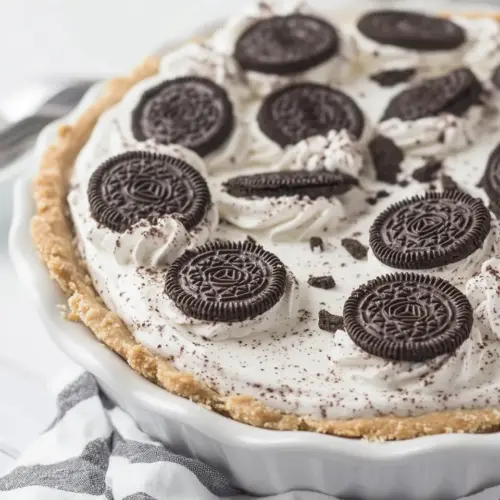
No Bake Oreo Pie
No Bake Oreo Pie delivers creamy, chocolate studded filling and a crispy cookie crust in an easy, no oven required dessert. This crowd pleasing, creamy pie is perfect for casual gatherings and easy weeknight treats. The texture contrast and minimal effort make it a recipe you will return to again and again.
Equipment
- Food Processor
- Electric Mixer
- 9-inch pie plate
- Mixing Bowls
- Piping Bag
Ingredients
- 24 whole OREO or other creme-filled chocolate cookies Crush and combine to form the pie crust base; pulse or smash until fine crumbs form and evenly pack into a pie pan for structure. Provide chocolatey flavor and crunchy texture that complements the creamy filling, helping hold the crust together when mixed with melted butter.
- 5 tablespoons unsalted butter, melted Melt and mix with crushed cookies to bind the crust components together and create a cohesive, sliceable base. Add a rich, buttery mouthfeel that enhances the cookie flavor while firming the crust once chilled.
- 1 cup heavy whipping cream Whip to soft peaks and fold into the filling to add lightness and volume, creating a silky, airy texture that balances the dense cream cheese. Contribute richness and a smooth, creamy mouthfeel that elevates the overall dessert.
- 8 ounces cream cheese, at room temperature Soften and beat until smooth to form the creamy foundation of the filling, providing tangy richness and body. Act as the primary stabilizer that holds the filling together and contrasts the sweet cookie elements with its slight tang.
- 1/4 cup plain Greek yogurt (can substitute sour cream) Add tangy creaminess and slight acidity to balance the sweetness of the filling; can be substituted if needed without significantly changing texture. Help thin the filling slightly for easier blending while contributing a fresh, cultured flavor.
- 1 cup powdered sugar Sweeten and stabilize the filling by dissolving into the cream cheese mixture, providing smooth sweetness and slight thickening. Assist in balancing tangy and bitter flavors while helping the filling set when chilled.
- 1 teaspoon vanilla extract Flavor and enhance the filling with warm aromatic notes; stir in for a subtle, familiar vanilla profile. Elevate overall taste complexity and round out the sweetness of the pie filling.
- 9 whole OREO or other creme-filled chocolate cookies Chop or crush and fold into or sprinkle over the filling to add extra cookie texture and visual appeal. Provide concentrated bursts of chocolate and creme that reinforce the Oreo character throughout the pie.
- 3/4 cup heavy whipping cream Whip to firm peaks and gently fold into the cream cheese mixture to lighten and stabilize the filling, creating a mousse-like consistency. Offer additional volume and creaminess while helping the pie hold its shape when sliced.
- 5 to 6 whole OREO or other creme-filled chocolate cookies Reserve and roughly chop to garnish the top of the pie, adding crunchy contrast and decorative appeal. Provide final texture and flavor accents that signal the dessert’s cookie identity to each bite.
Instructions
- Add the 24 OREO cookies to the bowl of a food processor. Process into fine crumbs. Then drizzle in the melted butter, and pulse until the crumbs combine with the butter. Press the crumb mixture into the bottom and sides of a deep-dish, 9-inch pie plate. Put it into the freezer while you prepare the filling.: You will notice the kitchen filling with a deep, chocolate aroma as the OREO cookies pulverize, and the texture will change from coarse crumbs to a sandy mass once the butter binds them. Pressing the mixture into the pie plate should feel firm under your fingertips, and a clean sound from the press indicates compacting. This step matters because a well pressed crust holds together when you slice, offering that satisfying snap at the edge. A common mistake is using too little pressure, which leaves the base crumbly, or using warm butter that over saturates the crumbs making the crust greasy. If the crumbs seem too loose, chill briefly and press again.
- Add the heavy cream to a large bowl. Use an electric mixer to beat the cream to stiff peaks (1 or 2 minutes). Set the whipped cream aside.: As you whip the cream , listen for a change from liquid sloshing to a thicker, denser whipping sound; visually, the cream will transform from glossy to matte and form peaks that stand tall without collapsing. This aeration lightens the filling and provides lift, giving the pie a featherlike mouthfeel. Avoid under whipping which yields a loose filling, and over whipping which can make the cream grainy or buttery. If you see small curds forming, stop immediately and fold gently to rescue texture.
- In a separate bowl, use the electric mixer to combine the cream cheese, powdered sugar and vanilla until smooth and well-combined. Transfer the mixture to the bowl with the whipped cream, and use a rubber spatula to fold them together.: The cream cheese mixture should look glossy and velvety when fully incorporated with the powdered sugar and vanilla . When you fold into the whipped cream , do so with a gentle sweeping motion to keep the air you whipped in, creating a light, mousse like texture. You should feel a slight resistance as the spatula moves through the mixture and see a silky ribbon fold over itself. If you mix too vigorously you will deflate the whipped cream , producing a dense filling. A common pitfall is adding cold cream cheese which leaves lumps; ensure it is room temperature for a smooth result.
- Add 9 OREO cookies to a zip baggie, and use a rolling pin or meat mallet to smash the cookies into small pieces. Stir the crushed cookies into the filling mixture. Scrape the filling into the frozen crust, and smooth the top. Refrigerate.: When you smash the nine OREO cookies you want a range of small chunks and crumbs so the filling has visible chocolate bits and a pleasant crunch. Stirring them into the filling distributes those pockets of texture; you will see dark specks throughout a pale filling which looks appealing and promises contrast. Spreading the filling into the chilled crust should feel cool to the touch, and the top should become glossy then matte as it settles. Refrigeration is crucial here because it allows the fats and cream to firm up, creating sliceable structure. Avoid adding too many crumbs or very large chunks, otherwise slices will be uneven and messy.
- In a medium bowl, use an electric mixer to whip the heavy cream to stiff peaks. Add the whipped cream to a piping bag with a decorative tip, and pipe swirls along the edge of the pie (alternately, you can just spoon dollops of the whipped cream onto the pie). Place a whole OREO into each swirl of cream. Refrigerate until ready to serve.: The final whipped cream should feel pillowy and cool, and the act of piping creates tall, white ridges that beautifully frame the darker filling. When you press a whole OREO into each swirl you get a delightful junction of textures and a classic look that makes people smile. Keep the pie chilled until serving to maintain the whipped topping shape and the filling firmness. A typical error is piping too early on a warm pie which can cause the cream to slide; always make sure the filling is thoroughly cold before decorating.
Notes
- Chill everything: Cold bowls and chilled heavy cream whip faster and hold structure longer.
- Crumb size matters: For the filling, aim for a mix of fine crumbs and small chunks to maintain pleasantly varied texture.
- Press firmly: Compact the crust into the pie plate so slices hold together instead of crumbling apart.
- Room temperature cream cheese: This prevents lumps and ensures a silky smooth filling without over mixing.
- Piping tip: Use a large round or star tip for dramatic swirls and to make room for whole OREO garnish.
- Make ahead: Prepare a day ahead and keep refrigerated, the flavors develop and texture improves overnight.