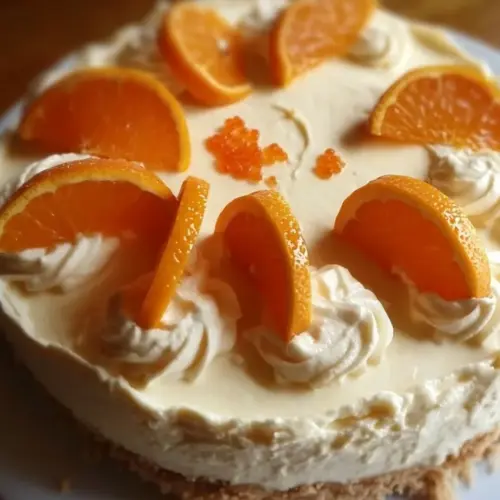
No Bake Mandarin Orange Cheesecake
No Bake Mandarin Orange Cheesecake is a creamy, citrus forward dessert with a buttery crumb crust and bright mandarin segments. This easy no bake treat delivers silky texture and fresh flavor, perfect for spring gatherings or a simple weeknight dessert. It slices cleanly after chilling and makes a showy centerpiece with minimal effort, so it is worth making for any occasion.
Equipment
- Food Processor
- 8 inch spring form pan
- Mixer or whisk
- Measuring Cup
Ingredients
- 1 1/2 cups digestive biscuit cookies Crush into fine crumbs to form the base of the cheesecake; provides texture and a crunchy contrast to the filling. Combine with melted butter and press firmly into a pan to create a stable, flavorful crust that holds its shape without baking.
- 6 tablespoons butter Melt thoroughly and bind with the crushed biscuits to create a cohesive crust; adds richness and helps set the base. Adjust amount slightly if crumbs seem too dry or greasy to ensure a firm, sliceable foundation.
- 1/4 teaspoons freshly grated nutmeg Grate finely and sprinkle sparingly into the filling to add warm, aromatic complexity; enhances depth without overpowering citrus notes. Use freshly grated nutmeg for brighter flavor and incorporate gradually to balance the sweetness of condensed milk.
- 16 ounces cream cheese softened Soften to room temperature and beat until smooth to create a creamy, stable body for the cheesecake filling. Provide structure and tang that balances the sweetness, allowing the condensed milk to incorporate evenly for a silky texture.
- 14 ounces sweetened condensed milk Pour gradually while whisking to sweeten and lighten the cream cheese mixture; contributes smooth, dense sweetness and helps set the no-bake filling. Use full amount for proper sweetness and consistency, adjusting mixing speed to avoid overwhipping.
- 3 mandarin oranges Peel and separate into segments or chop finely to fold into or top the filling; deliver bright, juicy citrus bursts and freshness. Reserve a few segments or slices for decorative topping and incorporate juice and zest as needed for extra flavor.
- 1 teaspoon lemon juice Squeeze fresh and add to the filling to brighten flavors and balance sweetness with acidity. Use juice sparingly to prevent curdling while enhancing the tang that complements the mandarin segments and cream cheese.
- 1 teaspoon vanilla Measure and add to the filling for a subtle, rounded vanilla aroma that enhances overall flavor complexity. Use pure vanilla and mix thoroughly to distribute its sweet, floral notes evenly through the no-bake cheesecake.
Instructions
- Preheat oven to 350 degrees.: Immediately you will notice the faint hum of the oven warming and the slight scent of dry heat as metal racks expand. Preheating matters because a hot oven gives the crust an even, golden color and helps set the butter quickly. If you skip preheating the crust can bake unevenly, leaving soft spots that make slicing messy. A common mistake is turning on the oven after the crust is ready, which causes inconsistent browning. Keep the oven door closed while it reaches the full temperature so the environment stays steady.
- Crush the digestive biscuit cookies in a food processor, process cookies until they are crushed into fine crumbs. Pour cookies into a bowl, and add 6 tablespoons of melted butter and nutmeg and stir to combine. Press the crust into an 8-inch spring-form pan. Bake crust in for approximately 12 – 15 minutes. The crust should be a golden brown color.: The moment you pulse the biscuits you will hear a rapid, mechanical crunch that transforms into a soft sandy texture. Mixing in the warm, melted butter distributes glossy pockets of fat through the crumbs, and the faint perfume of nutmeg folds in, promising depth. Pressing the mixture firmly into the pan gives a compact base that crisps properly; use the back of a measuring cup for an even press. As the crust bakes, the kitchen will fill with toasty, sweet aromas and the edges should turn a warm golden brown, signaling they're done. If the crust still seems loose after baking, press additional crumbs into the base and chill briefly. Avoid overbaking, which dries the crust and makes it crumbly instead of pleasantly crisp.
- In a medium-sized bowl combine cream cheese and sweetened condensed milk. Add 1 teaspoon lemon juice, and one teaspoon vanilla stirring into the cream cheese. Mix cheesecake mixture until very smooth, this can be done by hand or with a mixer. Peel two of the mandarin oranges, and cut the segments into small pieces over the bowl with the cheesecake mixture.: As you stir, you will feel the resistance of the softened cream cheese give way, becoming silky as the sweetened condensed milk loosens the mass. The lemon juice brightens the blend, and the vanilla tucks into the background, smoothing sharp edges. Small, controlled strokes with a whisk or a low speed on the mixer minimize air bubbles, which helps the filling set to a dense, velvety texture. Cutting the peeled mandarin oranges directly over the bowl allows any escaping juices to fall into the batter, preserving that citrus flavor rather than wasting it. Watch for lumps, and scrape the bowl frequently to ensure an even mixture. A common error is using cold cream cheese, which will keep you mixing in vain and leave little pockets of unblended cheese; always soften ahead of time.
- You will want any of the juices to fall into the cream cheese batter. Stir the orange pieces into the cream cheese. Spread the cheesecake batter over the crust, and refrigerate for at least 8 hours before serving. Just before serving, peel the last orange and use segments to decorate the top of the cheesecake.: When the citrus juices mingle with the filling, the aroma becomes vividly fresh and the batter takes on a slightly glossy sheen. Stirring distributes the sweet, tangy pockets of mandarin so every slice has bursts of fruit. Spreading the batter evenly across the cooled crust ensures uniform slices and a stable set; I like to smooth the top with an offset spatula for a clean finish. Chilling for at least 8 hours allows the filling to firm fully, giving a slice that holds rather than collapses. If you serve too soon the texture will be too soft and weepy. Right before serving, arranging the last mandarin segments on top adds a bright, professional look and a fresh bite. One mistake people make is decorating too early, which can cause juices to seep and make the surface sticky; add the final segments just before serving for the best presentation.
Notes
- Room temperature ingredients: Bring the cream cheese to room temperature before mixing to ensure a silky, lump free filling that blends quickly.
- Even crust press: Use the bottom of a measuring cup to press the crumb and melted butter mixture firmly into the pan so the base stays intact when slicing.
- Use fresh mandarins: Fresh mandarin oranges give the brightest flavor, and chopping two into the filling lets their juices naturally flavor the batter.
- Cover while chilling: Wrap the cake loosely with plastic wrap while it chills to prevent it from absorbing fridge odors and to keep the surface hydrated.
- Decorate last: Add the remaining mandarin segments just before serving to maintain their fresh texture and prevent the topping from weeping.