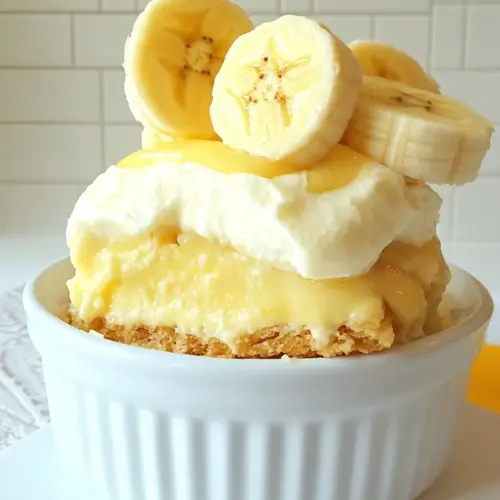
Nilla Wafers Banana Cream Dessert
Nilla Wafers Banana Cream Dessert is a creamy, crunchy, and easy layered treat that combines buttery cookie crumbs, sliced bananas, silky banana cream pudding, and light cool whip. Perfect for potlucks and quick family gatherings, this nostalgic dessert is simple to assemble and always disappears fast. Make it for a no fuss, crowd pleasing finish that feels homemade and comforting.
Equipment
- Food chopper
- Measuring Cup
- Mixing Bowl
- Spatula
- Refrigerator
Ingredients
- 45 Nilla Wafers About 2 cups crushed Crushed to create a buttery, crunchy base that provides texture and structure for the dessert; combine with melted butter and press into a pan to form an even crust. Offers a sweet, slightly vanilla flavor that complements the banana and creamy layers, and helps absorb moisture to keep layers distinct.
- 6 Tbs butter melted Melted to bind the crushed wafers together into a cohesive crust and add a rich, buttery flavor; stir evenly into the crumbs before pressing firmly into the dish. Also helps the crust set as it cools, creating a stable foundation for the pudding and whipped topping.
- 1 box Banana Cream Pudding large Prepared according to package directions to produce a silky, banana-flavored custard layer that delivers the main flavor and creamy body of the dessert. Thickens as it chills, providing stability between the crust and whipped cream while reinforcing the banana theme.
- 8 oz cool whip thawed Thawed to fold into or spread atop the pudding layer, adding lightness and creamy volume while balancing the denser custard. Provides a smooth, airy texture that enhances mouthfeel and helps create a fluffy, sliceable dessert when chilled.
- 2 Bananas Sliced and layered to add fresh fruit flavor, natural sweetness, and a soft, tender texture that complements the creamy pudding and crunchy crust. Also used as a garnish to reinforce the banana flavor and provide visual appeal and freshness to each serving.
Instructions
- Crush the Nilla Wafers. I put mine into a food chopper and that did the job great. You want the consistency to be pretty fine.: The aroma of crushed Nilla Wafers is lightly sweet and toasty, and you want the texture to resemble fine sand rather than large chunks. Using a food chopper delivers uniformity, and the sound changes from crunchy clacks to a subtle whisper as the pieces break down. This matters because a finely crushed base packs better when mixed with the butter , creating a firmer crust after chilling. Watch out for over processing which can lead to a paste like texture, and under processing which leaves gaps that do not hold together when sliced.
- Spray bottom of pan with cooking spray for easy removal. Add the melted butter to the crushed Nilla Wafers and press down into pan. It may be a little crumbly but that's ok because when chilled the crust becomes firm.: When you prepare the pan, the slight sheen from the spray prevents sticking and helps you unmold clean slices. Pressing the crumb and melted butter mixture into the pan should feel firm under your fingers, and it will emit a faint buttery aroma as it settles. This step is important so the crust does not cling to the pan walls, and if you skip the spray you risk losing neat edges when serving. A frequent error is not pressing evenly which causes thin spots that crumble when cut.
- Chop up banana and make a layer on the bottom. Mix jello pudding according to directions and pour on the top. Let chill in fridge for about an hour.: As you incorporate the warm butter the crumbs darken slightly and give off a rich scent, signaling that the fats are coating the crumbs properly. Pressing with the bottom of a measuring cup ensures a compact, cohesive foundation. The reason this technique matters is it reduces air pockets, so when chilled the crust sets firm rather than falling apart. Avoid using too much butter, otherwise the crust becomes greasy and may separate from the filling.
- Put cool whip on top and ENJOY!: Chilling transforms the texture as the butter solidifies and binds the crumbs, bringing a solid snap to the base. You might notice a softer mouthfeel before refrigeration, but patience here pays off because the cold helps everything settle. If you try to cut it too soon the slices will not hold well, and a common misstep is serving before the crust fully firms which results in a messy presentation.
- Chop up banana and make a layer on the bottom: Fresh bananas have a sweet, perfume like scent and a creamy texture when sliced, and placing them directly on the crust creates a fresh counterpoint to the sweet cookie. Arrange the slices close together so the pudding has a stable base to rest on, and use slightly ripe fruit for the best balance of sweetness and texture. One thing to avoid is using overripe bananas which can leak juices and make the layers soggy.
- Mix jello pudding according to directions and pour on the top: As you whisk the Banana Cream Pudding mix with milk or the specified liquid, you will see it thicken into a glossy custard like texture. The sheen indicates it is properly hydrated and stable enough to support the next layers. Pour gently to avoid displacing the banana slices, and smooth the surface with a spatula. If the pudding seems thin, give it a few more minutes to set; pouring too early risks a runny dessert that does not hold shape.
- Let chill in fridge for about an hour: Cooling is when everything comes together, you will notice the pudding firming and the crust solidifying, and the dessert will lose any warm, damp feel. Chilling concentrates flavors slightly and gives the cool whip something stable to rest upon. If you are in a hurry you can chill a bit longer for cleaner slices. Avoid moving the pan while it is still soft, as wobbling can create fissures between layers.
- Put cool whip on top and ENJOY: The final layer of thawed cool whip brings an airy finish and a whisper of sweetness, and spreading it creates a cloud like cap that contrasts with the denser pudding below. The texture should be light and billowy, and you will hear a soft, muffled spreading sound rather than any resistance. This layer keeps the dessert feeling fresh and light. The common pitfall is over spreading which can compress the pudding underneath and make the surface uneven.
Notes
- Prep the crust properly, crush the Nilla Wafers to a fine, sandy texture so they bind well with the melted butter, ensuring a stable base that will hold up when sliced.
- Cool the pudding slightly, let the prepared Banana Cream Pudding sit until it is warm to the touch rather than hot before pouring, this prevents the crust from softening and keeps layers distinct.
- Slice bananas uniformly, cut your bananas into even rounds so each serving has consistent fruit distribution and the finished slices look tidy and balanced.
- Press crust evenly, use the bottom of a measuring cup to compact the crumb and butter mixture, this gives a firm, uniform base for clean cutting and a pleasant mouthfeel.
- Chill thoroughly, allow at least an hour in the refrigerator so the pudding firms and the crust sets, longer chilling yields cleaner slices and a more cohesive texture.