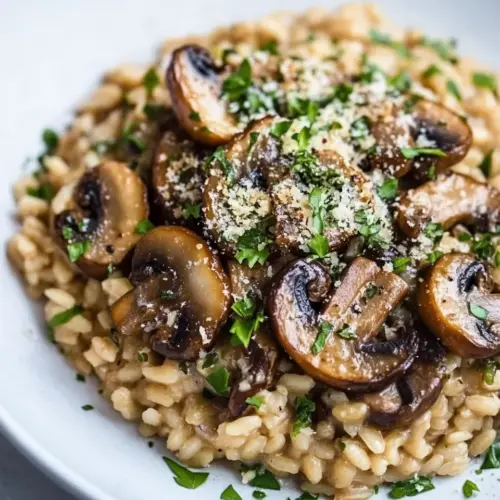
Mushroom Risotto
Mushroom Risotto is a creamy, savory dish bursting with umami from mixed mushrooms and aromatic garlic and scallions. This easy weeknight dinner delivers silky texture from Arborio rice and bright finishing notes from balsamic vinegar and fresh parsley. Make it when you want a comforting, restaurant quality meal that feels special and satisfies every time.
Equipment
- Large Skillet
- Wooden Spoon
- Ladle
Ingredients
- 1/4 cup olive oil Lightly fruity and robust, used to sauté aromatics and mushrooms and to build the risotto’s silky base; helps transfer heat and carries flavors while contributing a subtle Mediterranean aroma. Adds a smooth mouthfeel and prevents rice from sticking to the pan when toasting and cooking.
- 2 tablespoons chopped fresh parsley plus more for garnish, optional Bright and herbaceous, provides a fresh green note when stirred in near the end and as a garnish to lift the dish’s richness. Offers a mild grassy flavor and visual contrast that complements the earthiness of mushrooms.
- 4 cloves garlic minced Pungent and savory, releases aromatic oils when minced and sautéed to form the flavor foundation for the risotto. Adds depth and umami that enhances the overall savory profile without overpowering delicate mushroom flavors.
- 2 scallions thinly sliced (2 tablespoons, white and green parts) Mildly oniony and slightly sweet, thinly sliced scallions add gentle allium flavor and textural contrast when folded into the finished risotto. Use both white and green parts to supply sweetness and fresh color, brightening the dish.
- 1 cup Arborio rice uncooked (see note 1) Creamy-starch rice that absorbs broth and releases starch to create the classic velvety risotto texture; must be toasted briefly and cooked slowly while adding liquid gradually. Provides the structural base of the recipe and determines final mouthfeel and creaminess.
- 16 ounces mushrooms trimmed and thinly sliced (see note 2) Earthy and meaty, mushrooms contribute concentrated savory and umami flavors while adding body and bite to the risotto. Thin slicing ensures even cooking and maximum surface browning to deepen flavor through caramelization.
- 3 1/2 cups chicken broth or vegetable broth, warmed (see note 3) Savory liquid warmed before adding, used to gently simmer the rice and coax out starches for a creamy finish; choice of chicken or vegetable broth adjusts overall flavor intensity. Keeping it warm prevents chilling the pan and ensures steady cooking.
- 1/2 cup freshly grated Parmesan cheese or shredded Salty, nutty, and umami-rich when freshly grated, Parmesan enriches the risotto with creamy, savory depth and helps bind the dish at the end of cooking. Stir in off heat to melt smoothly and enhance the luxurious texture.
- 1 tablespoon balsamic vinegar Sweet-tart and concentrated, balsamic vinegar adds a bright acidic counterpoint that balances the dish’s richness and intensifies mushroom flavors when finished. A small splash brightens the overall profile without dominating.
- Salt and freshly ground black pepper Seasoning components used to adjust taste and enhance natural flavors; salt amplifies savory notes while black pepper contributes warmth and a mild bite. Add gradually and taste as you go to achieve a balanced final seasoning.
Instructions
- In a large skillet over medium heat, heat oil until shimmering. Add parsley, garlic, and scallions and cook until tender, about 1-2 minutes.: The pan will give off a gentle sizzle as the olive oil warms and the minced garlic releases its aroma, so lean in and breathe that savory scent. You should see the edges of the scallions soften and the parsley wilt, turning glossy and fragrant, not browned. This early stage builds a clean, aromatic base that flavors every grain of Arborio rice . If you overheat the oil, the garlic can brown quickly and taste bitter, so keep the heat at medium and stir often. A quick test is to lift a piece of garlic with a spoon; when it is translucent and fragrant, you are ready to proceed.
- Stir in rice and cook until the edges are translucent, about 3 minutes. Stir in porcini, shiitake, and cremini mushrooms. Cook until mushrooms are tender, about 3 minutes.: As you add the Arborio rice the grains will become glossy from the oil and start to look translucent at their edges, which signals they are toasted and primed to absorb liquid slowly. When you fold in the sliced mushrooms , listen for a renewed sizzle and watch them begin to brown and release their juices, adding deeper flavor. This step tempers the rice and infuses it with mushroom essence, building layers of umami. Avoid adding too many mushrooms at once; crowded mushrooms steam rather than brown, which reduces flavor development. The surface of the mushrooms should show golden edges and a rich, concentrated smell when they are done.
- Reduce heat to medium and stir in 1 cup broth. Cook uncovered, stirring frequently, scraping browned bits from bottom of the pan, until liquid is absorbed, about 5 minutes.: When the first cup of warm broth hits the pan you will hear a softer simmer and see the rice swell as it soaks up the liquid. Use a wooden spoon to gently scrape any browned bits from the bottom, because those fond pieces carry concentrated flavor that will dissolve into the risotto. The mixture should appear glossy and slightly thickened when the liquid has mostly absorbed. Stirring frequently keeps the rice moving so it releases starch evenly, but it does not need furious agitation. A typical slip is to add too much liquid at once; start with one cup to control texture and ensure the rice cooks from the outside in.
- Stir in remaining broth, 1/2 cup at a time, cooking about 3 minutes after each addition and stirring occasionally, until broth is absorbed, rice is tender and mixture is moist.: This gradual addition of warm broth is where patience pays off, and you will notice the pot gradually thicken into a creamy suspension rather than a dry pile of grains. Each time you add liquid the rice will plump and release more starch, creating that characteristic silk. Watch for a tender yet slightly firm center when you bite a grain, and adjust the final addition so the texture is moist but not soupy. The sound changes too, from a higher simmer to a quieter, thicker bubble. Rushing by pouring all the broth at once will give you overcooked, gluey rice, or conversely, an undercooked interior, so proceed in measured increments.
- Stir in cheese and vinegar and season to taste with salt and pepper (I like 1/2 teaspoon salt and 1/4 teaspoon pepper). Garnish with minced fresh parsley.: At the finish the risotto should look glossy and cling to your spoon in a loose, flowing mound. When you fold in the freshly grated Parmesan cheese it will melt and enrich the sauce, while the measured splash of balsamic vinegar lifts the flavor profile with a subtle tang. Taste carefully before adding additional salt because the broth and cheese may already contribute significant seasoning. Over-salting is the common misstep here, so I recommend beginning with the suggested amounts and adjusting slowly. The final garnish of chopped parsley adds a fresh contrast both visually and on the palate.
Notes
- Keep broth warm Warm broth maintains a steady cooking temperature, which helps the rice cook evenly and release starch predictably. Cold broth will cool the pan each time you add it and interrupt the gentle simmer necessary for creamy texture. I keep my broth on a low simmer beside the risotto so each addition barely changes the pan temperature.
- Toast the rice briefly Toasting Arborio rice until the edges turn translucent helps maintain a slightly firm core while encouraging starch release on the surface. This small step gives you that al dente bite inside with a silky exterior. Watch carefully because rice can brown if left too long.
- Brown mushrooms in a hot pan Searing mushrooms in a well heated skillet concentrates their flavors and reduces moisture, resulting in a robust umami note. Do not crowd the pan; if mushrooms pile up they steam instead of caramelize. Work in batches for best results.
- Stir with purpose Gentle, consistent stirring encourages even starch release without breaking grains. You do not need to stir nonstop aggressively, but regular movement keeps the texture smooth. If you stir too vigorously you risk crushing rice grains and making the risotto gluey.
- Finish off heat Adding the Parmesan cheese and balsamic vinegar off heat preserves their flavors and prevents cheese from clumping. Stir them in when the heat is low so they melt and emulsify naturally into the rice.