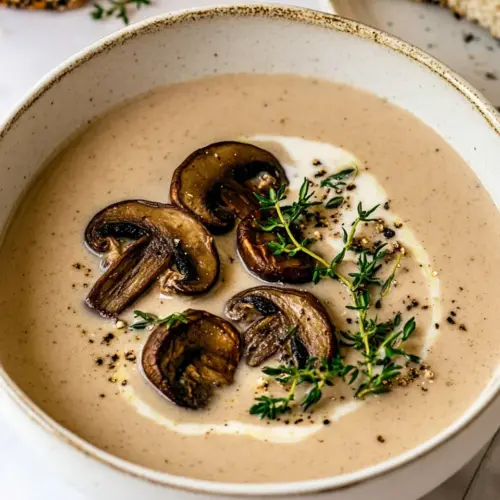
Mushroom Bisque
Mushroom Bisque is a creamy, comforting soup with concentrated umami and a silky finish. This easy weeknight dinner feels elegant enough for guests while remaining simple to prepare. The browned mushrooms, aromatics, and a splash of heavy cream create a luxurious texture that soothes and satisfies. Make it for chilly nights when you want something warm and impressive with minimal fuss.
Equipment
- Blender
Ingredients
- 4 tablespoons unsalted butter Melted to create a rich cooking fat and flavor base, unsalted butter helps sauté the mushrooms and aromatics without adding extra salt. Provides a silky mouthfeel that enriches the bisque and carries the flavors of garlic and herbs. Allows better control over seasoning since it contains no added salt.
- 20 ounces sliced mushrooms Sliced to provide the primary earthy flavor and meaty texture of the bisque, mushrooms contribute deep umami and natural moisture as they cook. Browning them in butter concentrates their flavor and develops caramelized notes that become the backbone of the soup. Their porous texture also helps absorb and release the broth, enhancing overall body.
- 1/2 cup diced onion, about half an onion Diced to add gentle sweetness and aromatic depth, onion softens and mellows as it sautés, forming a flavor foundation for the bisque. Builds complexity by releasing natural sugars that balance the mushrooms' earthiness and the cream's richness. Small dice ensures even cooking and integration into the finished soup.
- 2 teaspoons minced garlic Minced to infuse a sharp, aromatic punch that brightens and deepens the savory profile, garlic releases bold flavor quickly during sautéing. Adds a subtle pungency that complements mushrooms and herbs without overpowering the bisque when used in moderation. Finely mincing ensures even distribution throughout the soup.
- 1 teaspoon fresh thyme, chopped Chopped to introduce a subtle, slightly floral herbaceous note, fresh thyme brings savory complexity and pairs naturally with mushrooms. Releases essential oils during cooking that accentuate the bisque's earthy character and help tie together other flavors. Small pieces allow the herb to infuse without creating large, chewy bits.
- 1 teaspoon fresh parsley, chopped Chopped to contribute bright, clean, and slightly peppery freshness that lightens the richness of the soup when stirred in near the end. Adds visual contrast and a fresh herb aroma that complements thyme and cream. Finely chopped parsley disperses evenly for balanced flavor and garnish potential.
- 1/4 cup all-purpose flour Used as a thickening agent to build the bisque's velvety body, all-purpose flour forms a roux with butter to provide stable viscosity. Helps the soup cling to the palate and integrates with broth and cream to prevent separation. Cooking the flour briefly removes raw taste and yields a smooth texture.
- 3 cups chicken broth Added to provide savory liquid and depth, chicken broth supplies a flavorful base that melds with mushrooms and aromatics. Contributes saltiness and umami that enhance the bisque while keeping the overall profile balanced. Using a quality broth improves the soup's complexity and mouthfeel.
- 1 1/2 cups heavy cream Stirred in to create lush creaminess and a luxurious finish, heavy cream enriches the bisque with a smooth, silky texture. Balances savory and earthy flavors while adding body and a hint of sweetness. Gradual incorporation prevents curdling and ensures a cohesive, velvety soup.
- salt and pepper, to taste Adjusted to achieve balanced seasoning, salt and pepper enhance and refine the bisque's flavors to taste. Salt amplifies savory elements while pepper adds mild heat and aromatic lift. Tasting and seasoning at the end ensures proper flavor without over-salting.
Instructions
- Add 4 tablespoons unsalted butter to a 6 or 8-quart Dutch oven and melt over medium heat. Once the butter is melted, add 20 ounces sliced mushrooms. Cook and stir the mushrooms for about 5 minutes until they have released a lot of liquid. Turn the heat to medium-low and cook for an additional 10-15 minutes until the liquid has almost entirely evaporated.: You will smell the rich dairy notes as the butter melts and begins to foam, and the surface will look satin smooth. This warm, nutty aroma primes the pot so the next ingredients caramelize nicely, which deepens the final flavor. A common mistake is using too high heat and browning the butter to the point of bitterness, so lower the heat if you see dark specks forming. Keep a wooden spoon handy and watch for foaming to subside before adding the next item.
- Add 1/2 cup diced onion, 2 teaspoons minced garlic, 1 teaspoon fresh thyme, and 1 teaspoon fresh parsley, and cook for 2-3 minutes, until the onions start turning translucent and the garlic is fragrant.: As the mushrooms hit the hot fat you will hear a lively sizzle, and within a few minutes they will release a glossy liquid that fills the pan. That released liquid is precious, it contains concentrated mushroom flavor; continue to cook until much of it has evaporated so the mushrooms begin to caramelize. Stir occasionally so the slices brown evenly and develop deep color. Avoid overcrowding the pot which causes steaming rather than browning; if you see too much pooling, raise the heat slightly and spread the mushrooms out more.
- Turn the heat back up to medium and stir in 1/4 cup all-purpose flour. Continue to stir as you cook the flour with the mushroom mixture for 3-4 minutes. It will get clumpy and stick together, which is alright.: During this stage the pan will steam and smell intensely savory, and the texture of the mushrooms will become soft and almost translucent at the edges. This release helps concentrate their umami. Be cautious not to rush this step, as undercooked mushrooms will leave the soup watery. If you notice they are soggy rather than caramelized, increase the heat in short bursts while stirring to evaporate excess moisture.
- Slowly stir in 3 cups chicken broth, ensuring the mixture doesn’t clump up too much as you add it.: The sizzling will calm and the fractions of liquid will shrink, leaving mushrooms that are darker in color and richer in taste. That reduction is crucial because it multiplies savory notes. If you skip this reduction, the bisque will taste diluted. Keep the lid off so evaporation occurs, and scrape any browned bits from the bottom to keep them from burning.
- Add 1 1/2 cups heavy cream and stir until combined.: As you add the onion , garlic , and herbs, their aromas will bloom immediately, creating a fragrant lift against the mushroom base. The onion should begin to turn translucent while the garlic becomes fragrant without taking on color. Overcooking garlic until brown will introduce bitterness, so stir briskly and watch closely. If the pan seems dry, add a splash of broth to prevent sticking.
- Carefully ladle the soup into a high-speed blender. Place a clean, folded kitchen towel on top to prevent leaking, and then blend the soup on high speed until smooth. This may be split into a few increments if your blender is not big enough for all of the soup at one time.: The dry flour will clump as it meets the hot mixture, and you will notice the texture change from loose to paste like. Cooking the flour for several minutes removes raw flour taste and helps it bind to the liquids later. If the paste seems overly thick, that is okay, because the next step of gradually adding broth will loosen it. Avoid adding the broth too quickly which can lead to stubborn lumps.
- Add the pureed soup back to the pot and simmer over medium-low heat while stirring intermittently for about 10 minutes until thickened. Season with salt and pepper, to taste. Serve warm.: The mixture will emit a toasty, slightly nutty scent as the flour cooks, and you might see it darken just a touch. This gives the bisque depth and prevents a starchy edge. Take care not to brown the flour too much, or you risk a toasted flavor that competes with the mushroom notes. Keep stirring to ensure even cooking.
- Slowly stir in 3 cups chicken broth: As you add the chicken broth in a slow stream, the paste will transform into a smooth, saucy liquid. Listen for a gentle bubbling as the broth integrates, and use a whisk if needed to break any small lumps. The broth carries savory salt and body, so taste it later before seasoning further. A common issue is pouring too fast, which traps lumps, so take your time and whisk while pouring.
- Add 1 1/2 cups heavy cream and stir until combined: When the heavy cream joins the pot, the aroma will soften and the surface will look glossy and cohesive. The cream rounds the edges of savory flavors and creates that luxurious mouthfeel. Keep the heat moderate to avoid scalding the dairy which can change texture. If you notice slight separation, lower the heat and stir gently until it comes together.
- Carefully ladle the soup into a high speed blender: The soup will be hot and steamy, so use caution and cover the blender lid with a folded towel to allow steam to escape safely. The sound of the Blender will change as the soup becomes a velvety emulsion and the color will turn uniform and creamy. Do this in batches if needed to avoid overfilling. A frequent mistake is sealing the lid tightly without venting, which can cause pressure buildup, so always leave a small vent covered with a towel.
- Place a clean, folded kitchen towel on top to prevent leaking, and then blend the soup on high speed until smooth: Blending transforms the texture into a silky, cohesive bisque and releases aromatic steam. You will see the surface go from speckled to glossy and uniform. If the texture feels too thick after blending, return it to the pot and thin with a splash of broth. Over-blending for too long can warm it excessively, so pulse as needed to reach the desired smoothness.
- Add the pureed soup back to the pot and simmer over medium low heat while stirring intermittently for about 10 minutes until thickened: The simmer allows flavors to marry and the body to reach a spoon coating consistency. You will notice subtle thickening and the aroma will deepen further. Stir intermittently so the bottom does not scorch, and keep the heat low enough to maintain a gentle shimmer rather than a rolling boil. If the soup becomes too thick, thin with reserved broth; if it seems watery, simmer a bit longer.
- Season with salt and pepper, to taste: After the reduction and thickening you can judge seasoning properly. Add small amounts, taste, and adjust until the balance sings. Freshly ground black pepper brightens savory notes while salt amplifies them. Avoid over-salting early on, as reductions concentrate saltiness; always taste after the final simmer.
- Serve warm: The finished bisque should be ladled into warm bowls so it stays at a comforting temperature. The surface will gleam slightly and the aroma will be inviting. If serving later, cool quickly and refrigerate, reheating gently to preserve the cream’s texture. A common serving mistake is boiling when reheating, which risks breaking the emulsion, so heat slowly and stir often.
Notes
- Brown the mushrooms properly, ensuring you cook them until most of their liquid is gone so they caramelize and concentrate flavor. If you rush this step, the soup will taste diluted rather than rich.
- Use room temperature cream when adding it to the hot broth to reduce the chance of curdling, and stir gently as it incorporates for a smooth finish.
- Whisk the flour into the cooked base and give it several minutes over heat to remove the raw starchy taste; undercooked flour will leave a chalky note.
- Pour the broth slowly while whisking to prevent lumps; a few stubborn lumps can be smoothed with the blender, but gradual addition avoids extra work.
- Blend carefully, covering the lid with a towel and venting slightly; hot liquids expand and you want to avoid pressure related splatters.
- Season at the end so you can balance salt and pepper after the soup has reduced and concentrated, adjusting in small increments for best results.