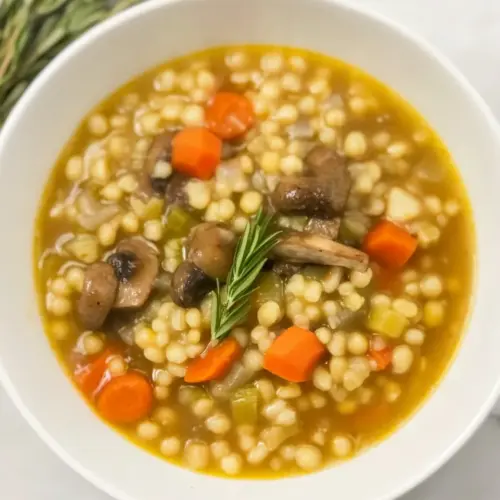
Mushroom Barley Soup with Flanken
Mushroom Barley Soup with Flanken is a creamy, savory bowl that combines tender short ribs, chewy pearl barley, and layered mushroom umami for an easy weeknight dinner or a cozy weekend meal. The long simmer creates deep, comforting flavors and a rich mouthfeel, making it perfect for cold nights and feeding a crowd. It’s worth making for the hearty texture and soulful broth.
Equipment
- Large Stockpot
- Small mixing bowl
- Mesh strainer
- Coffee filter or cheesecloth
Ingredients
- 8 meaty short ribs (flanken), trimmed about 2 1/2 lbs Brown and sear to develop deep, caramelized flavor on the short ribs, which provide rich beefy depth and collagen for body in the soup.
- 2 tablespoons olive or grapeseed oil or more as needed Heat and coat the pan to sauté vegetables and brown meat without smoking, using oil to transfer heat and prevent sticking during initial cooking.
- 6 dried mushrooms Rehydrate to concentrate umami and earthy notes; dried mushrooms intensify the soup's mushroom flavor when soaked and added to the stock.
- 1 pound white mushrooms scrubbed and sliced Slice and soften to contribute a fresh, meaty mushroom texture and add additional savory, earthy flavor that complements both barley and meat.
- 1 cup peeled and chopped carrots about 2-3 medium carrots Peel and dice to add natural sweetness, texture, and color; carrots also contribute aromatic sugars that balance savory elements during simmering.
- 1 cup chopped celery, including leaves about 3-4 stalks Chop to provide aromatic backbone and mild bitterness from the leaves; celery adds flavor complexity and a subtle crunchy texture when not fully broken down.
- 1 whole large onion chopped Chop to create a savory aromatic foundation; onions release sugars and savory compounds that round out the broth as they soften and caramelize.
- 2 cloves crushed garlic Crush and release pungent, aromatic compounds that brighten and deepen the overall flavor profile; garlic is added toward the end of sautéing to avoid burning.
- 3 quarts low sodium chicken, beef or mushroom stock Simmer as the primary liquid to extract flavors from meat, mushrooms, and aromatics; low-sodium stock allows control over final seasoning and richness.
- 1 1/4 cups pearl barley Rinse and simmer to absorb flavors and provide chewy, tender grain body; pearl barley thickens the broth slightly and adds wholesome texture.
- 2 bay leaves Add whole to infuse subtle herbal, slightly floral notes; bay leaves lend background complexity and a gentle savory lift during long simmering.
- Salt and pepper Season finally to taste with salt and pepper to balance flavors, enhance savory notes, and adjust the soup's overall seasoning at the end of cooking.
Instructions
- Rinse short ribs and pat dry. Generously salt and pepper them. With a knife, score the back side along the bone (this allows the meat to absorb more of the cooking liquid).: When you rinse and thoroughly pat the short ribs dry, you remove surface moisture so they can brown properly, producing a browned crust and those deep caramelized aromas. Scoring near the bone helps seasonings and simmering liquid penetrate the meat, so the interior becomes flavorful as collagen breaks down. As you salt, notice the meat's texture change as the salt begins to draw moisture, which strengthens the crust during searing. A common mistake is skipping the drying step, which can cause steaming rather than browning, so be patient and get the pieces dry before the pan. If the ribs are very cold from the fridge, let them sit a short while so they brown more evenly.
- In a large stockpot, heat 2 tbsp olive or grapeseed oil over medium high heat. Add short ribs and brown on all sides, about 4 minutes on each side.: As the pot heats, you will see the oil shimmer, which indicates it is hot enough to sear. Add the short ribs in a single layer so each side makes direct contact and sizzles; that sizzle is the sound of flavor forming. Browning for about 4 minutes per side creates a rich mahogany crust and leaves browned bits on the pot bottom, which we will later deglaze into the soup. Be mindful not to crowd the pot, as crowding releases moisture and prevents a good sear. If your pan looks crowded, brown in batches and keep the browned pieces aside so they go back in later.
- While the meat is browning, place dried mushrooms in a small bowl and cover with 3 cups of hot water. Allow to soak for 20 minutes.: The soaking process is where concentrated mushroom flavor moves into the liquid, and you will notice a rich, earthy perfume begin to build. Use hot water but avoid boiling it aggressively, which can make the rehydrated pieces too soft. After 20 minutes the mushrooms should be plump and pliable, and the soaking liquid will look darker and aromatic. One pitfall is discarding the soaking liquid without straining, which loses a lot of flavor; instead strain it carefully later to harvest that umami gold.
- Once the meat has finished browning, remove and set aside. Add roughly half of the white mushrooms to the stockpot and brown over medium high heat. Remove and set aside.: With the short ribs removed, the pot still holds flavorful fond. Add half of the sliced white mushrooms and let them contact the hot surface so they develop brown edges and a nutty aroma. Browning in batches prevents steaming and concentrates flavor; the mushrooms will release juices at first, then sizzle and reduce, creating delicious caramelization. Take note of the change in smell from raw earthiness to toasty mushroom sweetness, and avoid stirring constantly, which hampers browning.
- Add remaining half of white mushrooms to the pan and brown, adding additional oil as needed. Add carrots, celery, onion and the rest of the browned mushrooms. Cook until onions are translucent. Add garlic and cook until fragrant, then reduce the heat to medium.: The second mushroom batch creates more caramelized bits and balances the pot. When you add the chopped carrots , celery , and onion , they will release their own moisture and begin to soften; the mixture should smell sweeter as the onion approaches translucency. Stir occasionally so nothing sticks, and add a splash more oil if the pan looks dry. Add the crushed garlic last in this sequence so its aroma blooms without burning. Reduce to medium so the vegetables sweat gently, which encourages a rounded, savory base rather than sharp raw notes.
- By now the dried mushrooms will have softened. Drain the mushroom soaking water by straining it through a coffee filter or multiple layers of cheesecloth (use a mesh strainer or colander to hold the filter or cheesecloth) directly into the stockpot. Stir, scraping any brown bits from the bottom of the pan as the liquid heats up. Give the soaked, softened mushrooms another quick rinse under running water to remove any remaining residue (wash carefully, grit can be hiding in the gills of the mushrooms). Chop the mushrooms into small pieces and add them to the stock pot.: Straining the soaking liquid through a fine filter captures concentrated flavor while leaving behind any grit. As you pour it into the pot, use a spatula to scrape the browned bits from the bottom, which dissolves into the broth and deepens the overall taste. Rinsing the rehydrated pieces removes hidden particles; after chopping them, add them so their concentrated umami enhances the vegetable base. A common oversight is not filtering well enough and ending up with a gritty texture, so take the extra minute to strain carefully.
- Add the chicken, beef or mushroom stock, barley, bay leaves and seared short ribs to the stockpot. Stir to combine all ingredients. Reduce heat to a low simmer. Allow soup to cook, uncovered, for 2 hours or until the barley and short ribs are completely tender and the soup is nicely thickened. Add water during the simmer if the soup becomes overly thick. After cooking, season with salt and pepper to taste. I use about 1 1/2 tsp salt and a heaping 1/4 tsp pepper. Use whatever amount of seasoning tastes best for you.: As you add the stock , barley , bay leaves, and the browned short ribs , you will notice the pot become aromatic and the liquid level rise. Bring it to a gentle simmer, then lower the flame so bubbles barely break the surface, which allows collagen to melt slowly and the barley to soften uniformly. Over two hours the broth will concentrate, and the meat will yield to your fork. If it thickens too much, add hot water a bit at a time to keep the texture soupy. Taste at the end and adjust the salt and pepper ; underseasoning is a frequent error because flavors develop over long cooking, so taste before final adjustments.
- Remove all of the short ribs from the soup and shred, then mix the meat back into the soup before serving. Alternatively you may serve whole short ribs on the bone, 1-2 per bowl of soup.: Pulling the short ribs out and shredding them concentrates meatiness throughout the pot, letting tender strands meld with the barley and broth. Shredded meat blends seamlessly and makes every spoonful substantial, while serving them on the bone creates a striking presentation and allows diners to enjoy the ritual of eating off the bone. One thing to avoid is leaving excess bone fragments in the soup when shredding; take care to pick out any small pieces before returning the meat to the pot.
Notes
- Make ahead advantage: This soup often tastes better the next day after the flavors have melded, so I frequently prepare it a day in advance and reheat gently the following day.
- Skim fat if desired: After chilling, the top may firm slightly, making it easy to remove excess fat for a cleaner finish while retaining the meaty depth.
- Use low sodium stock: Starting with low sodium gives you control over the final seasoning, as the soup reduces and intensifies during the long simmer.
- Batch browning: Browning mushrooms and meat in smaller batches prevents steaming and produces better caramelization and richer flavors.
- Careful mushroom cleaning: Soak and rinse rehydrated mushrooms thoroughly to avoid grit, and strain soaking liquid through a coffee filter or cheesecloth.
- Stretch the recipe: The pearl barley expands beautifully, so a modest amount of meat and stock will feed more people while keeping the bowl satisfying.