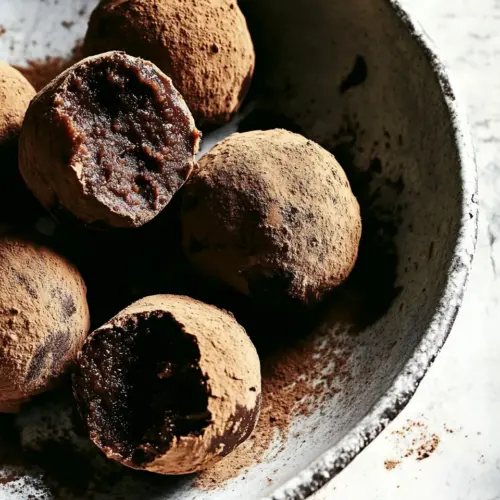
Muscovado Chocolate Truffle
Muscovado Chocolate Truffle is a creamy, rich dessert with deep molasses notes and intense dark chocolate flavor, perfect as an easy homemade gift or indulgent after dinner treat. The silky ganache and cocoa dusting create a delightful contrast in texture, making it an ideal choice for small gatherings or a cozy night in. Make it for its luxurious taste and simple, impressive results.
Equipment
- Saucepan
- Mixing Bowl
- Whisk
- Tray
- Sieve
Ingredients
- 100 grams muscovado sugar Provide deep, molasses-rich sweetness and a touch of moisture to balance the intense chocolate, helping create a complex, caramel-like undertone in the truffle ganache. Add gradually to taste to avoid overpowering the chocolate and to maintain a smooth texture in the final product.
- pinch sea salt Enhance and lift the overall flavors by balancing sweetness and intensifying the chocolate notes; a tiny amount sharpens and rounds the ganache. Sprinkle sparingly and dissolve thoroughly to avoid salty pockets and to accentuate the sweetness.
- 250 grams double cream Contribute a luxurious, silky mouthfeel and act as the liquid base that blends with chocolate to form a stable ganache; heat gently to avoid separation. Whisk smoothly with sugar and salt so the final truffle center is creamy and cohesive.
- 250 grams chocolate 70% dark finest chocolate, broken into pieces Melt into the warm cream to provide the dominant cocoa flavor, structure, and richness for the ganache; broken pieces ensure even melting and easy incorporation. Use high-quality 70% dark chocolate to deliver depth, bittersweet balance, and a clean set when chilled.
- 50 grams cocoa powder Intensify cocoa flavor and deepen the chocolate profile while helping absorb excess moisture for a firmer truffle texture; sift to avoid lumps. Blend thoroughly into the melted chocolate mixture for an even, pronounced chocolate finish.
- 50 grams muscovado sugar Boost molasses notes and add chewiness and nuanced sweetness distinct from white sugar, complementing the chocolate’s bitterness. Stir in after heating to dissolve completely and contribute to a richer, more complex truffle flavor and color.
Instructions
- Bring the sugar, salt and cream to a simmer. Pour on to the chocolate in a bowl and whisk well until emulsified and glossy. Allow the ganache to cool, then refrigerate.: The kitchen will fill with a warm, caramel like scent as the cream heats and the muscovado sugar begins to dissolve, creating tiny wisps of steam. You want small bubbles forming around the edge, not a rolling boil, because gentle heat helps the cream carry the sugar without scorching. Stir slowly and watch for the sugar to fully dissolve, as any remaining grains can cause a slightly gritty ganache. A common mistake is overheating, which can separate the fats, so pull the pan off the heat at the first sign of simmering and let the residual heat finish the dissolve.
- When you are ready to roll your truffles, mix the cocoa powder and sugar together well until fully combined.: As the hot mixture hits the chopped chocolate , you will see the pieces soften and melt into glossy ribbons. The aroma deepens, becoming intensely chocolate forward with a hint of molasses. Use a whisk in steady circles to coax the fat and liquid into a smooth emulsion; the ganache should look shiny and fluid. If it seems grainy, give it a minute and whisk more slowly to bring everything together. A typical error here is whisking too vigorously when the chocolate is still cold, which can cause the mixture to seize, so let the heat do most of the work before fast whisking.
- Now, take a generous amount of the ganache and, having dipped your hands into the dry mixture, form your desired sphere – or feel free to leave the truffles rustic.: As the ganache cools, its texture will change from glossy and fluid to thick and spreadable, releasing a comforting scent that is less volatile than when hot. Place plastic wrap directly on the surface to prevent a skin from forming, and refrigerate until it's firm enough to shape. Cooling slowly helps the texture become velvety, while rapid chilling can make it too hard and dry. One mistake is leaving it out too long at room temperature, which will keep it too soft to roll; conversely, chilling until rock hard will require tempering at room temperature before shaping.
- Once shaped, re-roll the truffles through the dry powder to coat them. Store in an airtight container in the fridge – or even the freezer if you want a constant supply of emergency truffles.: The dry mix should be even and free of lumps, giving a balanced bitter and sweet coating. The aroma will be dry and cocoa forward, which contrasts with the ganache's richness. Dipping your hands into the dry mixture before handling helps prevent the ganache from sticking, and ensures the surface takes on an even amount of dusting. A common slip up is using a dusty, clumpy mix which results in uneven coating, so sieve the cocoa powder into the muscovado sugar and stir thoroughly.
- But be sure to enjoy them at room temperature.: When you press the ganache it should yield softly, and the center should feel creamy, not crumbly. The tactile feedback is important, as it tells you if the ganache is at the right firmness. If it sticks excessively, chill it a little longer; if it breaks apart, let it warm briefly in your palms. Avoid overworking the ganache, which can melt it too much and make the truffles glossy and misshapen.
- Bring a mugful of milk to a simmer, place one muscovado truffle in the bottom of your cup, then pour on the hot milk and allow to stand for 2 minutes.: Rolling gives a matte, rustic finish that highlights the contrast between the interior and exterior. You should hear a faint, dry rustle as the powder settles, and the surface will look velvety rather than shiny. If the coating seems patchy, press gently and roll again, but avoid compressing the truffle which can squeeze out the center. A common mistake is rolling in a humid environment, which can make the powder clump and adhere unevenly.
- You can either drink the warm milk and enjoy the molten chocolate at the bottom, or give everything a good stir for a soothing hot chocolate milk.: Chilled, the truffles hold their shape and gain a firmer bite, while freezing is convenient for long term storage. When refrigerated, the texture is smooth and slightly firm, releasing flavors slowly; frozen and allowed to temper yields a delightful snap and creamy center. Be mindful of condensation when moving from freezer to room temperature, as moisture can ruin the coating. A frequent error is stacking them without layers, which causes sticking and damage to the coating.
- Skewer the truffles on to cocktail sticks and refrigerate. Melt a small bowl of your favorite chocolate over a pan of hot water until smooth.: Bringing truffles to room temperature unlocks the full aromatic profile and creates that melt in the mouth sensation. I usually leave a batch on the counter for 20 to 30 minutes before serving so the center softens without becoming too warm. If served too cold, the flavors can be muted and the texture feels firmer than intended. Don’t hurry this step, as patience significantly improves the tasting experience.
- Place your truffles around the dish of melted chocolate, then dip and indulge.: The hot milk will melt the truffle into a luxurious, slightly sweet drink, and the air will fill with a toasty, chocolate aroma. Letting it stand allows the center to liquefy gradually, creating a rich molten core. Avoid boiling the milk vigorously, which can scald and introduce bitter notes; gentle simmer is best. A common oversight is using very cold milk which delays melting and reduces the immediacy of the experience.
- You can either drink the warm milk and enjoy the molten chocolate at the bottom, or give everything a good stir for a soothing hot chocolate milk: Stirring creates an even, velvety drink with a balanced sweetness and deep cocoa notes. When stirred, you’ll see a glossy surface and steam rising with an inviting scent. If you prefer pockets of molten chocolate, leave it unstirred and sip slowly. One mistake is over stirring while the drink is too hot, which can make it thin and less creamy, so wait a moment if needed.
- Skewer the truffles on to cocktail sticks and refrigerate: Skewering is a fun presentation trick that chills the truffles evenly and makes them easy to serve. The skewered truffles will firm up and look elegant displayed vertically. Take care when inserting sticks to avoid squashing the center, and chill on a flat tray to prevent rolling. A frequent misstep is leaving them on sticks too long at room temperature, which makes them soften and drip.
- Melt a small bowl of your favorite chocolate over a pan of hot water until smooth: The melting chocolate should be glossy and pourable, with a fine cocoa aroma. Use gentle heat and stir often to keep it smooth; a water bath helps control temperature so it does not burn. If the chocolate becomes grainy, remove it from heat and add a small splash of warm cream to bring back gloss. Avoid introducing water into the chocolate bowl, which can seize it instantly.
- Place your truffles around the dish of melted chocolate, then dip and indulge: Dipping adds a beautiful, shiny shell that contrasts with the dusted ones, and the first crack of that shell is a delightful audio cue. As you dip, watch for smooth coverage and let excess chocolate drip back before setting on parchment. A common error is dipping when the coating chocolate is too cool, which results in thick, dull shells; keep the dip chocolate warm but not hot for best results.
Notes
- Adjust cream ratio — Increasing the amount of cream will yield a softer ganache that melts sooner on the tongue, ideal for pouring over hot milk, while reducing it makes firmer truffles better for precise shaping.
- Swap coating proportions — Altering the balance between cocoa powder and extra muscovado sugar changes the first impression of each bite, more cocoa for bitter contrast, more sugar for immediate sweetness.
- Temperature timing — Let the ganache cool at room temperature briefly before chilling to ensure an even texture that is neither grainy nor rock hard, giving you a reliable working window.
- Presentation switch — Roll some truffles smooth and dip others in melted chocolate for variety, combining matte and glossy finishes on a single platter for visual interest.
- Make ahead strategy — Freeze shaped truffles on a tray before transferring to a container, this keeps them uniform and makes portioning easy when you need a quick treat.
- Handling trick — Keep your hands slightly dusted with the dry mix to prevent sticking, this little step saves time and keeps surfaces tidy.