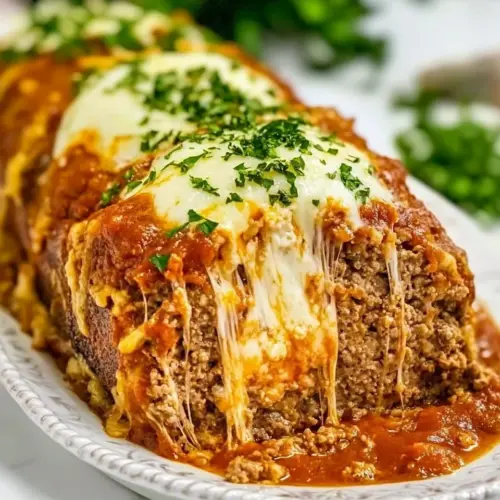
Mozzarella Stuffed Meatloaf
Mozzarella Stuffed Meatloaf is a creamy, cheesy, easy weeknight dinner that combines juicy ground beef with a molten mozzarella center and a bubbling tomato topping. This hearty loaf balances savory herbs, crunchy Panko crumbs, and umami Parmesan cheese for a satisfying family meal. Make it to enjoy comforting textures and crowd pleasing flavors that leave everyone asking for seconds.
Equipment
- 9x13-inch Baking Dish
Ingredients
- 2 pounds ground beef, 80 to 85% lean Provide rich, lean protein and the bulk of the loaf, binding with fats to keep the meatloaf moist while delivering savory beef flavor throughout; choose 80 to 85% lean for best texture and juiciness during baking.
- 1/2 medium onion, finely diced Add a mild, sweet onion flavor and tender texture when finely diced, helping to release moisture and aromatic depth as it softens during cooking to enhance the overall savory profile.
- 3 garlic cloves, minced Contribute sharp, pungent aromatics and depth when minced, infusing the meat mixture with savory complexity and helping to balance richer flavors in the loaf.
- 3 large eggs, lightly beaten Act as an emulsifier and binder when lightly beaten, helping to hold the meat mixture together, add richness, and provide structure so slices hold their shape after baking.
- 1 cup Panko crumbs Introduce light, airy dry crumbs that absorb moisture without making the loaf dense, helping to bind the mixture and maintain a tender, uniform texture.
- 1/4 cup grated Parmesan cheese Impart a nutty, umami-rich savory note and subtle saltiness when grated, enhancing overall flavor complexity and complementing the beef and cheeses.
- 1 tablespoon Worcestershire sauce Add a savory, tangy, and slightly sweet umami boost that deepens the meat's flavor profile and helps balance richness with a subtle, savory tang.
- 1 tablespoon chopped fresh parsley Provide fresh, herbaceous brightness and a hint of green flavor when chopped, cutting through richer components and adding a fresh finish to each bite.
- 3/4 teaspoons salt Season the mixture with a measured amount of salt to enhance and balance all flavors, helping proteins and other ingredients taste more vibrant without overpowering.
- 1 teaspoon dried basil Contribute warm, slightly sweet herbal notes that complement other seasonings, giving the meatloaf an Italian-inspired aromatic profile.
- 1/2 teaspoon dried oregano Add earthy, slightly bitter Mediterranean herb flavors that pair with basil and oregano to create a cohesive Italian seasoning profile in the meatloaf.
- 1/2 teaspoon black pepper Introduce a subtle peppery heat and aromatic bite that balances richness and enhances overall flavor complexity without overwhelming other herbs and spices.
- 1 1/2 cups plus 3 tablespoons pasta sauce, divided Provide a saucy, tangy component used in two portions—one mixed into the meat for moisture and flavor and extra reserved for glazing or serving to add brightness and moisture.
- 6 ounces mozzarella cheese, diced Offer a creamy, melty interior by dicing mozzarella into cubes that become gooey pockets when baked, delivering a rich, stretchy cheese center in each slice.
- 1/2 cup shredded mozzarella cheese Top or garnish the loaf with shredded mozzarella to create a bubbly, golden melted cheese layer, adding extra cheesiness and an appealing finished texture.
Instructions
- Preheat oven to 375 degrees and lightly grease a 9×13-inch baking dish.: As the oven comes to temperature you will notice a dry warm air settling in the cavity, and that stable heat is what creates even browning and a cooked center. Greasing the dish prevents sticking and makes it easier to lift the loaf out once cooled slightly. A common mistake here is not waiting for full preheat, which can cause uneven cooking and a soggy bottom, so allow the oven to reach the set temperature fully before placing the dish inside. The right moment to put the loaf in is when the dial indicates full heat and a faint warm smell begins to radiate from the oven.
- Place ground beef, onion, garlic, eggs, Panko crumbs, Parmesan cheese, Worcestershire sauce, parsley, salt, basil, oregano, black pepper, and 3 tablespoons of pasta sauce in a large bowl.: When the ingredients meet you will sense layers of aroma forming, from the sweet raw onion to the sharp tang of Parmesan cheese and the savory funk of Worcestershire sauce . The mixture should look cohesive but not wet, and the Panko crumbs will begin to absorb moisture. One thing to avoid is adding extra liquids at this stage, which can loosen the mixture and make shaping difficult. For best texture, let the crumbs hydrate for a minute so they hold moisture without collapsing the structure.
- Gently mix until evenly combined. Do not overmix it or your meatloaf will be tough.: You will feel the texture change under your hands, moving from loose to lightly tacky, and the scent will become uniformly savory. Mixing by hand in broad folding motions prevents overworking the proteins, which is crucial to avoid a dense result. A common error is kneading like bread, which tightens the meat proteins and yields dryness, so stop once everything is evenly distributed and the mixture holds shape when squeezed gently.
- Place half of the mixture in the prepared baking dish and shape it into a 9×5-inch rectangle.: When you pat the mixture into the dish you will notice it holds together yet gives slightly under pressure, and the surface will show small textured impressions from your fingers. Shaping into a rectangle helps create an even cooking profile and ensures the cheese center sits centered. Avoid compressing heavily, which removes air and leads to a dense interior. Aim for a gentle, even press so the loaf retains a tender crumb while keeping the shape.
- Place diced mozzarella down the middle.: Laying the diced mozzarella down the center creates a concentrated melty core, and you can already imagine the rich, stringy pull as it heats. Distribute the pieces in a single line to avoid large pockets that could burst through thin meat walls. A frequent mistake is piling too much cheese in a narrow channel, which can force it out during baking, so keep an even row with small gaps between cubes for best melting behavior.
- Cover the mozzarella with the rest of the meatloaf mixture, being sure to seal it together well on the sides so the cheese doesn't ooze out.: As you bring the top layer over the cheese you will feel the loaf become complete and compact, and sealing the seams by pinching gently will create a barrier that keeps the center intact. Press the edges together firmly but not aggressively, so the structure is continuous. If seams are left open, melted mozzarella can escape, so double check the sides and smooth any cracks before baking.
- Pour the remaining pasta sauce on top. Bake for 1 hour.: The tomato sauce will spread into a glossy cap that slowly caramelizes, releasing an acidic, sweet aroma that mingles with browned meat scents. As the loaf bakes you will hear a faint crackle and see juices bead at the surface, signaling steady cooking. One common oversight is underbaking at the center, so check for a gentle give and an internal temperature that indicates doneness rather than relying only on surface color. Resist opening the oven repeatedly, which drops temperature and can extend bake time.
- Sprinkle shredded mozzarella on top and place back in oven until cheese is melted.: Adding the shredded mozzarella late creates a bubbly, golden top that signals the finish, and the immediate aroma of hot cheese will be irresistible. Keep the loaf in the oven until the cheese is fully melted and starting to turn a delicate golden hue, watching carefully so it does not overbrown. A mistake to avoid is leaving it too long which makes the top rubbery rather than creamy, so remove when bubbling and lightly colored.
- Let rest 15 minutes before slicing.: Resting allows juices to redistribute, and during this wait you will notice the loaf firm slightly, making clean slices possible and preserving the cheesy center. The internal steam will continue gentle cooking, and the mozzarella will settle into a luscious, sliceable core. Cutting too soon often causes the cheese to spill out and the slices to fall apart, so patient resting is key for tidy presentation and optimal texture.
Notes
- Spicy option: Add half a teaspoon of crushed red pepper flakes into the meat mixture for a gentle heat that complements the tomato sauce and cheese without overwhelming the dish. This introduces a warm mouthfeel and a slightly sharper aroma as the loaf bakes, so start small and adjust to taste.
- Herb-forward twist: Increase the parsley to two tablespoons and add a teaspoon of fresh chopped oregano if available, for a brighter herbal profile. Fresh herbs will pop more when the loaf is sliced, providing lively green notes that contrast the rich mozzarella.
- Cheese center swap: Use a mix of diced mozzarella and a small amount of a higher melting cheese like fontina to add depth to the ooze. Combining cheeses changes melting behavior, so keep cubes modest in size to avoid excessive leakage.
- Make ahead: Shape the loaf and store it covered in the fridge for up to 24 hours before baking. Chilling helps flavors meld and makes shaping easier, though you may need to add a few extra minutes to the bake time if it goes into the oven cold.
- Serve hot or room temperature: While best warm to enjoy the gooey center, this loaf also holds its structure at room temperature, making it practical for picnics or gatherings. Slicing slightly thicker pieces works well for buffet style serving.
- Glaze variation: Mix a couple of tablespoons of the pasta sauce with a teaspoon of brown sugar for a glossy, sweet glaze that caramelizes attractively on top during the last minutes of baking.