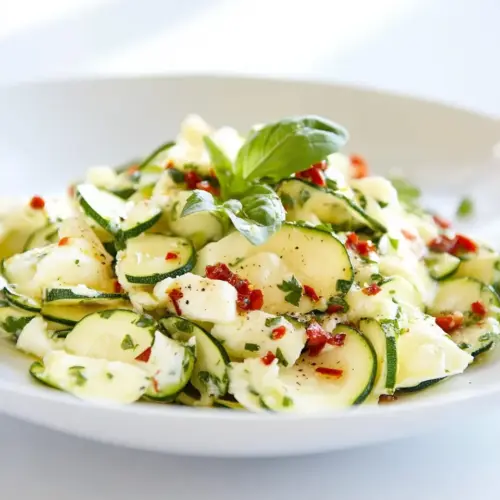
Mozzarella and Spicy Marinated Zucchini Salad
Mozzarella and Spicy Marinated Zucchini Salad is a bright, creamy, easy summer salad with tangy lemon, a touch of heat, and silky mozzarella. Thinly sliced zucchini soaks up a zesty dressing for an effortless, fresh side or light meal, perfect for easy weeknight dinner plans or casual gatherings, and worth making for its vibrant flavor and simple technique.
Equipment
- Knife
- Mandoline
- Large Bowl
- Fork
- Cutting Board
Ingredients
- 1 lemon Zest and squeeze to add bright acidity that balances rich and oily components; lemon juice helps lift flavors and tenderize zucchini slightly when marinating. Use both juice and a little zest for aromatic citrus notes that brighten the entire salad.
- 1 red chillies (2 if you want a kick) Chop finely to infuse heat and a fruity spice into the dressing; red chilli provides a warming counterpoint to creamy mozzarella and mellow zucchini. Adjust quantity for desired kick and remove seeds to reduce heat if necessary.
- 1 small garlic clove Crush or mince to release pungent, aromatic oils that deepen savory flavors in the dressing; garlic brings a sharp, earthy bite that complements herbs. Lightly smash and let sit briefly to mellow its intensity before mixing with oil and lemon.
- 2 tablespoon extra virgin olive oil Whisk to emulsify the dressing and coat zucchini and mozzarella with smooth, fruity fat; extra virgin olive oil contributes richness and mouthfeel. Use a high-quality oil for pronounced grassy and peppery notes that enhance the salad.
- sea salt and cracked black pepper Season to taste to enhance and balance all components; sea salt and cracked black pepper amplify natural flavors and control overall seasoning. Add gradually and taste as you go to avoid over-salting and to find the right peppery edge.
- 300 g zucchini Slice thinly to provide tender yet slightly crisp texture that soaks up the marinade; zucchini offers a mild, slightly sweet base that pairs well with cheese and herbs. Consider salting briefly and draining to remove excess moisture for a firmer bite.
- 1 mozzarella ball Tear or slice to deliver creamy, milky richness and a soft, melt-in-the-mouth contrast to the spiced zucchini; mozzarella adds cooling creaminess that balances acidity and heat. Drain well and serve at room temperature for best flavor and texture.
- fresh basil and parsley to serve Chiffonade or roughly chop to add fresh, aromatic green notes and bright herbaceous finish; basil and parsley lend sweet, peppery, and slightly citrusy accents. Scatter over the salad just before serving to preserve color and fragrance.
Instructions
- Zest the lemon into a large bowl, then cut it in half and squeeze in the juice.: The instant aroma of bright citrus will hit you as the oils release from the rind, a fragrant burst that sets the tone. You should notice a glossy, slightly sticky texture on the lemon zest when it has released enough oils, and the bowl will smell unmistakably fresh. I like to use my fingers to rub the zest into the bowl for a moment to help distribute the oils. A common misstep is zesting too deeply into the white pith which tastes bitter, so only grate the yellow part. Also, when you squeeze the halves, press firmly and roll the lemon on the counter first to get more juice.
- Finely chop the chilli (remove the seeds and membranes for a milder taste) and add to the lemon.: As you chop the red chillies , their sweet pepper scent mixes with the citrus to create a lively perfume. If you remove the seeds and membranes, the heat becomes more subtle and even, while leaving them gives bursts of spice. Finely chopping ensures the chili disperses across the salad rather than settling in one spot, preventing sudden hot bites. Be cautious of touching your eyes after handling, and if you find the chili too fiery after tasting, add a little more olive oil or lemon juice to tame it.
- Crush the garlic and place into the bowl with the chilli and lemon.: Crushing garlic releases a sharp, savory scent that pairs beautifully with citrus and pepper. When crushed, the garlic's oils infuse the dressing quickly, so give it a moment to meld before moving on. The crushed texture will disperse through the dressing and mellow as it sits, but be careful not to overdo it because raw garlic can become overpowering. If the garlic seems too assertive, a tiny pinch of salt can help tone it down.
- Pour in the olive oil and stir well with a fork until well combined.: When the extra virgin olive oil hits the citrus and aromatics, the dressing will take on a glossy sheen and a rounded mouthfeel. Stirring with a fork helps emulsify the mixture just enough to coat the vegetables without fully blending into a thick sauce. You should see the oil suspend with specks of zest and herbs, creating an inviting shimmer. A common mistake is adding too much oil too quickly, which can make the dressing greasy, so add steadily and taste as you go.
- Season to taste with salt and black pepper.: Adding sea salt and cracked black pepper unlocks flavors and balances the acidic lemon . Taste the dressing and adjust incrementally because salt is easier to add than remove. Freshly cracked pepper adds aromatic heat and texture. Over-salting is the usual pitfall, so season in small increments and re-taste after mixing.
- Finely slice the zucchini. You want slices that are about 2.5 mm thick. (I use the mandoline): Thin, even slices of zucchini are essential for a pleasing texture, as they quickly absorb the dressing and become tender while keeping a slight bite. The thinness allows the dressing to cling to surfaces and flavor every mouthful. If slices are uneven, some will be limp and others under-marinated, so take care or use a mandoline for consistency. Slice against the vegetable's length for attractive ribbons and easier eating.
- Add the zucchini to the dressing and toss well.: As the slices hit the bowl, you should hear a soft rustle and see them take on a slight shine as the dressing clings. Tossing ensures every slice is coated and begins to soak up flavor, which is why thin slicing and a well-balanced dressing matter. Let the zucchini sit in the dressing briefly to soften and absorb the citrus and chili. Over-tossing can bruise delicate slices, so aim for gentle, thorough mixing.
- Leave it to stand for a few minutes then spread over a serving platter.: Allowing the salad to rest gives the zucchini time to marinate, drawing the dressing into each slice. After a short wait, the texture becomes more harmonious and the flavors meld. When you spread it on a platter, arrange the slices attractively so they catch the light and herbs can be scattered evenly. A common oversight is serving immediately without letting the flavors integrate, which results in a sharper, less rounded profile.
- Drain the mozzarella and then carefully rip into small pieces.: Draining prevents excess liquid from diluting the dressing, and tearing the mozzarella by hand produces an organic texture that pairs beautifully with the zucchini. You should feel the soft, pillowy resistance as you tear, and the cheese will release a subtle milky aroma. Patting the mozzarella briefly avoids water pooling on the platter. Cutting the cheese too large can make distribution uneven, so keep pieces small enough for bites.
- Scatter the mozzarella over the zucchini and then top with some chopped basil and parsley.: The final step is a sensory flourish, with creamy mozzarella cool on top of warm citrus notes and the fresh perfume of chopped basil and parsley . The contrast of color and texture is pleasing, and the herbs add a bright finishing aroma. Scatter everything with intention so each serving gets a balance of cheese and herbs. Adding herbs too early causes wilting, so always finish just before serving.
Notes
- Increase or decrease the chilli: If you want more heat, use two red chillies, seeds included; for a gentler dish, remove the seeds and membranes. Adjust slowly to avoid overpowering the salad.
- Use different citrus: Swapping a lime or a mix of lemon and lime will shift the flavor profile. Each citrus brings its own aroma, so taste as you go to maintain balance with the olive oil.
- Make it ahead: Toss the zucchini with the dressing up to 30 minutes before serving to deepen flavor, but add the mozzarella and herbs right before plating to keep them fresh.
- Try thicker slices for rustic texture: If you prefer more chew, slice the zucchini slightly thicker, but allow longer marinating time so the dressing penetrates thoroughly.
- Toast herbs briefly: For a nutty note, flash-toast chopped parsley and basil in a dry skillet for a few seconds, then cool and sprinkle; be careful not to burn them.
- Brighten with extra zest: Adding a little more lemon zest on top just before serving enhances aroma without increasing acidity dramatically.